9 Signs a Dog Is Stressed at Home (And What Each Means)

What's in this list
- 01Why signs a dog is stressed at home look different
- 02Pacing and restlessness
- 03Excessive licking or yawning
- 04Hiding or clinginess
- 05Destructive chewing
- 06Changes in appetite
- 07Whale eye and pinned ears
- 08House soiling in a trained dog
- 09Excessive barking or whining
Your dog isn’t broken, and they’re not being stubborn. When a settled dog starts pacing the hallway at dusk or licking the same patch of paw raw, they’ve run out of quieter ways to tell you something.
The signs a dog is stressed at home usually aren’t the ones the advice describes. Most of it fixates on the dramatic stuff: the growl, the raised hackles, the lunge on a walk. Indoors, the story changes. The signals get smaller, slower, easier to miss. One of the nine below is the one owners most often mistake for a dog being unusually well-behaved, and it tends to show up right before things get worse.
Here’s how to read the room your dog actually lives in, and what each shift in behavior is quietly trying to say.
Why signs a dog is stressed at home look different
Outside, stress has somewhere to go. A dog can bolt, bark at the mail carrier, or pull toward the thing that spooked them. Home strips most of that away. The stressor is often invisible or constant. A new baby. A change in your work schedule. A house that’s suddenly empty for nine hours. The dog has nowhere to put the tension.
So it turns inward. Canine anxiety indoors leaks out through small, repetitive behaviors rather than big reactive ones. Dog body language at home is a vocabulary of calming signals and displacement behaviors: the quick yawn, the paw lick, the sudden stillness. These aren’t your dog acting out. They’re coping strategies, the canine version of drumming your fingers on a desk. Read in clusters, they tell you far more than any single twitch.
Pacing and restlessness
A dog who can’t settle is a dog whose nervous system hasn’t gotten the all-clear. Watch for the loop: same path through the kitchen, out to the hall, back to your chair, unable to lie down and stay down. It often ramps up at predictable times. Right before you leave. During a thunderstorm. When the house fills with guests.
Pacing is one of the clearer behavioral markers researchers track when studying dogs left alone, alongside panting and repeated position changes. Some restlessness is normal before dinner or a walk. What matters is the pattern. A dog who circles and resettles a dozen times, who gets up the moment they’ve lain down, who seems driven rather than merely bored, is telling you their internal weather is rough. Note when it happens. The timing usually points straight at the stress trigger.
Excessive licking or yawning
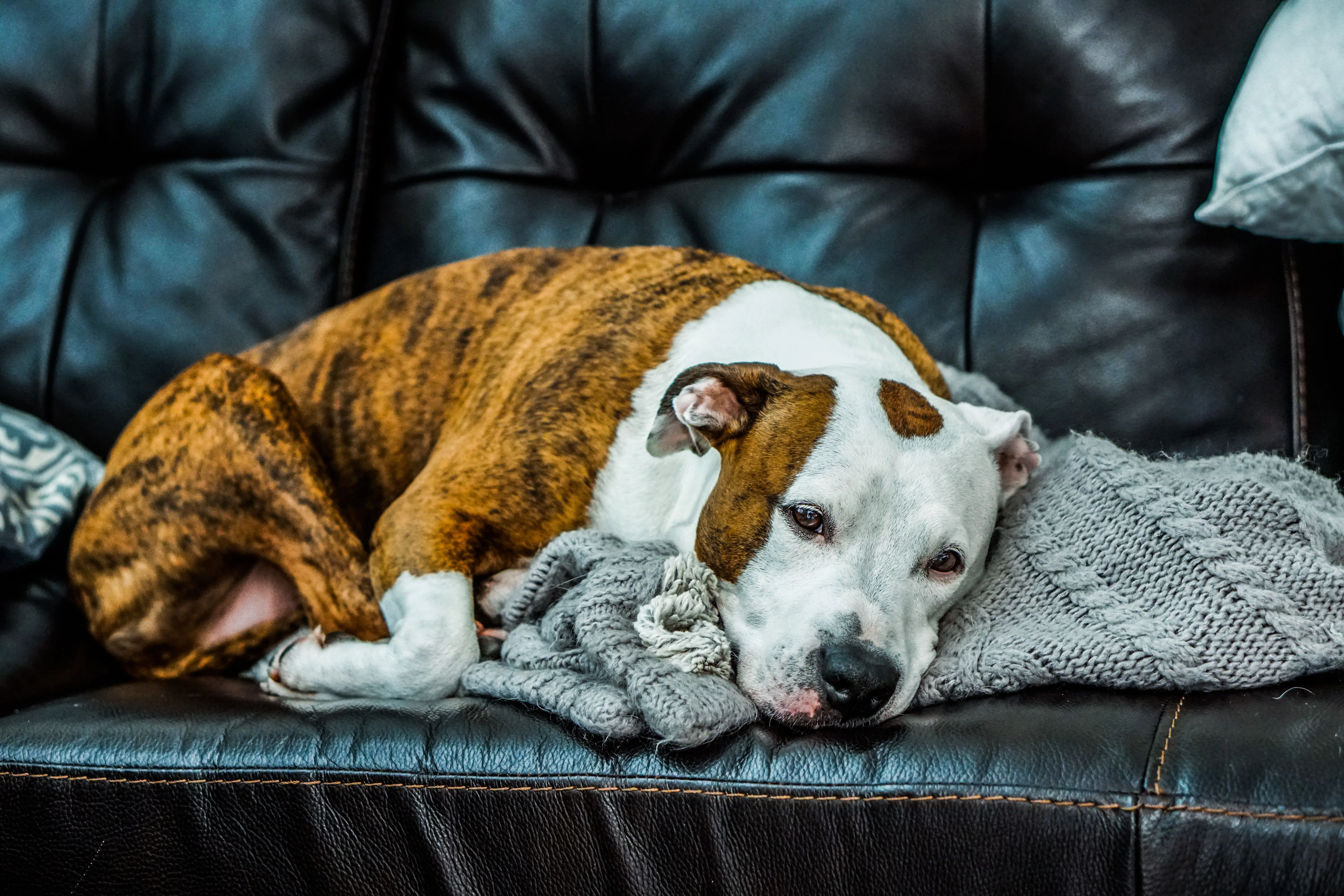
A yawn before bed is a sleepy dog. A big, slow, exaggerated yawn when you’re clipping on the harness, or when a stranger leans over them, is something else. Same with lip licking that has nothing to do with food, that quick tongue flick across the nose in a moment they find uncomfortable.
These are displacement behaviors, and they’re recognized stress signals when they show up outside the context of tiredness or eating [1]. In controlled studies of dogs facing a known stressor, lip licking and yawning rose right alongside physiological markers like cortisol in dogs and heart rate [2]. That’s the useful part: these small gestures track real, measurable arousal. Context is everything, though. Filling the food bowl? Probably anticipation. Same lick while your dog turns their head away and tenses? That’s a calming signal, and it’s worth pausing whatever’s happening.
Hiding or clinginess
Stress pushes dogs toward one of two poles, and the same anxious dog may swing between them. Some retreat: under the bed, behind the couch, into the quietest room in the house. Others velcro themselves to you, following from kitchen to bathroom to bedroom, unable to relax unless they’re touching you.
That kind of excessive attachment is closely tied to separation anxiety. Dogs prone to it often shadow their owners room to room and grow agitated the moment you pick up your keys. Hiding is the other request, the one for space, a way of removing themselves from whatever feels like too much. Neither is a personality quirk to override. A dog who suddenly wants to disappear, or who can’t bear a closed door between you, is showing you where their threshold has moved. Force a hiding dog back into the open and you usually make the fear worse.
Destructive chewing
Shredded cushions and gnawed doorframes read like defiance. Usually they’re not. Destructive chewing that happens specifically when you’re gone is one of the classic separation-related behaviors, an outlet for tension a dog can’t otherwise release.
The location tells you a lot. Damage focused on exit points, the front door, window sills, the frame of the crate, points toward a dog trying to reach you or escape confinement, not one having a good time with a table leg. Chewing that only happens in your absence, paired with pacing or vocalizing, suggests distress rather than boredom or too little exercise. The distinction matters, because the fixes are completely different. A bored dog needs more to do. An anxious dog needs to feel safe when alone, and no pile of chew toys will get them there on its own.
Changes in appetite
A stressed dog often stops eating on schedule. Some refuse food entirely when you’re out, then wolf it down the second you’re back. Others lose interest in meals that used to send them sprinting to the bowl, or start eating in a hurried, joyless way.
Appetite shifts turn up again and again in the research on separation-related distress, alongside signs like salivation and digestive upset. The mechanism is familiar to anyone who’s been too nervous to eat before a big event: stress hormones suppress the appetite. A dog too worried to touch a stuffed food toy you left behind is telling you plenty about how they experience your absence. Rule out the physical first, though. Dental pain, nausea, and illness also blunt appetite, so a sudden change is always worth a vet’s attention before you assume it’s purely emotional.
Whale eye and pinned ears
Whale eye is the tell owners learn to see and then can’t unsee. It’s the crescent of white sclera that shows when a dog turns their head away from something but keeps their eyes locked on it. The head says I’m not engaging. The eyes say I can’t stop watching.
Researchers have observed visible sclera in fear-related contexts, such as dogs exposed to fireworks, alongside backward-directed ears as markers of a negative emotional state [1]. Pinned ears, flattened back against the skull, travel with it. Together they’re a dog bracing. You’ll catch whale eye when a child leans in over a food bowl, when someone hugs a dog who’d rather not be hugged, when a hand reaches over the head from behind. Flat-faced breeds show more white as a matter of anatomy, so compare against your own dog’s baseline rather than any white you happen to see.
House soiling in a trained dog
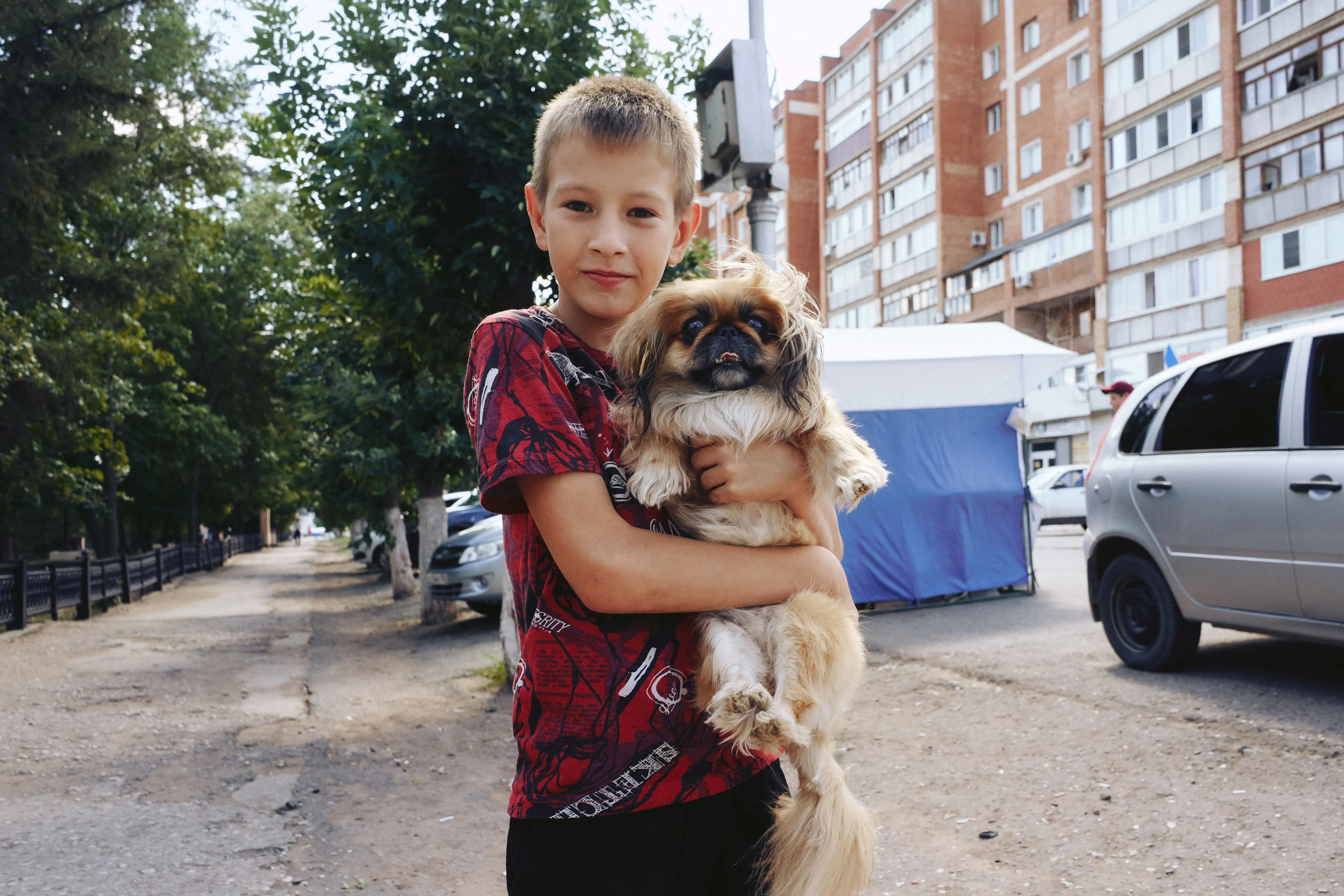
When a reliably house-trained dog suddenly starts eliminating indoors, something has changed. Sudden house soiling in a trained dog can signal anxiety, particularly when it happens in your absence [3]. In video studies of dogs left home alone, elimination showed up as one of the separation-related behaviors caught on film, even in dogs who’d recently been outside [3].
The pattern is the clue. Anxiety-linked accidents tend to appear only when the dog is alone or confined, often soon after you leave, in a dog who is otherwise spotless when you’re home. That’s different from a housetraining gap, a marking habit, or the many medical causes of incontinence, which usually happen whether or not you’re present. Urinary tract issues, digestive illness, and age-related decline can all look identical from the outside, so a new soiling problem is a reason to see your vet before you draw any behavioral conclusions.
Excessive barking or whining
Distress vocalizations sound different from ordinary barking, and once you know the difference it’s hard to miss. Territorial barking at a passing dog is punchy and directed. Anxious vocalizing runs higher in pitch, faster, more relentless: a whine that won’t resolve, barking that starts the moment you shut the door and doesn’t stop.
This is one of the most reported separation-related behaviors, partly because it’s the one the neighbors complain about. In behavioral studies, vocalization was among the first signs to appear after an owner left and often the most sustained. If your dog is quiet when you’re home and a neighbor mentions hours of barking while you’re out, believe them. That gap between your experience and theirs is itself diagnostic. A dog who saves the noise for your absence is telling you the absence is the problem.
Notice that almost none of these nine signs is loud on its own. The clingy dog from #4, the one who won’t leave your side, is the signal owners most often file under good behavior, right up until the barking or the soiling starts. Stress at home speaks in a quiet dialect, and the fluent reader watches for clusters rather than single gestures: whale eye plus pinned ears plus a lip lick, all in the same tense moment, says far more than any one of them alone.
Start by tracking the timing. When does the pacing begin, when does the appetite drop, what had just changed in the house? Patterns point at triggers, and triggers are where change becomes possible. None of this replaces professional guidance. If the signs are frequent, escalating, or paired with any physical symptom, that’s the moment to loop in your vet or a qualified behaviorist. Your dog has been talking the whole time. The skill is learning to listen before they have to raise their voice.
References
- (2022). Audience effect on domestic dogs' behavioural displays and facial expressions. Scientific Reports. https://doi.org/10.1038/s41598-022-13566-7
- (2024). Daily dosing of cannabidiol (CBD) demonstrates a positive effect on measures of stress in dogs during repeated exposure to car travel. Frontiers in Veterinary Science. https://doi.org/10.3389/fvets.2023.1302214
- (2010). Video analysis of dogs with separation-related behaviors. Applied Animal Behaviour Science. https://doi.org/10.1016/j.applanim.2010.01.014
The fire's still going.
Stoke another read →