10 Ways to Achieve a Quiet Luxury Home Aesthetic

What's in this list
- 01Defining the Quiet Luxury Philosophy
- 02Investing in Fine Architectural Details
- 03The Power of a Muted Bespoke Palette
- 04Choosing High-End Natural Stone Surfaces
- 05Focusing on Custom Hidden Storage
- 06Selecting Fewer, Better Statement Furniture Pieces
- 07The Art of Subtle, Unbranded Accents
Walk into a room owned by someone with serious money and the first thing you notice is usually an absence. No logos. No chrome. No flash. The sofa is plain. The walls are a color you can’t quite name. And still the space reads as expensive before you can say why.
The restraint is the point. What people now call quiet luxury runs on materials, proportion, and craft rather than brand recognition. It rewards patience over impulse, and the slow accumulation of better things.
Most guides stop at “buy beige,” which misses how it actually works. By the time you reach the part on hidden storage, you’ll understand why the most expensive-feeling rooms tend to be the emptiest, and why one well-made cabinet can do more for a space than a wall of art.
Defining the Quiet Luxury Philosophy
A quiet luxury home is built on confidence rather than display, and it’s sometimes called stealth wealth decor. Quality announces itself slowly. A hand-finished plaster wall, a solid brass handle that has started to patina, a linen with real weight to it: none of these shout, and that’s the appeal. Understated luxury assumes the people who matter will notice the difference, and that the people who don’t were never the audience. It’s a deliberate turn away from the logo-forward years, when status meant a visible label. The look borrows from old-money interiors and from a minimalist interior sensibility, then softens the cold edges with texture and warmth. Fewer objects, each chosen to last. Think of it less as a look you buy and more as an editing process you commit to, until every surface earns its place and nothing competes for attention.
Investing in Fine Architectural Details

Before furniture, the bones. Quiet luxury lives in the parts of a room people feel but rarely photograph: the depth of a baseboard, the reveal where a wall meets the ceiling, a doorway with proper proportion. Crown molding sized correctly for the ceiling height. Solid-core doors that close with a satisfying weight instead of a hollow knock. Window casings that frame a view rather than apologize for it. These details cost more because they take skilled hands and good material, which is exactly why they read as valuable. A builder-grade room can be dressed up endlessly and still feel thin if the architecture underneath is flimsy. Plaster over drywall where the budget allows. Choose joinery that fits flush. Let the millwork carry the character so the contents can stay sparse. Most renovators skip this layer, and it’s the one that separates a styled room from a substantial one.
The Power of a Muted Bespoke Palette
Color is where quiet luxury is won or lost. The palette leans muted and tonal: putty, oatmeal, stone gray, soft clay, ink, and the sort of off-whites that shift with the light. The trick is depth, not flatness. A bespoke palette built from layered neutrals reads as considered rather than safe, especially when you let undertones do the work, warming a room with a barely-there ochre or cooling it with a green-gray. Skip the high-contrast statement wall. Reach instead for paint with real pigment quality and a finish suited to the surface: matte for walls, a quiet eggshell for trim. A custom-matched color, even a single bespoke shade, gives a room a fingerprint that a fan-deck favorite never will. When the whole envelope sits in one tonal family, the eye relaxes, and the few darker or richer pieces you introduce land with far more weight.
Choosing High-End Natural Stone Surfaces
Few materials carry the quiet luxury message like natural stone. A honed marble counter, a limestone hearth, a single slab of travertine: these are high end materials with a depth engineered look-alikes struggle to fake, because the veining was made over geological time and can’t be printed. The appeal goes beyond looks. Enduring natural materials tend to hold their value with buyers. Studies of housing markets find that renovated, well-maintained homes command a measurable price premium over neglected ones, on the order of several percent, while unmaintained properties trade at a discount [1]. Quality surfaces are a visible signal of that maintenance and craft. Practically, choose honed or leathered finishes over high gloss for a softer, less showroom feel, and let one exceptional stone anchor a room rather than tiling every surface. A timeless design reads as permanent, and stone is about as permanent as a surface gets.
Focusing on Custom Hidden Storage
The emptiest-looking rooms are rarely the ones with the least stuff. They’re the ones where the stuff is out of sight. Custom hidden storage, integrated cabinetry, push-latch panels, a pantry tucked behind a flush door: all of it lets a space stay serene without forcing you to own less. This is where calm becomes architectural. And clearing visible clutter does more than please the eye. Research on home environments links cluttered, disorganized spaces to flatter daily cortisol patterns and lower mood [2], while broader work connects clutter to reduced wellbeing and a weaker sense of home [3]. Storage that absorbs the mess of daily life supports both the look and the feeling of a restful home. Built-ins also clean up a room’s lines, trading freestanding clutter for a single calm plane. The cost is real, but so is the payoff: a space that looks composed even on a chaotic Tuesday.
Selecting Fewer, Better Statement Furniture Pieces
Quiet luxury is subtractive. Rather than filling a room, you choose a handful of pieces with genuine presence and let them breathe. A single sculptural armchair. A solid oak table with visible joinery. A sofa in heavy linen or full-grain leather that only improves with use. The test is simple: would you still want this in twenty years? If yes, it probably belongs. Avoid matching sets, which read as showroom rather than collected. Mix periods and woods so the room feels assembled over time. Buy the best version of each thing you can manage, then stop. Empty space around a beautiful object isn’t wasted; it’s what lets the object register. Over a lifetime this restraint is also kinder to the wallet, since one excellent chair outlasts five disposable ones.
The Art of Subtle, Unbranded Accents
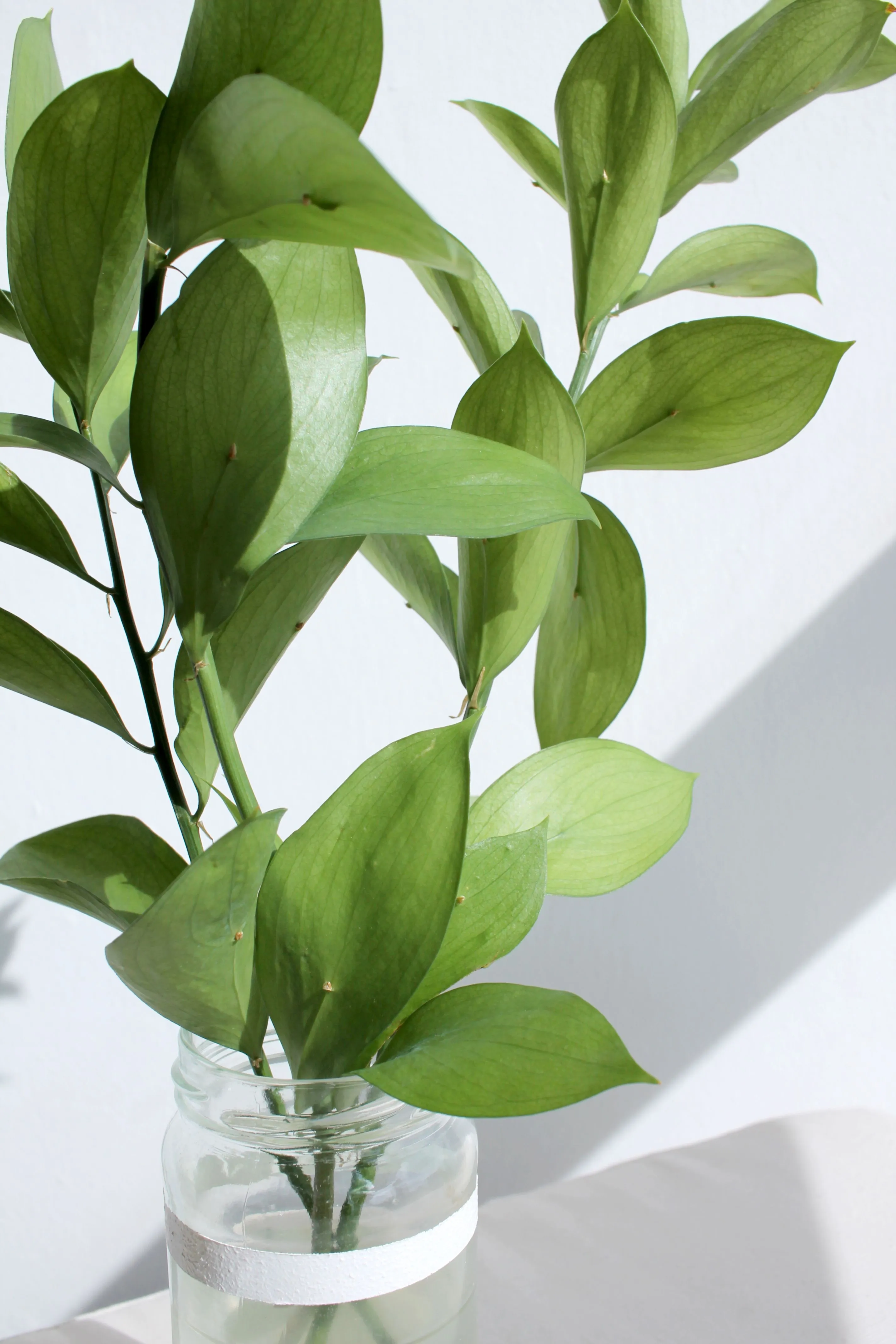
The finishing layer is where many rooms betray themselves. Quiet luxury accents are unbranded, tactile, and quietly personal: a hand-thrown ceramic bowl, a stack of cloth-bound books, an antique mirror with foxed glass, fresh stems in a plain vessel. Nothing here carries a visible label, and that absence is the statement. Texture stands in for logo, patina for polish. The home-environment research is suggestive here too, with one recent study finding that perceived home beauty mediates the link between a tidy space and wellbeing [4], which hints that a calm, considered room may feel good as well as look good. Keep surfaces mostly clear and let two or three objects hold a shelf rather than twelve. Choose accents for material honesty: real wood, real stone, real wool. You want a room that feels gathered and lived in, never staged, where the eye lands on craft rather than marketing.
Pulling this together is less about a shopping list than a way of deciding. The quiet luxury home aesthetic asks you to slow down: to fix the architecture before the styling, to choose one honed stone slab over a wall of glossy tile, to spend on the chair you’ll keep for decades rather than the trend you’ll tire of by spring. If you take one idea away, make it the part on custom hidden storage. The rooms that read as effortless are almost always the ones doing the most quiet, invisible work to stay that way. Build the muted envelope, hide the daily mess, edit hard, and let a few honest materials carry the room. Done well, the result is a home that never tells you it’s expensive. It simply feels that way, every time you walk in.
References
- (2026). The impact of renovations on house prices: evidence from a propensity score analysis. Journal of Housing Economics. https://doi.org/10.1016/j.jhe.2026.102032
- (2010). No place like home: home tours correlate with daily patterns of mood and cortisol. Personality and Social Psychology Bulletin. https://doi.org/10.1177/0146167209352864
- (2021). Home and the extended-self: Exploring associations between clutter and wellbeing. Journal of Environmental Psychology. https://doi.org/10.1016/j.jenvp.2021.101553
- (2025). Home clutter and mental well-being: Exploring moderators and the mediating role of home beauty. Journal of Environmental Psychology. https://www.sciencedirect.com/science/article/pii/S0272494425001550
The fire's still going.
Stoke another read →