10 Ways to Build a Relaxing Evening Routine for Sleep

What's in this list
- 01Setting a Daily Digital Evening Sunset
- 02The Brain Dump Journaling Exercise
- 03Lowering Your Home Thermostat for Sleep
- 04Sipping Non-Caffeinated Chamomile Infusions
- 05Dimming Overhead Lights to Warm Lamps
- 06Slipping Into Loose Breathable Loungewear
- 07The Power of Gentle Leg Up the Wall Poses
- 08Applying Soothing Lavender Body Oil
- 09Listening to Delta Wave Soundscapes
- 10The Final Five-Minute Gratitude Check
Most sleep advice falls apart in the hour before bed. People do everything right at midnight and forget that the body started heading toward sleep two hours earlier, back when the lights were still bright and the phone was still glowing.
That earlier window is the part worth taking back.
What follows is a ten-step wind down routine for the late evening, built for racing thoughts and the kind of nights where your brain refuses to clock out. Some steps rest on solid research. One of them, the warm cup so many people swear by, has a messier evidence trail than its reputation suggests, and step four is where that gets complicated. Treat the whole list as a menu. Take the pieces that fit your home and your temperament, and skip the rest.
Setting a Daily Digital Evening Sunset
Pick a fixed time each night when screens go dark, and treat it as a soft curfew rather than a hard rule. You’re giving your mind a consistent signal that the working part of the day has closed. A predictable cutoff supports sleep hygiene by separating stimulating input from the slower hours that follow. Notifications, group chats, and the endless scroll all pull you forward into problem-solving mode, which is the last place you want to be at this hour.
If a full blackout feels unrealistic, start with a thirty-minute buffer and let it stretch over a few weeks. Charging the phone in another room removes the temptation to check it. A paper book or a podcast fills the gap without dragging you back into reactive thinking. One slipped night doesn’t undo the habit; just move the charger back across the hall tomorrow.
The Brain Dump Journaling Exercise
Racing late-night thoughts usually come from a mind still holding tomorrow’s open loops. A brain dump empties them onto paper.
Spend five or ten minutes writing whatever is circulating: tasks, worries, half-formed plans, the email you forgot to send. There’s no structure to follow and no audience to impress, so spelling and grammar don’t matter. Some people like to end with a short list of the next day’s top three priorities, which hands the planning over to your future self.
Writing a worry down tends to loosen its grip. Your brain no longer has to keep rehearsing it just to avoid forgetting it. Keep the notebook by the bed so anything that surfaces after lights-out has somewhere to land other than the inside of your head. A cheap spiral pad and a pen that works are the only equipment this step needs.
Lowering Your Home Thermostat for Sleep
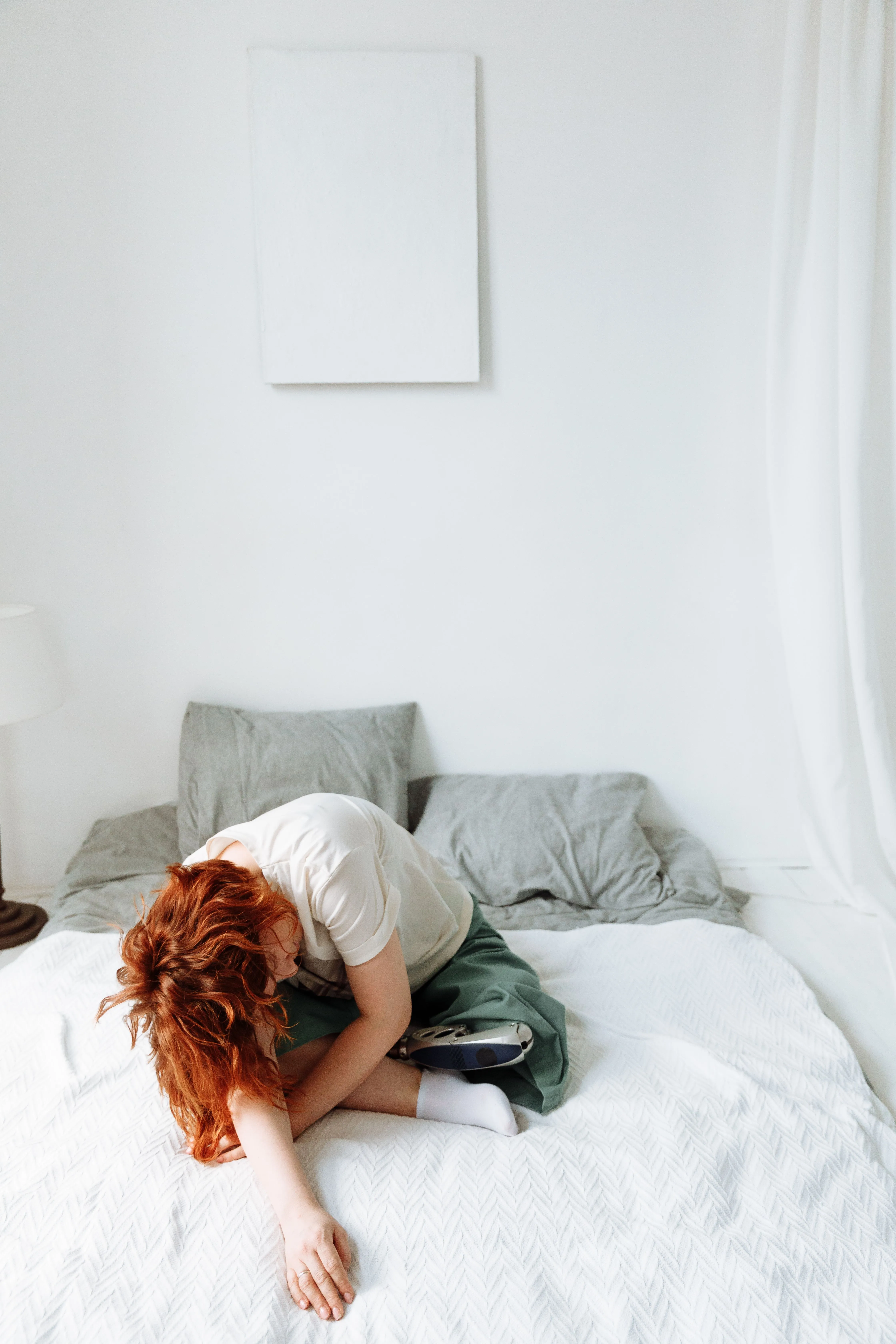
Your core body temperature drops in the run-up to sleep, and a cooler bedroom works with that decline instead of against it. Research on bedroom climate links warmer nighttime temperatures to more wakefulness and less deep sleep, with sleep quality suffering once rooms drift toward the warm end of the comfort range [1].
The widely cited target of around 65°F (about 18°C) is a reasonable starting point for many adults, though the evidence points to a range rather than one magic number, and older adults often sleep better a few degrees warmer [1]. Comfort is personal, so treat the thermostat as a dial to experiment with over a week or two. Layered bedding lets you fine-tune warmth without chilling the whole room. If you can’t touch the thermostat, a cracked window or a fan nudges things in the same direction.
Sipping Non-Caffeinated Chamomile Infusions
A warm, caffeine-free drink is a comforting anchor for the end of the day, and chamomile tea is the classic choice. There’s more behind it than ritual: chamomile contains apigenin, a flavonoid shown to bind to central benzodiazepine receptors in the brain (the same receptor family some anti-anxiety compounds target), which gives its calming reputation a plausible mechanism [2].
But the sleep evidence is mixed. A randomized placebo-controlled trial in adults with chronic insomnia found only modest, mostly non-significant changes in sleep measures, while a separate trial in older adults reported improved sleep quality [3]. Chamomile is no insomnia cure, and the research stops well short of claiming otherwise.
A warm mug still earns its place as a gentle, low-risk part of a wind down, partly through the herb and partly through the simple cue of slowing down. People with ragweed or daisy-family allergies should be cautious.
Dimming Overhead Lights to Warm Lamps
Bright overhead lighting keeps your visual system in daytime mode long after the sun has set. Swapping it for low, warm-toned lamps in the final hour signals that the day is closing.
Part of this is physiological and part is psychological: softer light is easier on the eyes and changes the whole mood of a room, nudging you toward stillness. Smart bulbs that fade to amber make it effortless, but one dim lamp in a corner does the job just as well.
Watch out for the bathroom on your last trip before bed. Flooding it with harsh white light feels jarring after a carefully dimmed evening. You want a gradual descent into dark rather than an abrupt switch, so your body never gets a sudden jolt of brightness telling it the day is starting again.
Slipping Into Loose Breathable Loungewear

What you wear to bed shapes how your body manages heat overnight, which ties straight back to staying cool enough for deep sleep. Tight waistbands and heavy synthetics trap warmth and leave you flipping the pillow at 3am. Loose cotton, linen, or a breathable knit lets heat escape and keeps your skin comfortable as your core temperature dips.
Changing clothes carries a quiet psychological weight too. Stepping out of the day’s outfit is a small ceremony that tells your mind the work is over. Keep a dedicated set of sleep clothes rather than defaulting to whatever you wore on the couch, so the change registers as a transition. If your feet run cold, light socks help; warm extremities encourage the blood-flow shifts that ease the body toward sleep.
The Power of Gentle Leg Up the Wall Poses
Legs-up-the-wall is one of the least demanding poses in any restorative practice, which is exactly why it suits the end of the day. You lie on your back with your legs resting vertically against a wall, hips a comfortable distance away, and breathe. It asks for no strength or flexibility, so it works for most bodies and most energy levels.
The position invites slow, deep breathing, and lengthening the exhale tends to settle the nervous system. Hold it for a few minutes and let the day drain out of your legs. Many people pair it with the soundscapes further down this list. If a wall is awkward, resting your calves on the seat of a chair achieves much the same thing with less fuss.
Applying Soothing Lavender Body Oil
Massaging a lightly scented oil into your hands, feet, or shoulders folds touch and aroma into one small ritual. Lavender is the traditional pick, and plenty of people find the scent calming, though research on aromatherapy and sleep is uneven and effects vary a lot from person to person. It works better as a sensory cue than as a sedative.
The slow, deliberate motion of rubbing oil into skin is itself a way of downshifting, pulling your attention into your body and away from a spinning mind. Warm the oil between your palms first so it feels soothing rather than startling. A fragrance-free oil works just as well if you’re sensitive to scent. Test a small patch first if your skin is reactive, and keep essential oils properly diluted rather than applied neat.
Listening to Delta Wave Soundscapes
Deep, dreamless sleep is associated with slow brain activity known as delta waves, and a small industry of soundscapes promises to coax your brain in that direction. Whether audio can genuinely entrain brain rhythms is still debated, and the evidence is far from settled.
What’s easier to defend is the value of a steady, low, unstimulating sound as a buffer against a noisy household or an overactive mind. A gentle drone or soft rain gives your attention something neutral to rest on instead of looping through tomorrow’s worries.
Keep the volume low and set a sleep timer so the audio fades rather than playing all night. Skip anything with sudden dynamic shifts or lyrics that invite you to listen closely. You want wallpaper for the ears, sound dull enough that your brain happily lets go of it.
The Final Five-Minute Gratitude Check
The last five minutes before sleep set the emotional tone you carry into the dark. A brief gratitude check redirects a wandering mind toward something steadier.
Run through two or three things from the day that went even slightly right, however small: a decent coffee, a kind message, a task finally crossed off. Nobody’s asking for forced positivity here. You’re just giving your brain a calmer track to settle into than the usual late-night audit of everything unfinished.
Some people whisper the items, some just think them, some add them to the journal from step two. Pair this with the dimmed lamps from earlier and the close of your evening becomes a consistent, repeatable signal. Over time your brain learns that this sequence means the day is genuinely over.
No single step here is a magic switch. A relaxing evening routine works as a stack of small, repeatable signals rather than a cure for anything, and that caveat matters most at step four, the chamomile cup, where the research is genuinely mixed and the calm comes as much from the ritual as from the herb.
Start with the two or three steps that fit your home, whether that’s the cooler bedroom, the brain dump, or the dimmed lamps, and let the rest accumulate over the following weeks. Tonight that might mean nothing more than moving the phone charger and putting a notebook by the bed.
And if racing thoughts persist night after night despite a steady wind down, that’s a conversation worth having with a clinician rather than another product to buy.
References
- (2017). Thermal environment and sleep quality: A review. Energy and Buildings. https://doi.org/10.1016/j.enbuild.2017.06.013
- (1995). Apigenin, a component of Matricaria recutita flowers, is a central benzodiazepine receptors-ligand with anxiolytic effects. Planta Medica. https://doi.org/10.1055/s-2006-958058
- (2011). Preliminary examination of the efficacy and safety of a standardized chamomile extract for chronic primary insomnia: A randomized placebo-controlled pilot study. BMC Complementary and Alternative Medicine. https://doi.org/10.1186/1472-6882-11-78
The fire's still going.
Stoke another read →