11 Ways to Try Slow Living Home Ideas Without Redecorating
What's in this list
- 01Give the front door a landing spot, where slow living home ideas start
- 02Keep one surface permanently clear
- 03Move the charging station out of the bedroom
- 04Switch the main light for two lower lamps in the evening
- 05Cut the kitchen drawer down to daily tools
- 06Make one chair the reading chair and leave a book on it
- 07Choose materials that show wear instead of hiding it
- 08Let one room stay unfinished on purpose
- 09Put slow tasks where you will see them, like a mending basket
- 10Build a tea or coffee corner that takes five minutes to use
- 11Leave a window seat or sill clear for looking out of
The kettle is on and the keys are missing again. Not lost, exactly. Somewhere in the drift of post and chargers that piles up on every flat surface between the front door and the kitchen.
Slow living gets sold as a whole look: a house rebuilt in oatmeal linen and hand-thrown ceramics. That framing puts it out of reach for anyone renting, sharing, or living with furniture they inherited.
The useful version is smaller. Eleven changes follow, each one able to stand alone. Number four is the one people tend to skip, because it looks like a decorating choice when it is closer to a sleep one.
Start anywhere. None of this needs a paint chart or a free weekend.
Give the front door a landing spot, where slow living home ideas start
Arriving home has a shape, and for most people that shape is a scramble: coat still on, bag on the floor, keys wandering off to a fresh hiding place. A landing spot fixes it. One shallow bowl for keys, one hook, one small tray for whatever comes out of pockets. It costs nothing if the bowl already lives somewhere in the flat. This is not about tidiness for its own sake. The first ninety seconds indoors set the tempo for the evening, and a rummage is a poor opening note. Renters can do the whole thing with adhesive hooks and a saucer.
Keep one surface permanently clear
Pick one. The counter beside the hob, the dining table, the shelf by the sofa. That surface stays empty, permanently, and the rest of the house carries on exactly as it is. Decluttering one surface is small enough to survive a bad week. It also registers for a reason. Imaging work has found that several objects in view at once suppress each other’s evoked activity in visual cortex, a neural sign of the visual system’s limited capacity [1]. Behavioural studies point the same way, with clutter measures tracking how slowly people find what they are hunting for [2]. Those experiments used lab displays rather than kitchens, so the read across to a low stimulation home is suggestive, not settled.
Move the charging station out of the bedroom
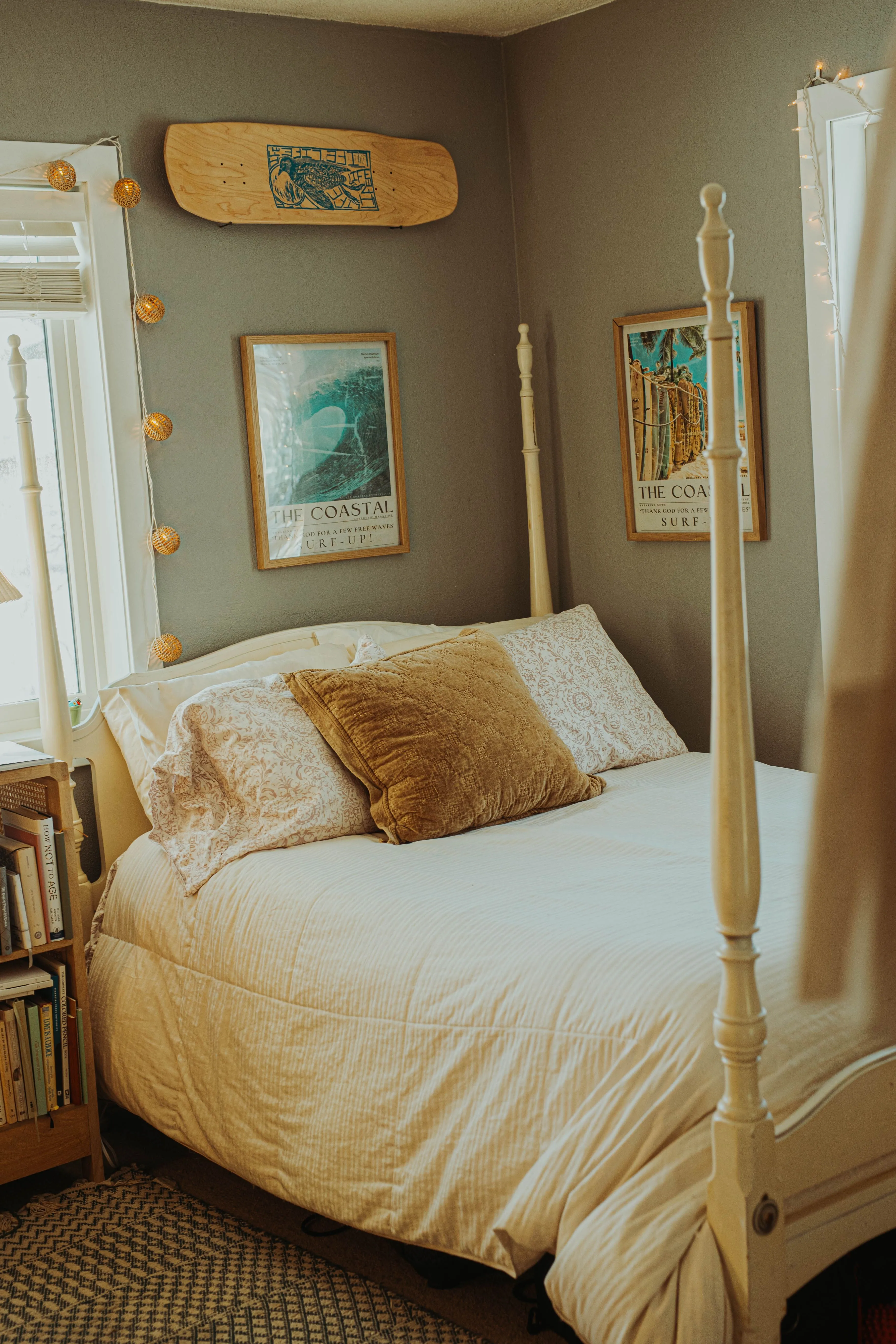
Phones charge where they charge because of where the socket happens to be, not because anyone decided. Move the whole setup to the hallway or the kitchen and a default becomes a choice, which is roughly what intentional living at home comes down to. The bedroom then has one job. Expect the first three nights to feel strange, and expect to buy a cheap alarm clock, since the phone alarm is the standard excuse for keeping it on the nightstand. The change tends to show up at the edges of sleep: the last twenty minutes before lights out, the first ten after waking. Both stop being scroll time by default.
Switch the main light for two lower lamps in the evening
The ceiling light is a blunt instrument. Two lamps at table or hip height, switched on around dusk with the overhead left off, change a room more than most furniture does. Warm lighting evening habits have some circadian logic behind them. In one small crossover study, two hours of evening exposure to blue-enriched 6500K light suppressed melatonin more than warmer 2500K and 3000K light at the same low intensity [3]. Sixteen young men took part, so what any given household gets from it is an open question. Bulbs labelled around 2700K are cheap, the lamps themselves can be secondhand, and none of it needs the landlord’s permission.
Cut the kitchen drawer down to daily tools
Kitchen drawers accumulate by ratchet: things go in, nothing comes out. Take everything onto the counter, put back only what got used in the past week, and box the remainder for a month. Most people find the honest daily list runs to eight or ten items. A wooden spoon, a decent knife, the peeler, the tongs. The gadget graveyard goes in the box, and after a month the box usually gets given away without ceremony. What you gain is a smaller daily search. Three or four rummages per meal disappear, and that friction is a big part of what makes cooking feel like admin.
Make one chair the reading chair and leave a book on it
A reading chair is any chair with a book left on the arm. The book is the whole mechanism. An empty chair reads as furniture. A chair with a paperback face-down on it reads as an invitation, and the gap between how often each gets used is wide. Keep a lamp within reach and the phone out of it. Some people add a blanket, which does more work than it sounds like, because being slightly cold is what sends anyone back to the sofa and the television. This is one of the cheapest slow living moves going, and it survives moving house, which most decorating does not.
Choose materials that show wear instead of hiding it
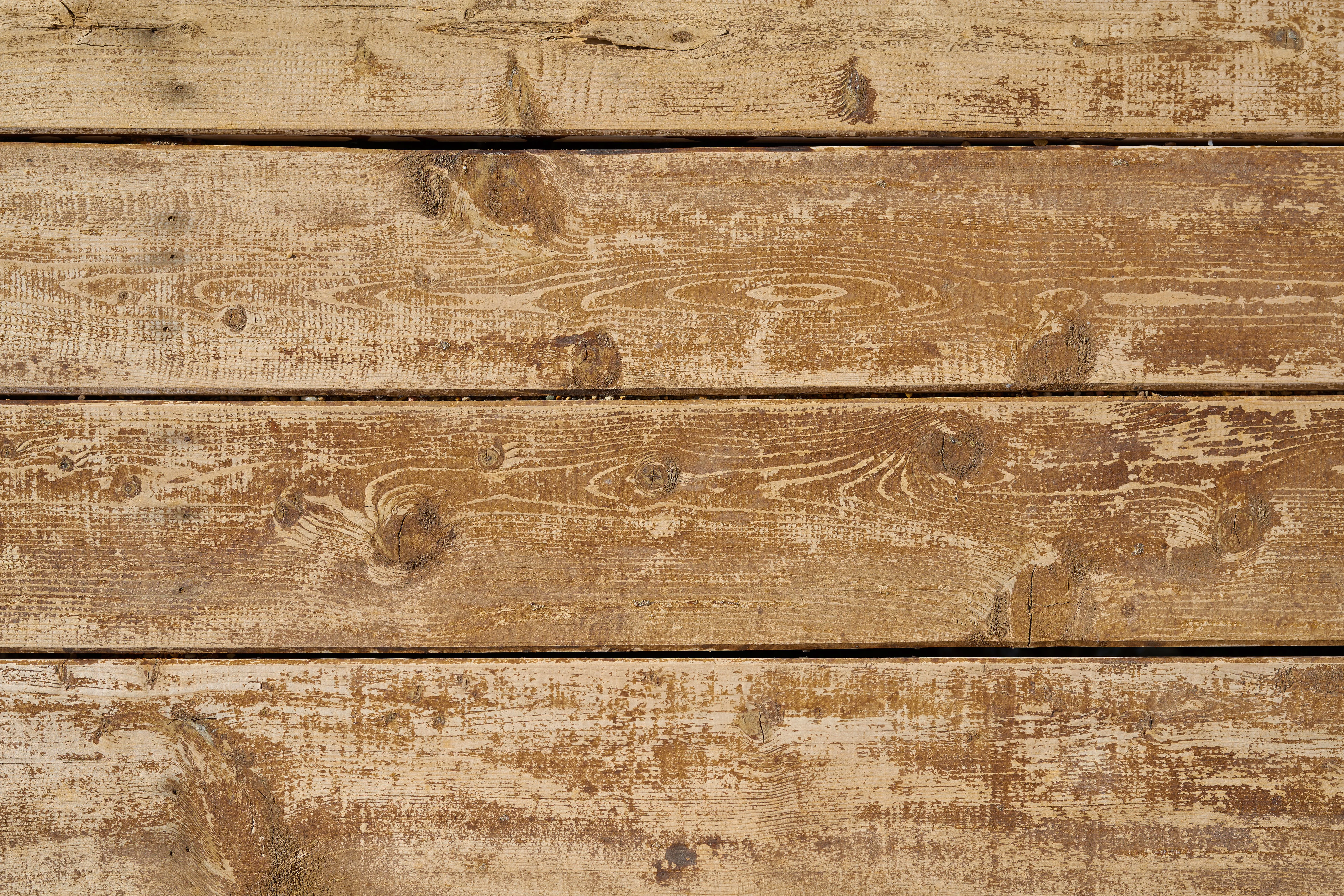
Materials that patina do a quiet favour: they stop the house being something to maintain. Wood that darkens, brass that dulls, linen that softens, unglazed clay that stains faintly with use. Every mark becomes evidence rather than damage. That is the practical core of wabi sabi interiors, stripped of the incense-and-poetry version, and it works best applied when something needs replacing anyway, not as an excuse to replace things early. When a chopping board or a mug finally gives up, the next one can be the kind that ages. High-gloss white demands daily attention to look intentional. Oiled oak looks better slightly neglected, which suits most actual lives.
Let one room stay unfinished on purpose
Some rooms want to stay half-done. The spare room with no curtains yet, the corner with the wrong rug. Leaving one space deliberately unfinished takes the pressure off everywhere else to perform, and it leaves somewhere for things to shift without a project attached. A calm home is rarely a completed one, since completion turns every later change into a decision with stakes. The trick is to name the room out loud as the unfinished one, ideally to whoever else lives there, so its state stops generating low-level guilt every time the door opens. Unfinished by agreement feels entirely different from unfinished by neglect.
Put slow tasks where you will see them, like a mending basket
Slow tasks lose to fast ones because fast ones are visible. A mending basket beside the reading chair, a bowl of shoes waiting for polish, a jar of seeds by the back door: the task exists once it has a location. Mending has a particular effect, since it quietly moves an object from the disposable category to the repairable one, and that reframing tends to spread to other things in the house. Keep the basket small enough that it cannot become a pile. Two or three items at a time. Once it is full it stops being a slow task and becomes a chore, and then everyone walks past it for eight months.
Build a tea or coffee corner that takes five minutes to use
A tea or coffee corner earns its keep only if using it takes about five minutes start to finish. Kettle, one tin, one pot or a small filter, two cups, all within arm’s reach on a single tray or shelf. Elaborate setups get used twice and then photographed. The five-minute ceiling is what lets the ritual survive an ordinary Tuesday. It helps to site it away from the main worktop, so making a drink never competes with dinner. There is nothing precious about the drink itself. The value sits in having one stretch of the day with a beginning, an end, and no screen in it.
Leave a window seat or sill clear for looking out of
Windowsills fill up. Plants, candles, a stack of things that had nowhere else to go, until the view becomes a view of the sill. Clear one window and keep it clear, and the eye gets somewhere to rest. Survey research in environmental psychology has linked natural content in the view from home, meaning trees and greenery rather than sky alone, with residents’ neighbourhood satisfaction and several aspects of wellbeing [4]. That work was correlational and drawn from low-rise apartment communities, so it describes an association rather than a lever to pull. A chair angled toward the glass still costs nothing, and a restorative environment mostly means one you look at rather than through.
None of this needs to scale into a philosophy. Eleven options, adopted one at a time, in whatever order suits the flat and the week. The one worth starting with is number two, keeping one surface permanently clear, because it takes four minutes and gives the fastest read on whether any of this changes how a room actually feels. If it does, the lamps come next. If it does not, you have lost four minutes and a stack of post. Slow living has an unfortunate habit of arriving as a shopping list, and the version that holds is closer to a set of small defaults that stop asking things of you. Keep whichever ones stick. Let the rest go quietly.
References
- (2011). Interactions of top-down and bottom-up mechanisms in human visual cortex. The Journal of Neuroscience. https://doi.org/10.1523/JNEUROSCI.3766-10.2011
- (2007). Measuring visual clutter. Journal of Vision. https://doi.org/10.1167/7.2.17
- (2011). Non-visual effects of light on melatonin, alertness and cognitive performance: can blue-enriched light keep us alert?. PLoS ONE. https://doi.org/10.1371/journal.pone.0016429
- (2001). The nature of the view from home: psychological benefits. Environment and Behavior. https://doi.org/10.1177/00139160121973115
The fire's still going.
Stoke another read →