12 Ways to Embrace a Cozy Apartment Lifestyle Alone

What's in this list
- 01The Sunday Morning Baking Ritual
- 02Creating a Comforting Solo Reading Corner
- 03The Mood Magic of Keeping Fresh Flowers
- 04Curating an Apartment Ambient Sound System
- 05Cooking Small-Batch Elevated Comfort Foods
- 06The Cozy Luxury of High-End Bath Towels
- 07Hosting Intimate Two-Person Dinner Parties
- 08Developing a Relaxing Post-Work Wardrobe Change
- 09The Therapeutic Value of Tending Plant Shelves
- 10Establishing Your Signature Apartment Evening Scent
- 11Designing an Inexpensive Home Tea Bar Station
- 12Embracing Quiet Mornings Prior to Screen Time
The smallest apartment in the building can be the warmest one on the floor. That has almost nothing to do with square footage and everything to do with what happens inside once the door shuts.
Solo apartment living usually gets treated as a waiting room, a placeholder until a partner shows up or a bigger lease comes through. It almost never gets treated as a skill. But the people who seem genuinely happy in their first one-bedroom are the ones who do treat it that way.
What follows is twelve habits that turn a rental into somewhere you actually want to be. Some are obvious. One of them, the evening scent ritual at number ten, has a stranger basis in how memory works than you’d guess, and it’s the one almost everybody skips. Stick around and you’ll see why a twelve-euro diffuser can do work a new sofa can’t.
The Sunday Morning Baking Ritual
Sunday is the easiest day to give yourself an anchor. One batch of scones or a small loaf fills the kitchen with warmth and gives the morning a shape your phone never will. Small batch cooking suits one person. You’re not committing to a sheet pan of muffins you’ll still be eating on Wednesday. Halve the recipe. Use the good butter. The point is the measuring, the smell of the oven coming up to temperature, twenty minutes of doing one thing with your hands. There’s a quiet pleasure in romanticizing life through repetition, and a weekly bake means the week starts on a soft edge instead of a scramble.
Creating a Comforting Solo Reading Corner
A chair, a lamp with a warm bulb, a small table for a mug. That’s the entire footprint, and it changes how a room feels. The trick is making it the most comfortable seat in the place, so sitting there feels like a reward rather than a task. Angle it away from the TV. Keep books within arm’s reach so picking one up takes zero effort. Apartment aesthetics usually get discussed in terms of what visitors will notice, but a reading corner is built for an audience of one. It says your attention is worth a dedicated place to land each evening.
The Mood Magic of Keeping Fresh Flowers
A single stem in a bottle counts. You don’t need a florist’s bouquet to get the lift flowers bring to a small space. Supermarket tulips, a few sprigs of eucalyptus, whatever is cheap and in season all works. Flowers come with a small obligation: the water change, the trimming of stems. That keeps you noticing your surroundings instead of drifting past them. They also mark time gently, opening and fading across a week, which gives an independent lifestyle a living calendar. Put them where you’ll actually see them, the kitchen counter or the desk, not the windowsill you never look at.
Curating an Apartment Ambient Sound System

Silence is great right up until it tips into loneliness. A decent sound setup gives you a dial to turn between the two. This doesn’t mean expensive speakers. One modest Bluetooth speaker placed centrally, a few saved playlists for different moods, and the habit of putting something on when you walk in, that alone changes the emotional temperature of a room. Jazz in the morning, focus music in the afternoon, rain sounds at night. Sound fills the corners a one-person home tends to leave echoing. You’re not drowning out the quiet. You’re choosing it, which feels entirely different from having it imposed on you.
Cooking Small-Batch Elevated Comfort Foods
Cooking for yourself is one of the clearest ways to feel in charge of your own days. Research on home cooking links it to a sense of food agency, the felt capacity to shape what you eat instead of defaulting to whatever’s fastest [1]. A scoping review of culinary programs found much the same thing: learning to cook tends to improve people’s confidence and independence around food [2]. None of this requires elaborate meals. One good bowl of pasta. A soup that covers two dinners. A properly seasoned omelet. Small batch cooking respects the reality of one mouth to feed while still treating that mouth as worth the effort. The autonomy is as much the point as the food.
The Cozy Luxury of High-End Bath Towels
Few upgrades give back this much per euro. You touch a towel every single day, often at a fairly low moment of the morning, and a plush, actually absorbent one registers as a small kindness. Testing outlets have written endlessly about thread weight and drying time, but the practical version is simpler: buy two towels you love instead of six you tolerate. Same logic for a soft robe and a bath mat that doesn’t feel like sandpaper. In solo apartment living, nobody else is going to upgrade these for you, which is exactly why doing it yourself lands as a deliberate act of care.
Hosting Intimate Two-Person Dinner Parties
A dinner party for one guest is the most underrated form of hosting. None of the logistical dread of a crowd, all of the warmth. One friend, one course you’ve actually practiced, a tablecloth that makes the meal an occasion. Cooking for someone in your own space is how you claim it as a place where life happens rather than somewhere you merely pass through. It also lets a small kitchen shine. Two people are easy to feed well off limited counter space. The scale is the appeal. A long conversation across a small table goes places a dinner for eight never reaches.
Developing a Relaxing Post-Work Wardrobe Change
Changing clothes when you get home is a small ceremony that tells your nervous system the workday is over. The specific garment matters far less than the consistency. Soft loungewear, a worn-in sweatshirt, slippers waiting by the door. Swapping out of work clothes draws a line between the part of the day you owe other people and the part that’s yours. If you now work in the same room you relax in, that boundary is doing double duty. The commute that used to mark the transition doesn’t exist anymore. Pick the change you look forward to, hang it somewhere you’ll reach for it, and let the gesture do its quiet signaling.
The Therapeutic Value of Tending Plant Shelves
Plants give a one-person home something to be responsible for that asks little and gives back steadily. A shelf of pothos, a snake plant in the corner, a herb or two on the kitchen sill. Tending them adds a gentle weekly rhythm, watering and turning them toward the light, and watching new growth appear is slow, reliable satisfaction. Greenery softens the hard lines of a rental and makes apartment aesthetics feel alive rather than staged. Start with the ones that tolerate neglect; the goal is a habit you can keep, not a second job. A windowsill that goes from bare to leafy over a few months quietly tracks the time you’ve spent making the place yours.
Establishing Your Signature Apartment Evening Scent
Scent attaches itself to states of mind faster than almost any other sense. Lab work on odor-associative learning suggests that a smell paired with a particular emotional or relaxed state can later, on its own, nudge behavior and perception in that same direction [3]. Animal studies of odor learning describe how fast and how durably the brain seems to bind a scent to the context it first met it in [4]. The practical upshot for a small space is appealing. Light the same candle, or run the same diffuser oil, only during your wind-down hour, and over a few weeks the scent starts cueing the calm on its own. Lavender, cedar, bergamot, whatever you like. Save it for evenings so the association stays clean instead of getting diluted across the whole day. This is the single cheapest lever in the entire cozy apartment lifestyle.
Designing an Inexpensive Home Tea Bar Station
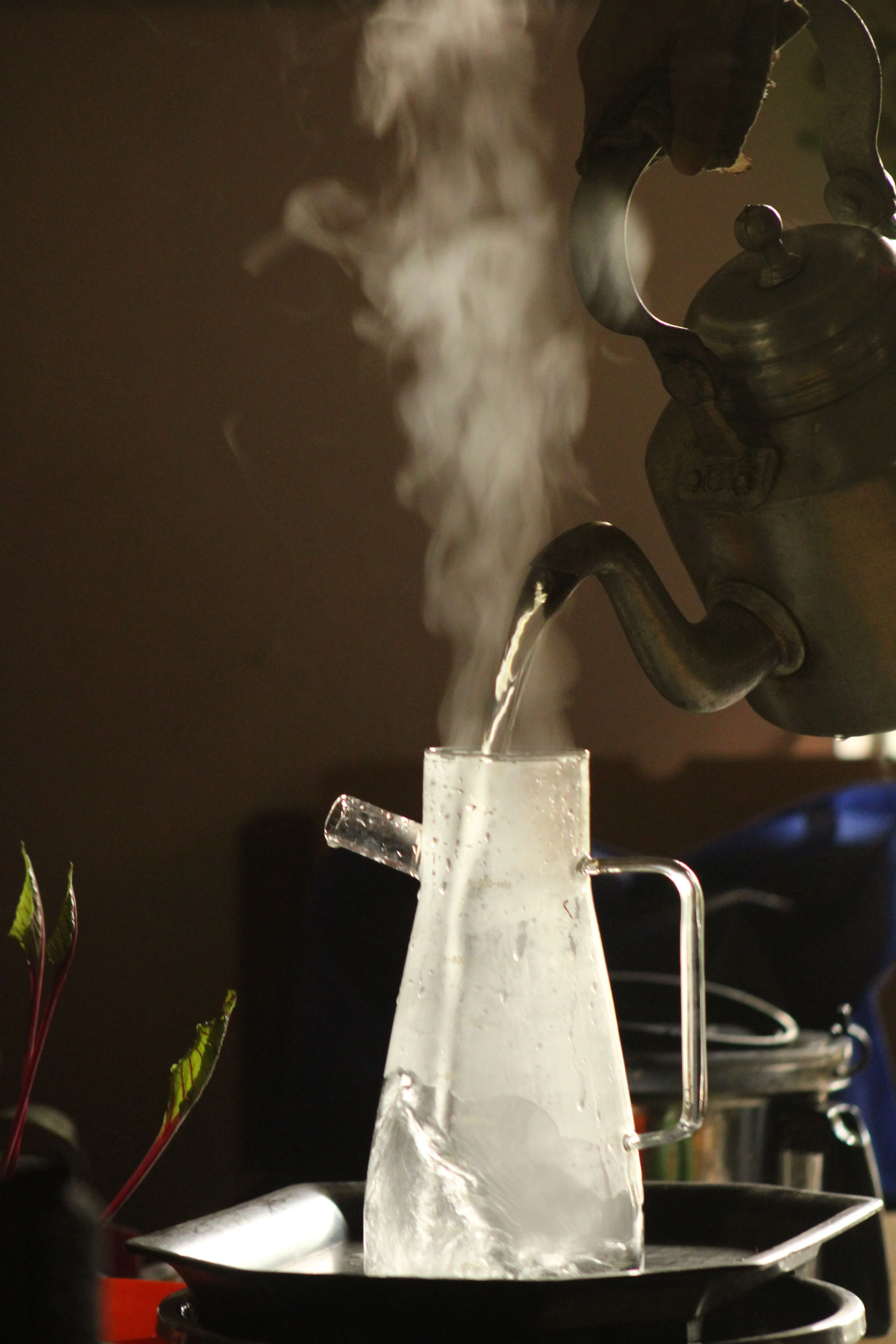
A tea bar is a corner of counter with a kettle, a few tins, and a mug you reach for on purpose. It costs almost nothing and pays out daily. Arrange the tins so choosing becomes part of the pleasure: a black tea for mornings, something herbal and caffeine-free for the hour before bed. Keeping it visible and tidy turns a passing habit into a small destination inside your own home. The same idea scales to coffee if that’s your drink. What matters is that a stretch of counter gets dedicated to a pause, a place you go to make something warm and stand still for as long as it takes to steep.
Embracing Quiet Mornings Prior to Screen Time
The first hour sets the tone, and handing it to a phone means handing the day to other people’s urgencies. Protecting a screen-free stretch at the start of the morning is one of the quieter luxuries of living alone, since nobody else is setting the agenda. Drink your tea by the window. Stretch. Let the room stay silent before the feeds start talking. Even fifteen unmediated minutes gives the rest of the day a calmer floor to stand on. The independent lifestyle has a real advantage here: full custody of your own mornings. Spending that first hour deliberately is a way of romanticizing life that asks for nothing but restraint.
None of these twelve habits needs a renovation or a bigger budget. They need attention, which is the one resource a solo dweller has in abundance. Start with whichever sounds least like a chore. Maybe it’s the Sunday bake. Maybe it’s the tea bar. Maybe it’s finally buying the towels you keep talking yourself out of.
The evening scent ritual at number ten is the one I’d push a friend to try first. It works on you whether or not you’re paying attention, and it costs about as much as a decent coffee. Build a few of these into your weeks and the apartment stops being the place you wait in. It becomes the place you come home to, in the full sense of that phrase. A small home, tended on purpose, is its own kind of company.
References
- (2017). Empowered to cook: The crucial role of 'food agency' in making meals. Appetite. https://doi.org/10.1016/j.appet.2017.05.017
- (2025). From kitchen to health: how culinary workshops influence eating habits, autonomy, and wellbeing in adults - A scoping review. Frontiers in Nutrition. https://doi.org/10.3389/fnut.2025.1653406
- (2004). Changing odor hedonic perception through emotional associations in humans. International Journal of Comparative Psychology. https://escholarship.org/uc/item/121733s7
- (2009). The basolateral amygdala is necessary for the encoding and the expression of odor memory. Learning & Memory. https://doi.org/10.1101/lm.1316909
The fire's still going.
Stoke another read →