6 Evening Rituals for a Relaxing Home Atmosphere
What's in this list
- 01The Blurred Lines of Remote Work
- 02The 6 PM Lighting Transition Rule
- 03Scent Cues to Signal the End of Work
- 04Closing the Laptop and Hiding Work Tools
- 05Playing Transitional Evening Soundscapes
- 06The Quick Reset of the Main Desk Surface
Your couch sits twelve feet from your desk. Your bedroom shares a wall with the room where you took six video calls today. When the office and the home are the same four walls, your brain never gets word that the shift has ended.
That blur costs you. People who work from home report more trouble switching off at night, and some of that is architectural. The cues that used to close a workday, the commute, the elevator, the door shutting behind you, are just gone.
Willpower won’t fix this. Staging will. Small signals from your surroundings, delivered in the right order, can do the disconnecting for you. The sixth ritual on this list is a sixty-second desk reset, and it often beats any candle or playlist. The other five are what make it work.
The Blurred Lines of Remote Work
When the commute vanished, a quiet piece of mental infrastructure went with it. The drive home, the walk to the train, the act of physically leaving, all of it worked as a buffer that let the workday close behind you. Take it away and the laptop sits glowing at the edge of your vision at 9pm, a standing invitation to check one more thing.
Remote work boundaries are hard because nothing outside you enforces them anymore. The same room holds the spreadsheet and the wind-down. Your nervous system keeps reading the space as on-duty.
You can rebuild boundaries out of sensory cues instead of geography, though. A shift in light, a scent, a sound, each one works as a small gate. Stack a few into a short evening transition and you give your brain the structure the missing commute used to supply. The rituals below run roughly in the order an evening actually unfolds, from the last hour of daylight to the moment you stop.
The 6 PM Lighting Transition Rule

Light is the main signal for your internal clock, and most home offices get it exactly backwards: bright overhead fixtures blazing right up to bedtime. Research on evening light exposure found that ordinary room light before bed suppressed melatonin in nearly everyone tested and pushed back when the hormone kicked in, which shortens the body’s internal night [1]. Dimmer evenings let that signal arrive on time, and that seems to be part of how light helps line up circadian rhythms and cut the time it takes to fall asleep.
The practical version is one of the simplest lighting tricks there is. Once the sun drops, kill the ceiling light. Move to lamps at eye level or lower, warm bulbs, low output. A single dimmable lamp on a smart plug set to fade at six does the job without you thinking about it.
The drop in brightness becomes a marker. Your eyes clock the room cooling down, and the evening transition begins before you’ve consciously decided to relax.
Scent Cues to Signal the End of Work
Smell has a direct line to the parts of the brain that handle memory and emotion, which makes it unusually good at tagging a moment. Studies on odor-based context-dependent memory show that a scent present during an experience can later help the brain get back to that context, and that distinctive or unexpected odors work best as cues [2][3]. You can run that in reverse: give one scent to the end of the workday and let your brain learn to pair it with the line between work and rest.
Pick something you never smell during the day. Cedar, bergamot, a particular incense. Light it or diffuse it only at clock-off time, every evening, so the pairing sticks.
Within a week or two the scent stops being decoration and turns into a switch. It tells your nervous system, through a channel words can’t reach, that the working part of the day is done. That kind of mental disconnect is exactly what most wfh wellness routines leave out.
Closing the Laptop and Hiding Work Tools

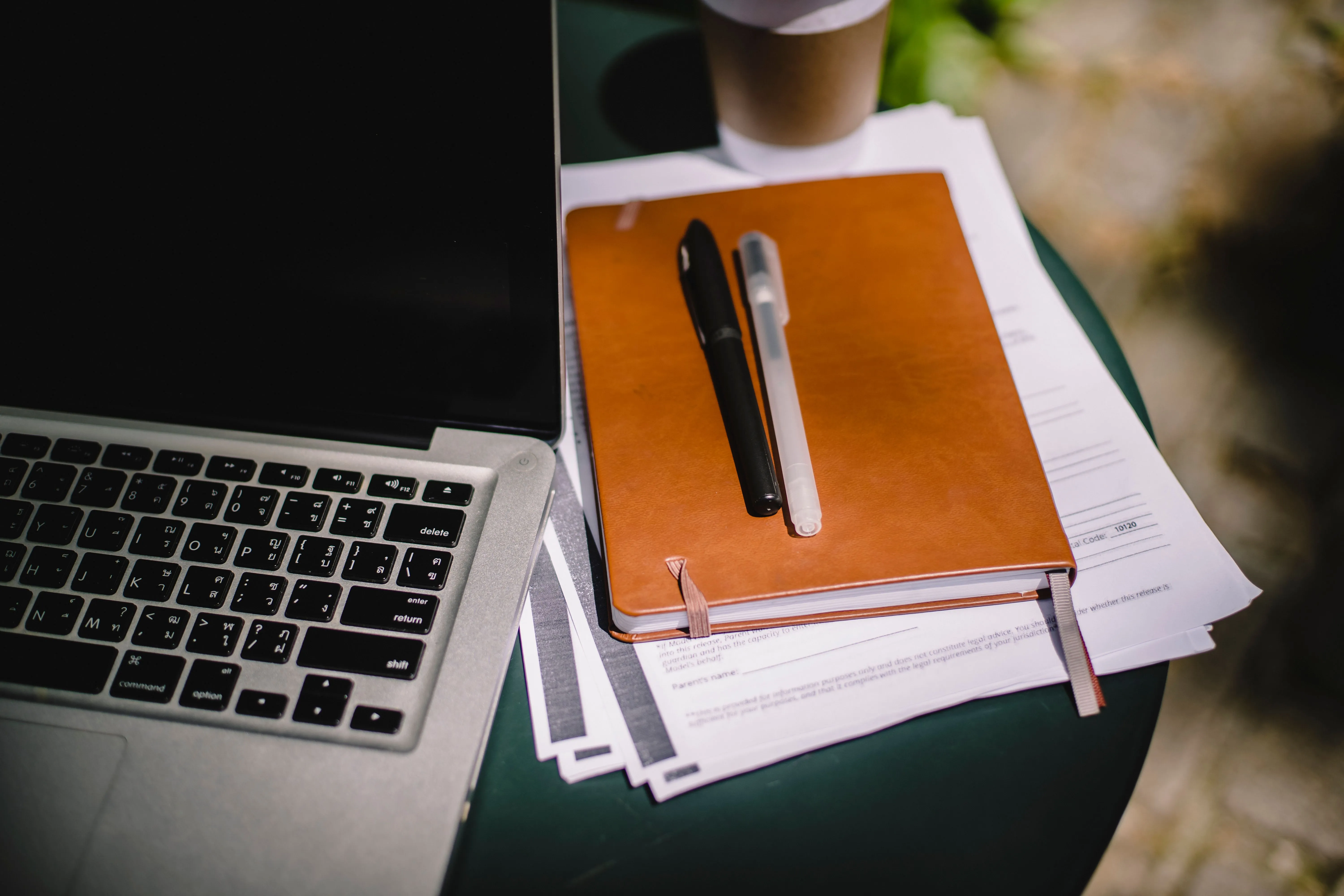
An open laptop is a to-do list that never shuts up. Dark screen, muted notifications, doesn’t matter. It sits there as a visual prompt, and visual prompts pull your attention whether you want them to or not. The most effective boundary move is also the most literal: close the machine and put it somewhere you can’t see it.
A drawer, a cupboard, a laptop bag by the door, a cloth over the monitor. Anything that gets the thing out of your line of sight so it stops broadcasting.
The rest of the kit goes too. Notebooks, the second screen, the work phone, the headset. Once they’re tidied away, they take their silent demands with them. What’s left is a room that reads as a home again, rather than an office with a sofa in it. If you’re serious about remote work boundaries, this is the ritual that turns the abstract idea of logging off into something your hands actually do.
Playing Transitional Evening Soundscapes
Sound fills a room faster than any other cue, and the soundtrack of a workday is usually either silence broken by notifications or the low hum of focus. Swap it out and the whole space clocks the change at once.
Think of it as a deliberate handoff. As the laptop closes, start something that belongs to the evening and never to work: a particular ambient album, a low instrumental playlist, the kind of thing you’d never put on during a deadline. Rain. A quiet record. Distant café noise.
Used the same way each night, it becomes another gate in the evening transition, the audio version of the lighting fade. The trick is keeping this music away from your working hours so it carries no link to tasks. When the room sounds different, you feel different in it, and the mental disconnect gets a nudge from a sense that takes no effort at all to engage.
The Quick Reset of the Main Desk Surface
Here’s the ritual most people skip, and the one that quietly holds everything else together. Before you walk away, spend sixty seconds clearing the main desk surface. Cups to the kitchen, papers squared into a pile, cables looped, the day’s debris gone.
This isn’t deep cleaning. It’s a closing gesture, the home-office version of pushing your chair in and turning off the light. A clear surface in the morning greets you as a fresh start. A clear surface at night says the work is set down, not paused mid-sentence.
It compounds, too. The reset only takes a minute because the lighting has already dimmed, the work tools are already going away, and the scent and sound have already shifted the room’s mood. Each earlier ritual feeds this one. Done nightly, the quick reset turns the end of work from a vague drift into a defined act, which is the whole point of building a relaxing home atmosphere in the first place.
None of this is heavy lifting. The 6 PM lighting transition is one lamp on a timer. The scent cue is a diffuser you only switch on after hours. The desk reset is sixty seconds. What makes them work is sequence and repetition, not effort. Run in order, they rebuild the buffer the vanished commute used to give you and hand your nervous system a clear set of signals that the workday is over.
Start with one. Most people find the lighting shift easiest, since it can run on autopilot. Add the others as they stick. Within a couple of weeks the room stops feeling like an office that happens to have a bed in it, and the evening starts arriving on time. The boundary you couldn’t hold by willpower turns out to be one you can stage instead.
References
- (2011). Exposure to Room Light before Bedtime Suppresses Melatonin Onset and Shortens Melatonin Duration in Humans. The Journal of Clinical Endocrinology & Metabolism. https://doi.org/10.1210/jc.2010-2098
- (1997). The effects of cue distinctiveness on odor-based context-dependent memory. Memory & Cognition. https://doi.org/10.3758/BF03211293
- (2022). Odor-based context-dependent memory: influence of olfactory cues on declarative and nondeclarative memory indices. Learning & Memory. https://doi.org/10.1101/lm.053562.121
The fire's still going.
Stoke another read →