6 ways to a calmer, stress free home
What's in this list
- 01Why a stress free home starts with one clear surface
- 02Pull back the curtains before you reach for a lamp
- 03Keep one plant you can actually keep alive
- 04Give every wandering item a home by the door
- 05Quiet the visual noise your eyes keep snagging on
- 06The five-minute reset that beats the annual purge
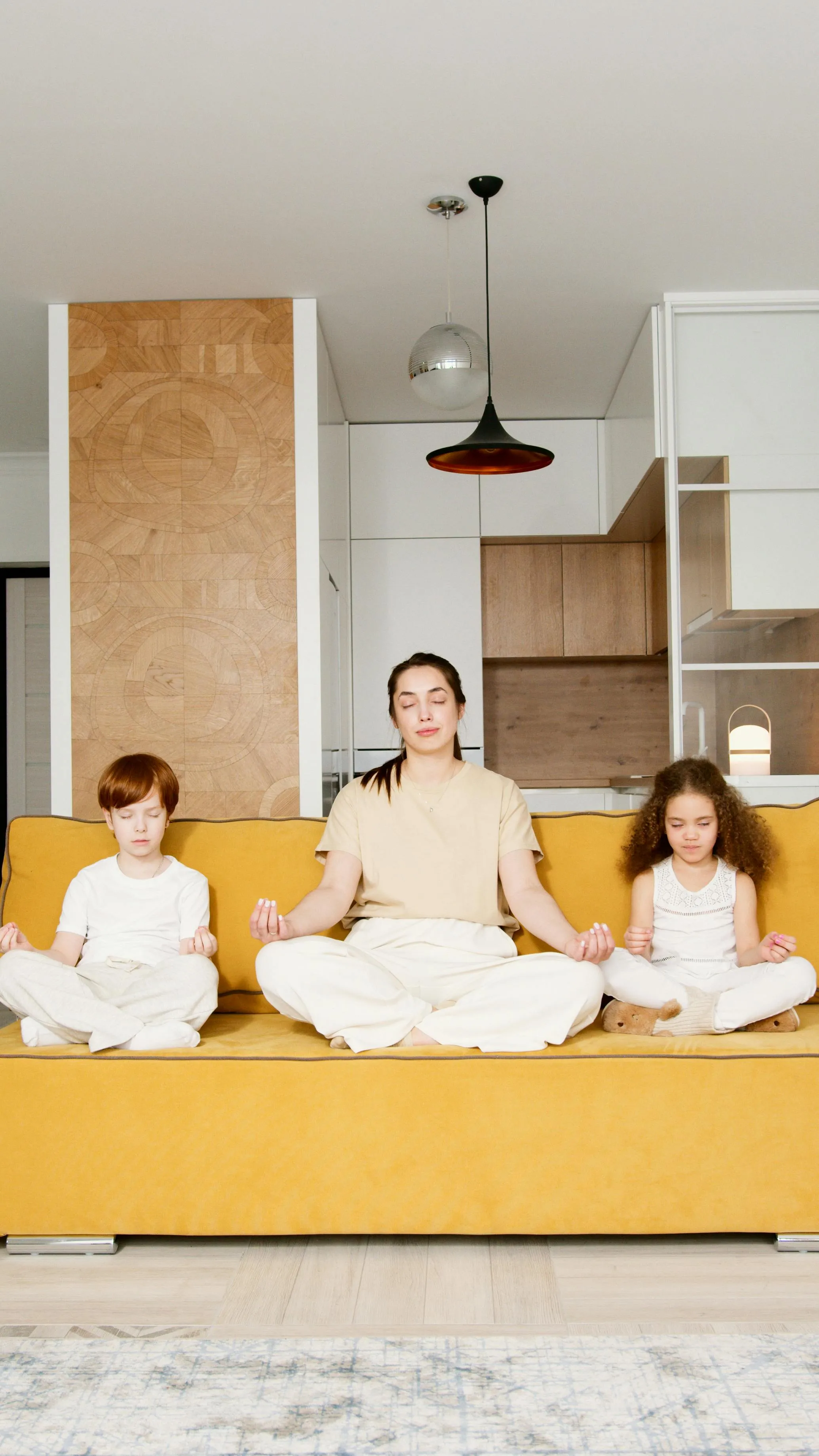
The dishes can wait. The pile of mail can wait. What sets off your nervous system isn’t usually the size of the mess, it’s how much of it sits in your line of sight. In a small study of dual-income couples, the women who described their homes with words like cluttered or unfinished stayed stressed across the day, while the ones who used restful language showed a healthier cortisol rhythm [1]. Nobody renovated anything. The difference was perception, and perception you can shift in an afternoon. The six small changes below lower the daily friction of living somewhere. None of them need a contractor, a budget, or a free weekend. One takes about five minutes a day and tends to outperform the dramatic declutter people try once a year and abandon by February. It’s the last one, and it’s the one most people skip.
Why a stress free home starts with one clear surface
When a place feels chaotic, the instinct is to fix all of it at once, which is why the effort usually collapses by Sunday night. A kinder starting point is a single visible surface, the kitchen counter or the coffee table, cleared and kept that way. The reason this works lies in how the brain handles a room. Multiple objects in view compete for limited attention, so a crowded sightline can tax you before you’ve consciously noticed it [2]. There’s also some evidence that the way people describe their homes, cluttered versus restful, tracks with their daily stress-hormone patterns, though the study was small and correlational [1]. A tidy home, in this sense, just means a few surfaces the eye can rest on. One reliably clear counter is enough to begin.
Pull back the curtains before you reach for a lamp
Daylight quietly resets your internal clock, and most homes have more of it than gets used. Before flipping on a lamp in the morning, open the blinds. The bright, blue-rich light helps anchor your sense of day and night. In one pilot study, office workers with more daylight at their desks slept longer and reported better wellbeing than colleagues in windowless rooms [4]. The sample was small, so treat it as suggestive rather than settled. Even so, moving a desk or a favorite chair toward a window costs nothing, and it nudges a calm home into existence one bright morning at a time.
Keep one plant you can actually keep alive

One houseplant won’t transform a room, but tending it appears to do something measurable. In a small randomized study, young adults who spent a few minutes transplanting a plant had lower physiological stress markers and reported feeling more relaxed than after a screen-based task [3]. The participants were all young men and the task was brief, so the result is modest. What probably carries into ordinary life is the repeated contact: watering, turning the pot toward the light, noticing new growth. Pick something forgiving like a pothos or a snake plant, so it becomes a small ritual instead of another thing wilting on the windowsill and adding to the guilt pile.
Give every wandering item a home by the door
Most daily friction comes from a handful of objects that never got an address: keys, the charging cable that wanders off every evening. Give each one a fixed spot near the door and you remove dozens of small decisions from the day. The point is practical, not decorative. Fewer little searches to run between waking and leaving. It may also feed the perception researchers tie to lower stress, the sense that a space is finished rather than perpetually mid-project [1]. A hook by the door, or a shallow bowl on the side table, is usually all you need. The setup takes about ten minutes, then works on its own to reduce home stress every morning after.
Quiet the visual noise your eyes keep snagging on
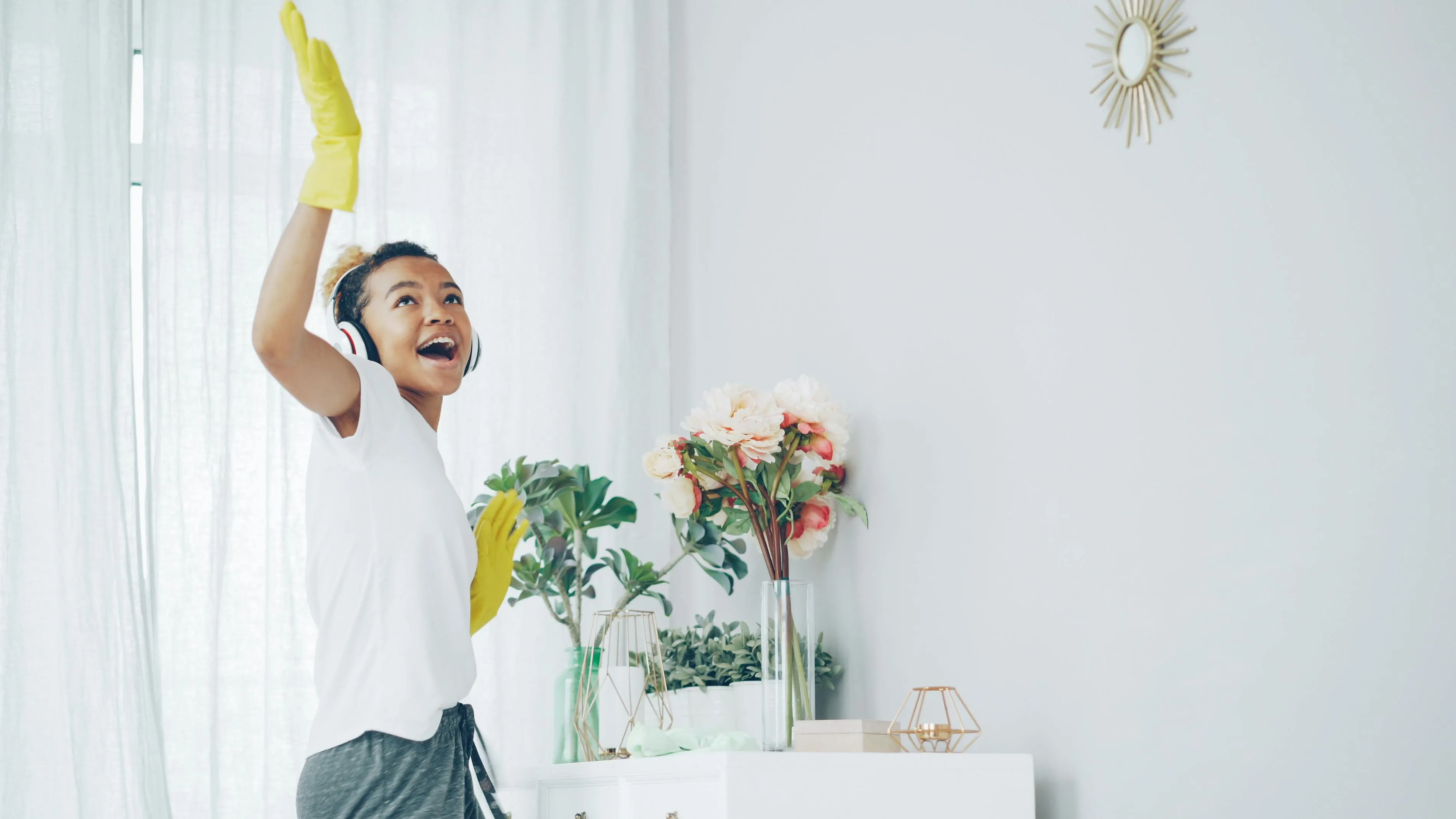
A clean room can still feel busy if the eye keeps catching on things: a tangle of cords, a counter lined with appliances, a fridge papered in old receipts. Objects in view compete for the same limited attention, so this low-grade busyness sits in the background of how settled a space feels [2]. Taming it is cheap. Bundle the cords or run them behind furniture. Move rarely used appliances into a cabinet. Strip half the paper off the fridge door. None of it counts as deep cleaning. It’s closer to editing the sightlines, trimming what your eyes have to sort through, so the room reads as restful before you’ve done anything dramatic to it.
The five-minute reset that beats the annual purge
Here’s the one most people skip. Instead of the once-a-year purge that swallows a weekend and rarely sticks, do a five-minute reset at the same time each day. Set a timer, move through the main room, and put the day’s drift back where it belongs. No sorting. No agonizing over what to keep. Just returning what already has a place. The annual overhaul tends to fail because it treats mess as an event. Daily life treats it as a tide. A short, repeatable reset matches that rhythm, and because the room never drifts far from baseline, the dread that usually precedes cleaning never has time to build. Five minutes most days will outperform five hours once a year.
If you take only one idea from this list, make it the five-minute reset in number six. The other five set the stage: clearer surfaces, more daylight, a plant worth keeping, a fixed spot by the door for the things that wander, fewer snags for the eye. The daily reset is what holds it together once the initial motivation fades. None of this asks you to renovate or live like a minimalist. A calm home grows from a few low-effort habits repeated often, not from a single heroic overhaul. Start with whichever change feels easiest this week, keep it small enough to survive a bad day, and let the others follow when they’re ready. The goal was never a flawless room. It was a space that asks a little less of you each time you walk through the door.
References
- (2010). No Place Like Home: Home Tours Correlate With Daily Patterns of Mood and Cortisol. Personality and Social Psychology Bulletin. https://doi.org/10.1177/0146167209352864
- (2011). Interactions of Top-Down and Bottom-Up Mechanisms in Human Visual Cortex. Journal of Neuroscience. https://doi.org/10.1523/JNEUROSCI.3766-10.2011
- (2015). Interaction with indoor plants may reduce psychological and physiological stress by suppressing autonomic nervous system activity in young adults: a randomized crossover study. Journal of Physiological Anthropology. https://doi.org/10.1186/s40101-015-0060-8
- (2014). Impact of Windows and Daylight Exposure on Overall Health and Sleep Quality of Office Workers: A Case-Control Pilot Study. Journal of Clinical Sleep Medicine. https://doi.org/10.5664/jcsm.3780
The fire's still going.
Stoke another read →