8 Lighting Tips for Comfortable Living Ideas

What's in this list
- 01Banning the Main Center Overhead Bulb
- 02The Strategy of Low-Level Table Lamps
- 03Using Smart Bulbs for Warm Sunset Shifts
- 04The Beauty of Indirect Under-Cabinet Lighting
- 05Choosing the Right Warm Kelvins Rating
- 06Using Fabric Shades to Diffuse Sharp Light
- 07Adding Accent Lights Behind Television Screens
- 08Maximizing Soft Daylight via Strategic Mirrors
The headache usually starts in the same spot, just above your eyebrows. You blame the screen. Or the long day. Or the coffee you forgot to drink. The light overhead almost never gets blamed, even though it usually should.
Most rooms run on one bright point stuck to the ceiling. Hard shadows, dim corners, and pupils working overtime to keep up. The fix is rarely a brighter bulb. It’s softer light, placed lower, split across more sources.
That’s the thread running through these comfortable living ideas: layered lighting that meets your eyes gently instead of all at once. Some are obvious once you hear them. One sits behind your television and catches almost everyone off guard, so stick around for tip #7.
Banning the Main Center Overhead Bulb
A single fixture in the middle of the ceiling is the most common setup there is, and one of the least flattering. It throws light straight down, carving shadows under faces and leaving the edges of the room dim. Your eyes keep readjusting between the bright pool under the bulb and the dark around it. That constant readjustment is a big part of what tired eyes feel like by nine at night.
Switch it off. Hand its job to several smaller sources scattered around the room. That’s the foundation of layered lighting: floor lamps in the corners, a couple of table lamps at eye level, maybe a sconce on the wall. Brightness gets spread out, so no single point dominates. The room ends up evenly lit, the transitions soften, and you lose the top-down glare that makes a space feel like a waiting room.
The Strategy of Low-Level Table Lamps
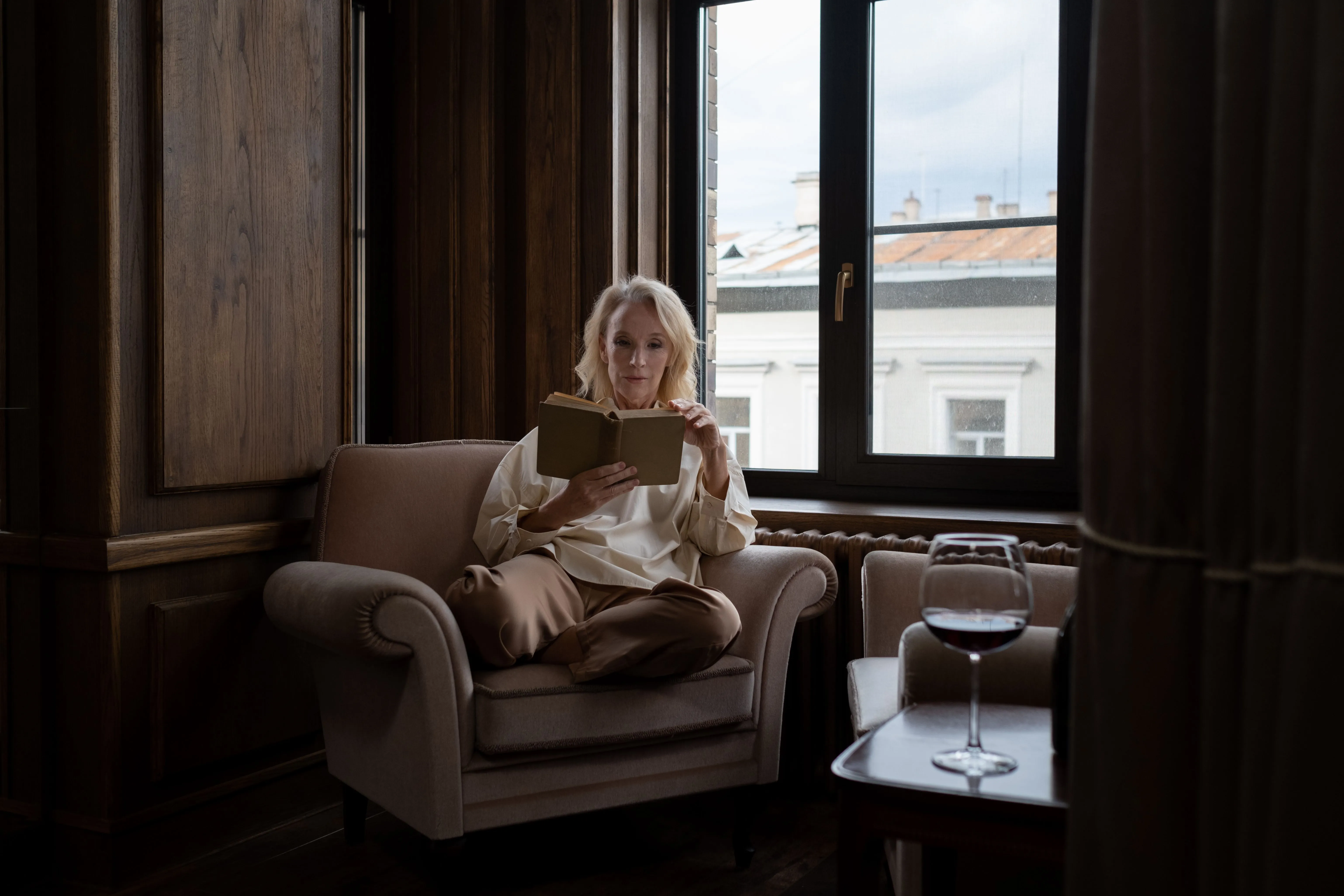
Lamps at table or desk height pull the center of brightness down to where you actually live, closer to your hands and your book than to the ceiling. The brightest part of the room stays out of your direct line of sight, which cuts the glare that makes eyes water and ache.
Two or three modest lamps almost always beat one powerful ceiling light. The total light splits into gentle pools instead of one blinding source.
There’s a practical bonus. Low lamps let you light only the corner you’re using. Reading in one chair shouldn’t mean flooding the whole room. Put them slightly behind or beside your seat so the bulb stays hidden and only the warm spill reaches your page. You get calmer, more controllable home illumination that you can dial up or down just by flicking lamps on and off as the evening goes on.
Using Smart Bulbs for Warm Sunset Shifts
Smart bulbs earn their keep by shifting color temperature through the day without you touching a switch. Cooler, brighter light in the morning supports alertness. A slow drift toward warm amber in the evening tells your body the day is winding down.
Studies on color temperature and mood tend to point the same way: warm correlated color temperatures around 3000K seem to leave people feeling more comfortable and relaxed, and warm, dimmed light has been linked to lower measured stress markers in lab settings [1][3]. Program your bulbs to slide toward those tones a couple of hours before bed, and the effect builds into your routine on its own.
The appeal is how little effort it takes. Set the schedule once, and the lights handle the transition while you cook dinner or fold laundry. Most systems let you group rooms too, so the whole home eases into a softer mood together rather than one lamp at a time.
The Beauty of Indirect Under-Cabinet Lighting
Kitchens are notorious for harsh overhead light bouncing off countertops and glossy cabinet doors straight into your eyes. Under-cabinet strips fix this by hiding the source and letting indirect light wash down onto the work surface. The bulb tucks beneath the cabinet lip, so you see the glow on the counter instead of the glare of the diode.
That’s much easier to look at for long stretches, which matters when you’re chopping vegetables or squinting at a recipe at the end of a tiring day.
It adds a useful layer, too. Even with the main kitchen lights off, a strip of warm under-cabinet lighting gives you enough to find a glass of water at night without the shock of a bright ceiling panel. LED strips run cool and sip electricity, so leaving them on as gentle ambient light costs next to nothing.
Choosing the Right Warm Kelvins Rating
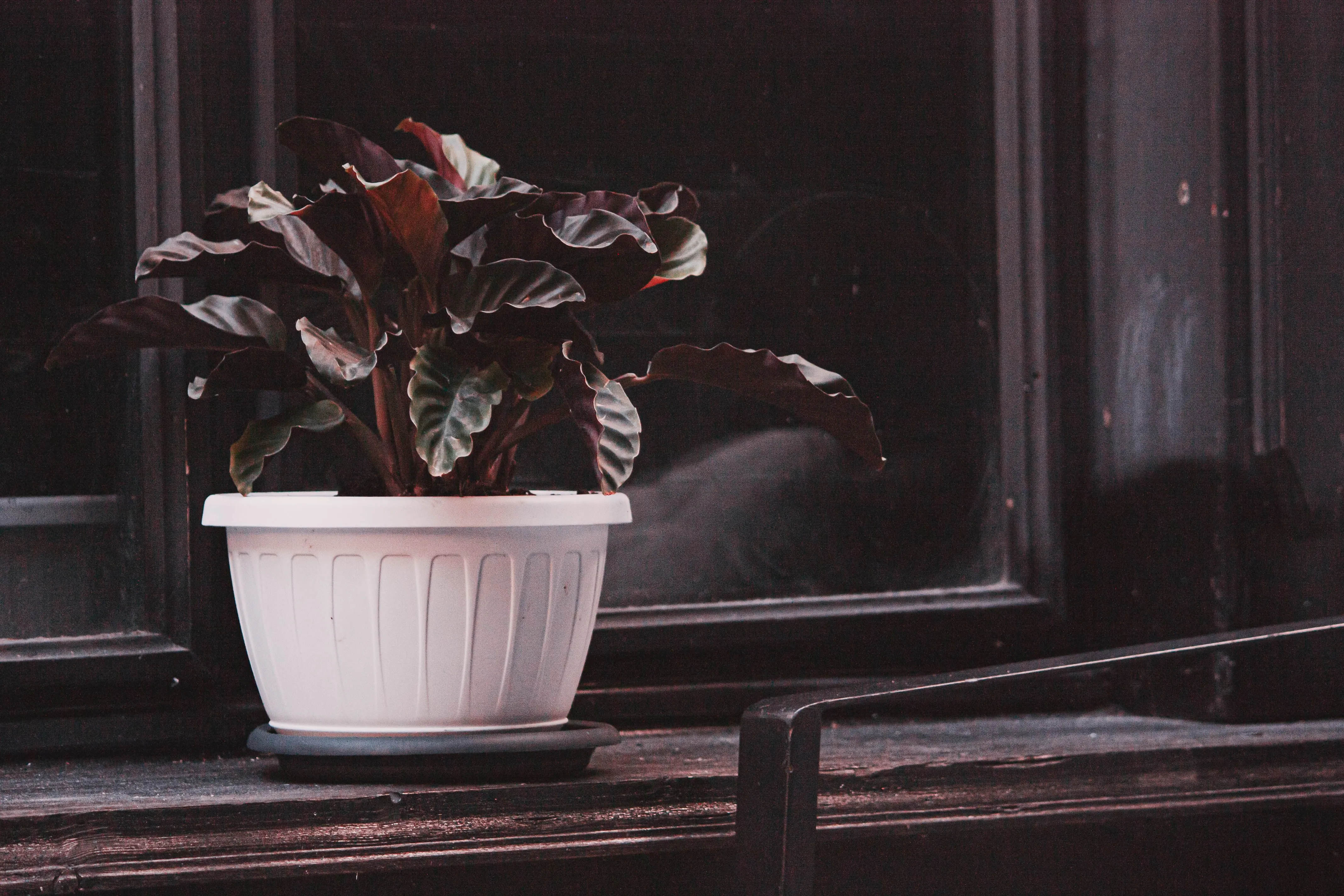
Color temperature, measured in Kelvin, decides whether a bulb feels like candlelight or a hospital corridor. For living spaces where you unwind in the evening, warm kelvin bulbs in the 2700K to 3000K range are the comfortable choice. They mimic the amber glow of a low sun.
Mood is only part of it. Light between 2700K and 3000K is associated with the kind of relaxation that echoes sunset light, and experimental work found warm tones around 3000K rated most comfortable and relaxing by participants [1]. Cooler bulbs above 4000K, all that bluish white, push the other way toward alertness. Handy in a home office. Wrong for a bedroom.
When you shop, check the box for the Kelvin number instead of trusting the word on the front. Manufacturers label warmth inconsistently, and a bulb sold as soft white in one brand can read noticeably cooler than the same name elsewhere.
Using Fabric Shades to Diffuse Sharp Light
A bare bulb is a tiny, intensely bright point, and your eye reads it as glare even from across the room. Wrap it in a fabric shade and the same light spreads over a much larger, dimmer surface. The bulb’s output doesn’t change, but the brightness your eye catches at any single spot drops sharply. That’s why shaded lamps feel so much gentler than exposed fixtures.
Lighter, looser-weave fabrics let more light through and cast a soft overall glow. Denser or darker shades focus the beam downward for reading. Linen and cotton in cream or off-white keep the warmth of the bulb intact rather than tinting it.
If a lamp still feels harsh, a slightly larger shade or a lower-wattage bulb usually settles it. You want light you can sit beside without squinting, and a good shade does most of that work for you.
Adding Accent Lights Behind Television Screens
A bright screen glowing in an otherwise dark room is about the harshest thing you can ask your eyes to handle. Your pupils try to settle for the darkness around them while a blazing rectangle sits dead center. That mismatch drives much of the fatigue people feel after a long viewing session.
Bias lighting, a soft strip behind the screen glowing against the wall, narrows the gap. Lifting the light around the display eases the extreme contrast your eyes are wrestling with, and research on luminance contrast and visual fatigue backs the link between gentler screen-to-surround ratios and reduced eye strain in dim conditions [2][4].
A warm white strip taped to the back edge of a TV or monitor, set low, does it. It doesn’t shine on the screen itself, so picture quality holds while the wall behind stops being a black void. Of everything here, this is the small fix that surprises people most for how much steadier their eyes feel afterward.
Maximizing Soft Daylight via Strategic Mirrors
Daylight is the most comfortable light there is, and you can stretch whatever little of it a room gets by putting mirrors where they’ll catch and bounce it. A mirror opposite or perpendicular to a window throws sunlight deeper into the space, brightening dim corners without adding a single watt.
The trick is angle. Position the glass so it reflects the window or a bright wall rather than a dark doorway, and the room gains a wash of soft, even daylight that no bulb quite replicates.
This is the cheapest tip on the list and one of the most effective for eye strain relief during the day, since natural light spread across a room is far kinder than a lamp fighting against gloom. Larger mirrors move more light, but even a modest one near a window lifts the whole space. Pale walls and glossy surfaces amplify it, passing the borrowed daylight from one surface to the next.
None of this asks for a renovation. Going from a single overhead bulb to scattered, warm, low-level sources is mostly a matter of moving lamps you already own and swapping a few bulbs for warmer ones.
Start with whichever room gives you the most trouble. Usually it’s the one where you read, work, or watch a screen after dark.
If you try only one thing, make it the accent light behind your television from tip #7. The contrast it fixes is doing more quiet damage to your eyes than almost anything else in the room. From there, layer outward: a shaded lamp here, an under-cabinet strip there, a mirror catching the afternoon.
Comfortable rooms are rarely the brightest ones. They’re the ones where the light meets you softly, from several directions at once, and never asks your eyes to flinch.
References
- (2022). Effect of Color Temperature and Illuminance on Psychology, Physiology, and Productivity: An Experimental Study. Energies. https://doi.org/10.3390/en15124477
- (2021). Study on the Effects of Display Color Mode and Luminance Contrast on Visual Fatigue. IEEE Access. https://doi.org/10.1109/ACCESS.2021.3061770
- (2025). The impact of color correlated temperature and illuminance levels of office lighting on stress and cognitive restoration. Journal of Environmental Psychology. https://doi.org/10.1016/j.jenvp.2025.102589
- (2008). Effects of Ambient Illumination, Luminance Contrast, and Stimulus Type on Subjective Preference of VDT Target and Background Color Combinations. Perceptual and Motor Skills. https://doi.org/10.2466/pms.107.2.336-352
The fire's still going.
Stoke another read →