Checklist
A Decluttering Checklist for ADHD That Actually Sticks
Five-minute bursts, three boxes, and one line that quietly decides whether the pile ever leaves your hallway.
Draws on the executive function and body doubling studies listed below.
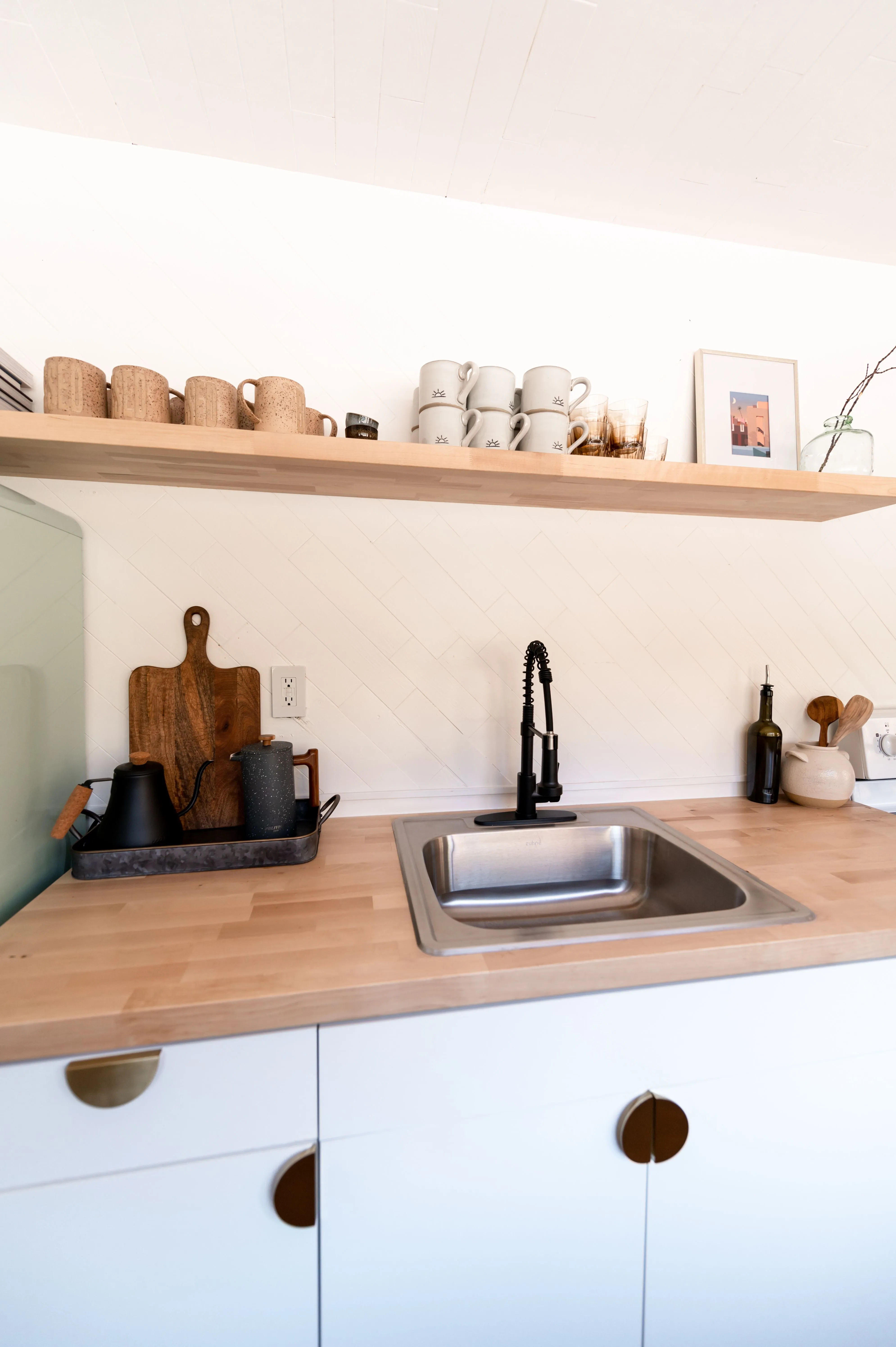
Most decluttering advice assumes the hard part is deciding what to throw out. For a lot of people with ADHD, the hard part already happened forty minutes earlier, at the moment standing up didn’t happen. Task initiation stalls. The room reads as one big undifferentiated problem. The whole job gets pushed to a Saturday that never arrives. So this list works backwards from the stall. Small zones. Timers that end things. Ten seconds per decision, maximum. One line on it looks like filler and does more work than the rest put together.
How to use this decluttering checklist with ADHD

Search “decluttering checklist adhd” and most of what comes back starts with a category. Every book. Every wardrobe. That scale is what produces the overwhelm, because holding a whole room in working memory is the expensive part, the bit usually filed under executive dysfunction. Meta-analytic reviews comparing people with and without ADHD report medium-sized differences on measures like inhibition and working memory, though they also warn those differences are neither universal nor specific to ADHD [1][2]. What that leaves you with is unglamorous: shrink the zone until it fits in one glance, and pick the finish line before you touch anything.
Three boxes, three decisions
Decision paralysis is a sorting problem more than a willpower problem. Give a brain four categories plus a maybe pile and every object becomes a small research project. Three containers and a ten-second cap turn it into a reflex. The ten seconds matter more than the labels do. Whatever is still in your hand after that is usually sentimental, and sentimental things need their own session, on a day with more patience in the tank.
Bring in a body double

Body doubling means working next to someone who is not helping you. They do their thing, you do yours. Surveys of neurodivergent adults found people were using it long before anyone gave it a name, mostly to get started and to stay with the task once they had [3][4]. That research describes what people report rather than testing it against a control group, so body doubling is best treated as widely reported and promising rather than proven. Trying it on one drawer costs you nothing.
Get the donation pile out the door
Bags that stay in the flat get reopened, and reopening undoes the sorting. The second pass is worse than the first, because the decision budget is already spent. What you want to kill is the gap between deciding and dropping off. A booked collection works. So does a boot loaded the same evening, while the sorting still feels finished.
Build a rhythm you can keep
Maintenance fails when it runs on remembering. Hang the burst on something already fixed in the day and the remembering disappears: the kettle going on, the end of a work call, the laptop closing. A visible streak pulls its weight too. Ticking off a done day hands you a small dopamine hit at exactly the point where the task hands you none, which is why a calendar on the wall usually beats a mental note. The line doing the heavy lifting is the one about stopping when the timer rings, drawer still half sorted. Ending on time with work visibly left over is what makes tomorrow’s five minutes feel startable. Marathon sessions buy you one impressive Saturday and three months of avoidance after it.
Run one zone. Then put the list down.
28 things, in 5 groups
How to use this decluttering checklist with ADHD
-
Stopping on time keeps tomorrow's session cheap to start. Emptying the drawer is not today's job.
-
Music you already know fades into the background. A new album turns into the activity itself.
Three boxes, three decisions
-
Easier to answer than 'might I need this someday', a question with no wrong answer and therefore no end.
-
Still sealed in six months tells you what you actually needed, with no second round of decisions.
Bring in a body double
-
You want someone in the room, not someone checking your work. They should have their own task going.
Get the donation pile out the door
-
Cupboards and lofts turn donation piles into permanent residents.
-
Listing and posting it costs more attention than the item will ever pay back.
Build a rhythm you can keep
-
The mark on the wall is the reward the task itself never gives you.
-
Picking the next zone in advance removes the decision that usually stops the next session before it starts.
References
- (2005). Validity of the executive function theory of attention-deficit/hyperactivity disorder: a meta-analytic review. Biological Psychiatry. https://doi.org/10.1016/j.biopsych.2005.02.006
- (2005). Executive functioning in adult ADHD: a meta-analytic review. Psychological Medicine. https://doi.org/10.1017/S003329170500499X
- (2024). "It Was Something I Naturally Found Worked and Heard About Later": An Investigation of Body Doubling with Neurodivergent Participants. ACM Transactions on Accessible Computing. https://doi.org/10.1145/3689648
- (2023). Proposing Body Doubling as a Continuum of Space/Time and Mutuality: An Investigation with Neurodivergent Participants. Proceedings of the 25th International ACM SIGACCESS Conference on Computers and Accessibility (ASSETS '23). https://doi.org/10.1145/3597638.3614486
The fire's still going.
Stoke another read →