Comparison
Blackout Curtains or Blinds: Which Darkens a Room Best?
The fabric is almost never the problem. Something else in your window frame is leaking the light that wakes you at five.
Draws on the window-covering and light-exposure studies listed below.
What's in this list
- 01Blackout curtains or blinds: where the light actually gets in
- 02The insulation numbers are less flattering to curtains than the catalogues suggest
- 03What a nursery asks of a window that a living room does not
- 04Where the money goes, and the mistake that wastes it
- 05Dust, noise, and living with the thing for a decade
| Dimension | Blackout curtains (lined or coated panels on a rod or track) | Blackout blinds (roller or cellular shades in the frame) |
|---|---|---|
| Total darkness | Panels hang proud of the reveal, so light gets out over the heading, around the leading edges and through the centre join. Going wider and longer than the frame helps but rarely closes it. | Mounted in or over the frame, so the leak is a thin outline rather than a spill. Side channels and a cassette head shrink it to almost nothing, for extra money. |
| Winter warmth | Adds a fabric layer and a pocket of still air. Whole house testing found lined curtains often did less than the models predicted, largely because they seal poorly at the reveal. | Sits tight to the reveal and tracked closer to predicted values in the same testing. Cellular types trap air in the honeycomb by design. |
| Price and fitting | Off the shelf panels and a rod cost little and go up in an evening. Sizing is forgiving, since oversized beats exact. | Usually made to measure for each window, with drilling into the frame or reveal. Millimetre errors show up as stripes of light. |
| Sound | Heavy fabric in deep folds soaks up some reflected sound and takes the hard edge off a bare room. Traffic rumble still arrives through the glass. | Thin, flat and tight to the pane, so very little absorption. Cellular versions do slightly more than rollers. |
| Cleaning | Many linings machine wash fine, though coated blackout fabric can crack in a hot wash. Panels collect dust, pollen and pet hair. | A damp cloth handles it. Foam backed roller fabric creases permanently if it rolls crooked or gets folded. |
| Look and room fit | Softens a hard room and hides an unattractive frame. Works over a radiator only if the panels stop above it. | Keeps the sill and window seat usable and suits small or awkward openings. Looks plain rather than cosy. |
The verdict
For a nursery or a shift worker's bedroom, fit a blackout blind inside the reveal with side channels. It wins on darkness because it closes the gap rather than thickening the cloth. Curtains are the better single choice in almost every other room of the house.
- Blackout curtains (lined or coated panels on a rod or track) suits
- Living rooms, spare rooms and adult bedrooms where softness, warmth and a low bill matter more than absolute darkness, and where the window frame needs hiding.
- Blackout blinds (roller or cellular shades in the frame) suits
- Anyone chasing real darkness: daytime sleepers, east facing bedrooms, nursery naps, and windows with a radiator or a seat underneath.
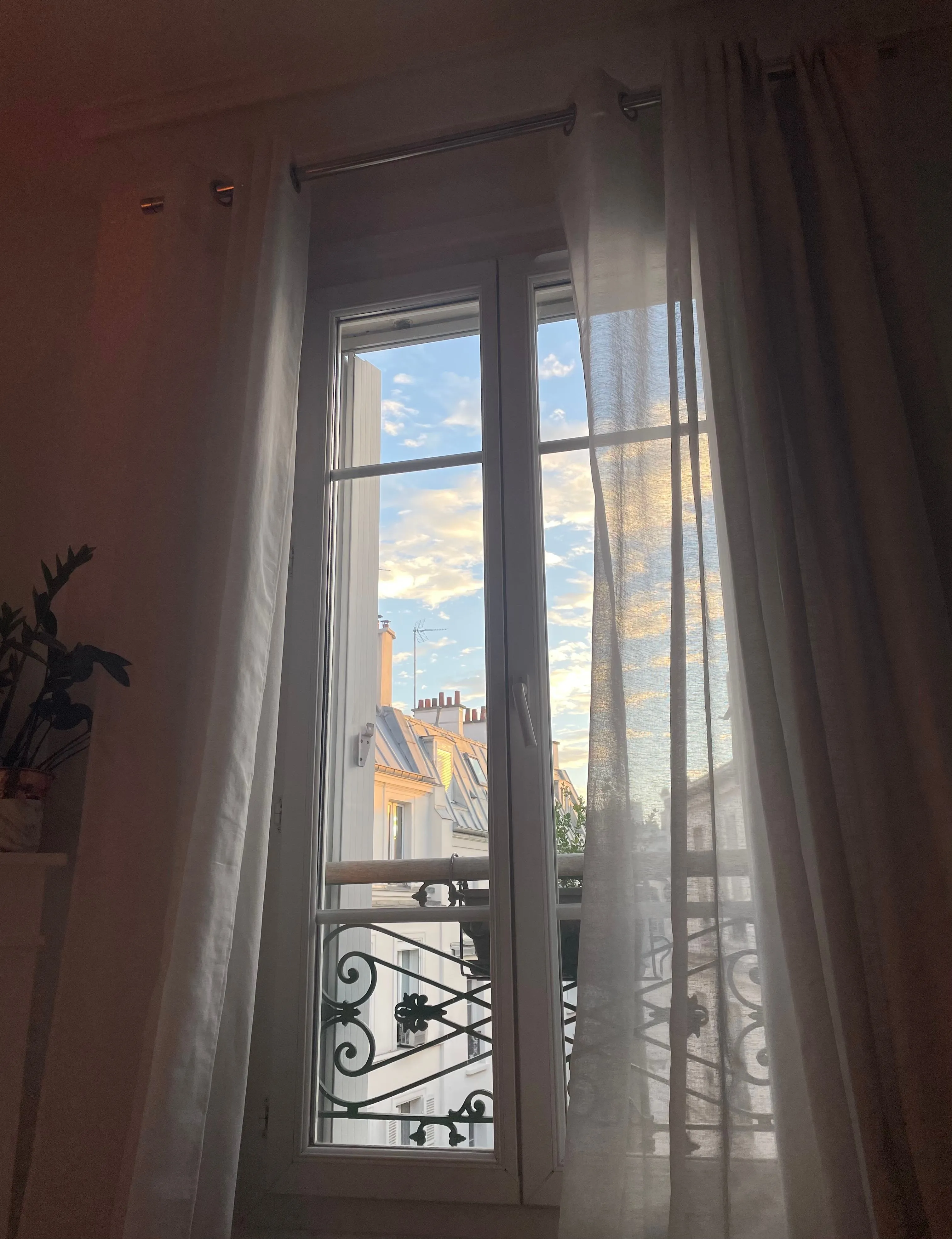
Hold a blackout panel up against the window on a bright morning and almost nothing comes through the cloth. Hang that same panel on a rod, step back, and the room still glows.
That gap between the two is where the money usually gets misspent. The fabric is the easy part. Both blackout curtains and blackout blinds can be made from material that stops essentially everything hitting it. The difference comes down to the few centimetres of air around the edges, and curtains and blinds treat that space in completely different ways.
Blackout curtains or blinds: where the light actually gets in
Light blocking percentages get measured on the cloth itself, in a lab, with nothing around the edges. Work on shading fabrics found that the measured optical properties often disagreed with what suppliers published, and that one headline transmittance figure tells you little about how a fabric behaves as the sun swings round [3]. A stated 99 per cent is worth less than it sounds, and it says nothing at all about the light gap running down the side of a curtain panel.
The geometry is what decides it. A curtain hangs a few centimetres off the glass, on a rod that stands clear of the wall again. Daylight coming into the reveal gets out over the heading, around the leading edges, and through the vertical join where the two panels meet. A blind fitted inside the reveal reduces all of that to a thin outline, and channels down each side shrink the outline further. Room darkening is an assembly job long before it is a fabric job.
For a bedroom the published target is under 1 lux of melanopic equivalent daylight illuminance at the eye [4]. A clear morning outdoors runs past 10,000 lux. Leak a couple of per cent of the window area and you are still nowhere near that 1 lux.
The insulation numbers are less flattering to curtains than the catalogues suggest
Thermal insulation is the other reason people buy either of these, and the evidence here points somewhere fairly specific. A whole house test facility with single-glazed sash windows measured heat flow through covered and uncovered panes, using lined curtains in the bedrooms and roller blinds in the kitchen and bathroom. Both cut heat flux. The interesting bit was the mismatch: the curtained rooms showed the widest gap between what the performance guidance predicted and what the sensors actually recorded, while the blinds landed closer to expectation [1]. The authors point out that these separations sit within measurement error, so treat the direction as a hint rather than a settled result.
The mechanism, at least, is well characterised. Hot box testing of a cloth curtain over single glazing found the U value came out about 19 per cent better with the curtain edges sealed against the frame than with them hanging loose [2]. Trapped still air does the insulating, and trapped air needs an enclosure to sit in. A curtain that gapes at the sides and vents warm air over the top never encloses anything.
One more detail from the same house testing is worth taking to the shops with you: where a radiator sat directly under the window, heat loss through that pane went up sharply [1]. Full length curtains draped over a radiator make it worse still, because they funnel warm air straight onto cold glass.
What a nursery asks of a window that a living room does not

Young children seem to react to light more strongly than adults do. One study of preschool aged children exposed to light in the hour before bed found melatonin suppression averaging around 78 per cent even in the dimmest band tested, roughly 5 to 40 lux, and staying high across every brighter band [5]. That is a small sample, it looked at evening exposure rather than naps, and it is one piece of evidence rather than a rule. Read cautiously, it still suggests a nursery has less room for a stray glow than a spare bedroom does.
Shift worker sleep is harder again. Going to bed at ten in the morning means the light beyond the pane is two or three orders of magnitude brighter than the streetlamp a night sleeper contends with, and every gap scales with it. A curtain arrangement that looks perfectly dark at midnight can be hopeless at nine.
In both rooms the answer is about where the thing is mounted. A blind inside the reveal with side channels, or an outside mount blind that overlaps the frame generously on all four sides, handles the geometry a rod cannot. If the room also needs to feel warm and soft, hang curtains over the blind. They cost little, and they cost nothing in darkness.
Where the money goes, and the mistake that wastes it
A pair of ready made blackout curtains and a rod costs about what a takeaway does, and the sizing is forgiving, because bigger is simply better. Made to measure blackout blinds cost more per window and the tolerance is brutal: cut two millimetres narrow and you have a permanent stripe of light.
The wasted money nearly always goes on fabric grade rather than fit. Upgrading from a three pass lining to something heavier improves a number that was already close to its ceiling. The same spend on side channels, a cassette head, or a wall mounted track that wraps back to the wall goes after the part of the system that is actually leaking.
Before you order, measure the depth of the reveal, since an inside mount blind needs somewhere to live. Check whether the window opens inwards, which rules out most inside mounts. Look at where the sill projects, because that is where an outside mount blind will hang short. Renters with limited drilling rights usually do better with an outside mount roller on the wall above the frame than with a curtain track, since it covers more area from a single pair of brackets.
Dust, noise, and living with the thing for a decade
Noise reduction is the most oversold claim in this whole category. Fabric mass and deep folds do soak up some reflected sound, which is why a curtained room sounds calmer than a bare one. Low frequency traffic rumble travels through the glass and the frame, and a textile hanging in front of it barely registers. If road noise is your actual problem, the fix is glazing or seals. Cellular blinds do marginally more than rollers thanks to the trapped air, and marginally is the right word.
Upkeep splits cleanly. Coated blackout linings hate hot washes and tumble dryers, and the coating cracks along fold lines when it gets mishandled, which puts pinholes through the exact layer you paid for. Curtains also collect dust, pollen and animal hair in a way a vertical vinyl surface does not. Blinds wipe down in a minute, though foam backed roller fabric takes a crease permanently if it winds crooked, and a creased roller sits away from the channel and lets light past.
Over ten years, the curtain is the thing that gets washed twice and replaced once. The blind either keeps rolling straight or starts annoying you.
So: pick the blind if the person sleeping in that room needs it genuinely dark. A baby napping at two in the afternoon, someone whose shift finishes at seven in the morning, anyone with an east facing window and no patience for a four o’clock sunrise. Fit it inside the reveal, add the side channels, and accept that this is where the budget goes.
Pick curtains everywhere else, where warmth, softness and hiding an awkward frame matter more than the last few lux.
And if the budget stretches, layer them. A blind against the glass deals with the light gap and the thermal insulation; curtains over the top deal with the look and the acoustics. Measure the reveal depth first, though, because that one number decides which half of this you can even have.
References
- (2017). The thermal performance of window coverings in a whole house test facility with single-glazed sash windows. Energy Efficiency. https://doi.org/10.1007/s12053-017-9529-0
- (2001). A study of the U-factor of a window with a cloth curtain. Applied Thermal Engineering. https://doi.org/10.1016/S1359-4311(00)00071-5
- (2016). Estimating detailed optical properties of window shades from basic available data and modeling implications on daylighting and visual comfort. Energy and Buildings. https://doi.org/10.1016/j.enbuild.2016.05.038
- (2022). Recommendations for daytime, evening, and nighttime indoor light exposure to best support physiology, sleep, and wakefulness in healthy adults. PLOS Biology. https://doi.org/10.1371/journal.pbio.3001571
- (2022). High sensitivity of melatonin suppression response to evening light in preschool-aged children. Journal of Pineal Research. https://doi.org/10.1111/jpi.12780
The fire's still going.
Stoke another read →