Questions answered
How Long Can a Dog Be Left Alone at Home? Answers by Age
A four-month puppy and a twelve-year-old dog run on completely different clocks, and one common rule gets both wrong.
Draws on the behavioural and welfare studies listed below.
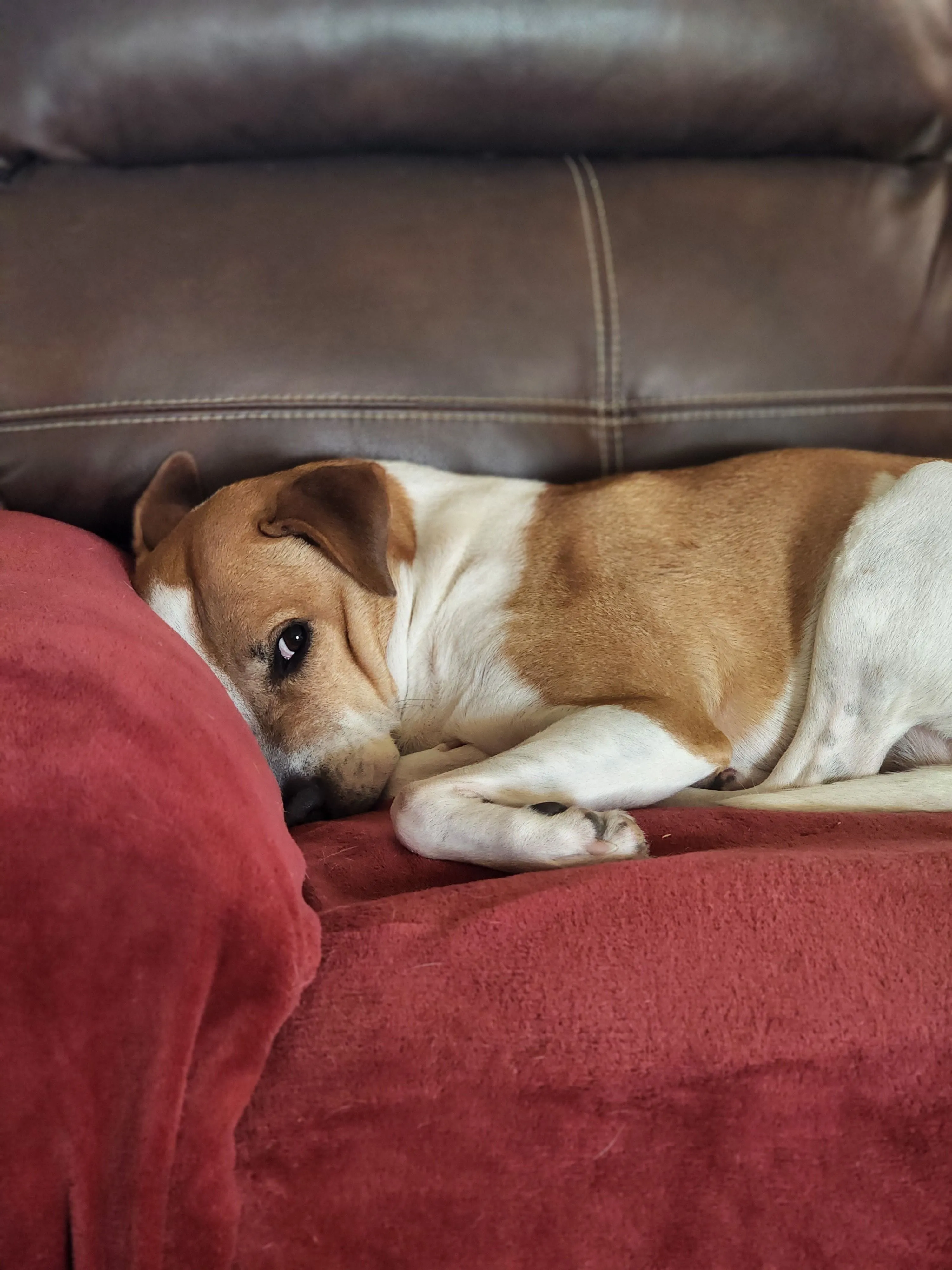
A dog asleep on the sofa when you leave is not the same as a dog who is fine being left. From the doorway they look identical. The difference only shows up in what the dog does the moment you walk back in.
Ask how long can a dog be left alone at home and most owners reach for a single number. Eight hours. Six. Whatever the internet said. The honest answer moves with the animal in front of you: its age, its bladder, its temperament, and how it learned to be by itself in the first place. A puppy and a senior are running on clocks that barely overlap. Get the number wrong and the cost is rarely dramatic. It is slow, quiet, and easy to miss until the accidents or the chewed doorframe start.
Here is how the timing actually breaks down, stage by stage.
How long can a dog be left alone at home in a single stretch?
For a healthy, house-trained adult, four to six hours sits well within comfortable territory. Many dogs handle up to eight when the rest of their day supports it: a good walk beforehand, water available, and a routine they can predict.
That upper figure is a ceiling, not a target. It assumes an adult with normal bladder control and no anxiety around being left. A dog who paces, howls, or destroys things in your absence is telling you the number is lower for them, whatever the average says. Age pulls it in hard at both ends of life. And the quality of the time matters as much as the length. A dog left with a full bladder and nothing to do at hour three is worse off than one left calm and empty at hour five.
How long can a puppy be left alone based on its age in months?
The rule of thumb owners pass around is one hour per month of age. A two-month puppy, about two hours. A four-month puppy, about four. It tops out near six to eight hours once the dog is grown.
The biology behind it is real enough. Puppies are not born with voluntary bladder control. The muscles and nerves that hold urine develop over the first several months, and most dogs reach reliable control somewhere around four to six months [1]. Before that, a young puppy simply cannot hold on the way an adult can, and punishing house soiling that the dog is not yet equipped to prevent tends to make things worse.
Treat the hour-per-month figure as a starting estimate, not a promise. Small breeds carry smaller bladders and often need more frequent breaks. A puppy schedule built around consistent, frequent trips outside does more for house training than any clever trick, and it lays the groundwork for the dog learning to settle alone.
Is it really okay to leave an adult dog alone for eight hours every workday?
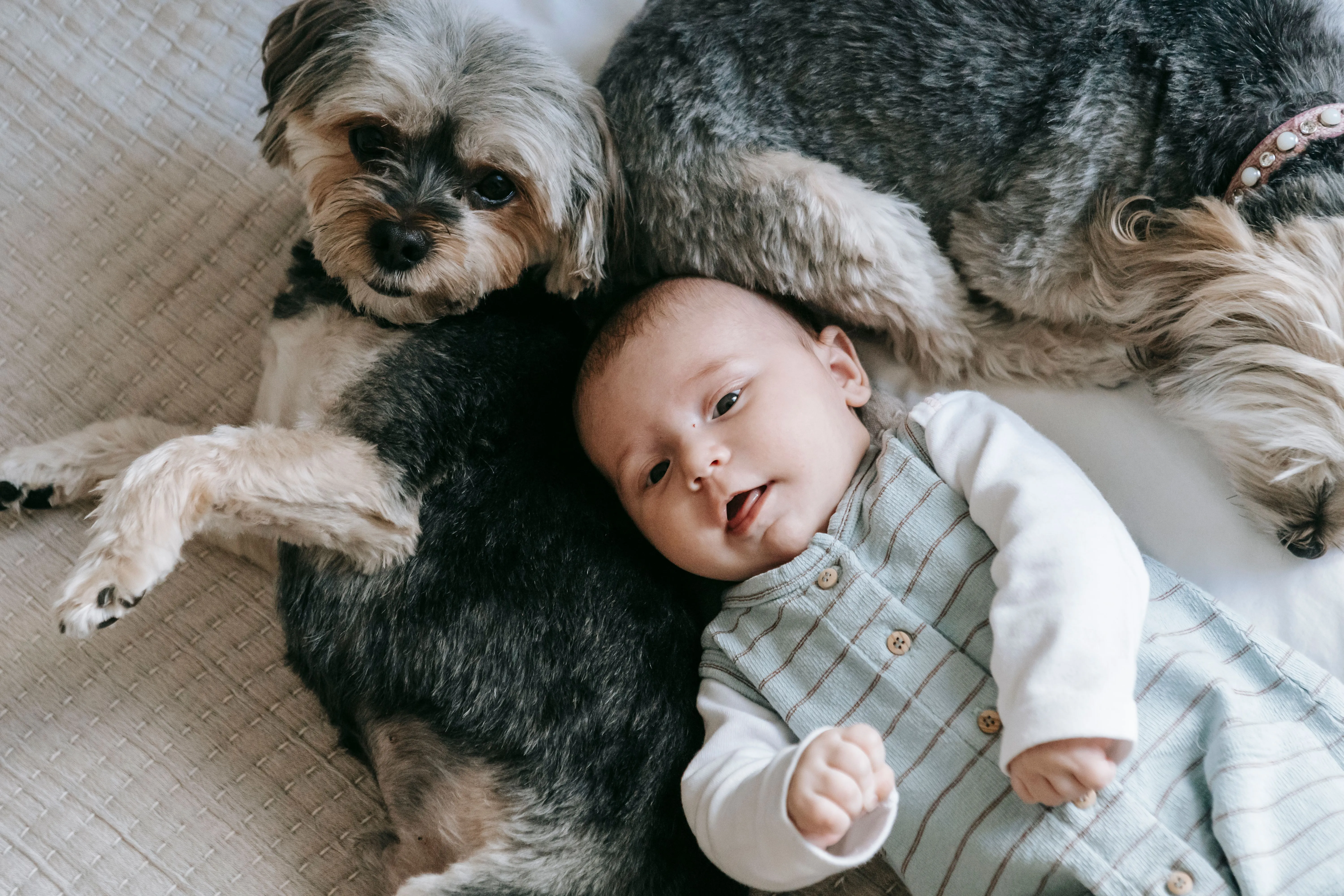
The six-to-eight-hour figure gets cited so often it can start to feel like a guarantee. It is closer to an outer boundary that adult dogs can reach when everything else is working in their favour.
Studies that recorded dogs at home without diagnosed separation problems found that most spent their alone time resting or sleeping rather than in visible distress [2]. That is reassuring. But the same research also found that dogs left for longer stretches greeted their owners more intensely, with more physical activity and body shaking. The longer absence seemed to register on them even when they looked calm during it [3].
So a daily eight-hour workday is workable for plenty of dogs, and genuinely hard on others. A midday visit, a proper walk before you go, and something to occupy the mind change the math. What the dog does at reunion and around the house tells you more than the number on the clock.
Why can’t older dogs be left alone as long as they used to be?
A dog who managed full workdays through middle age can lose that capacity gradually, and the change is easy to miss because it does not happen overnight.
Several things shift at once in later life. Bladder control weakens, so the comfortable gap between toilet breaks shrinks. Stiff or painful joints make a long stretch without movement harder. Some older dogs develop canine cognitive changes that leave them more confused or unsettled when alone, and anxiety can surface in a dog who never showed it before.
None of this means a senior needs constant company. It means the old number no longer fits, and the kinder move is shorter, more frequent breaks rather than the schedule that worked five years ago. If a previously settled older dog starts having accidents or seems distressed when left, that is worth a conversation with your vet to rule out a medical cause.
Does crating a dog let me leave it alone for longer?
A crate is a management tool, not a time extender. It does not increase how long a dog can physically hold its bladder, and it does nothing to lengthen the emotional stretch a dog can tolerate alone.
For some dogs, crate training genuinely helps. A crate introduced slowly and paired with good things becomes a den, a small secure space where an anxious dog feels contained rather than adrift in an empty house. The word that matters there is slowly. A dog shut in a crate it fears, or confined while already distressed at being left, can end up more stressed. Research on dogs with separation problems has noted more lip licking and other anxiety signals in confined dogs [4].
So crating can improve the quality of alone time for the right dog trained the right way. It cannot buy you extra hours, and it is no substitute for the toilet breaks and exercise the dog still needs.
What are the signs my dog was left alone too long?
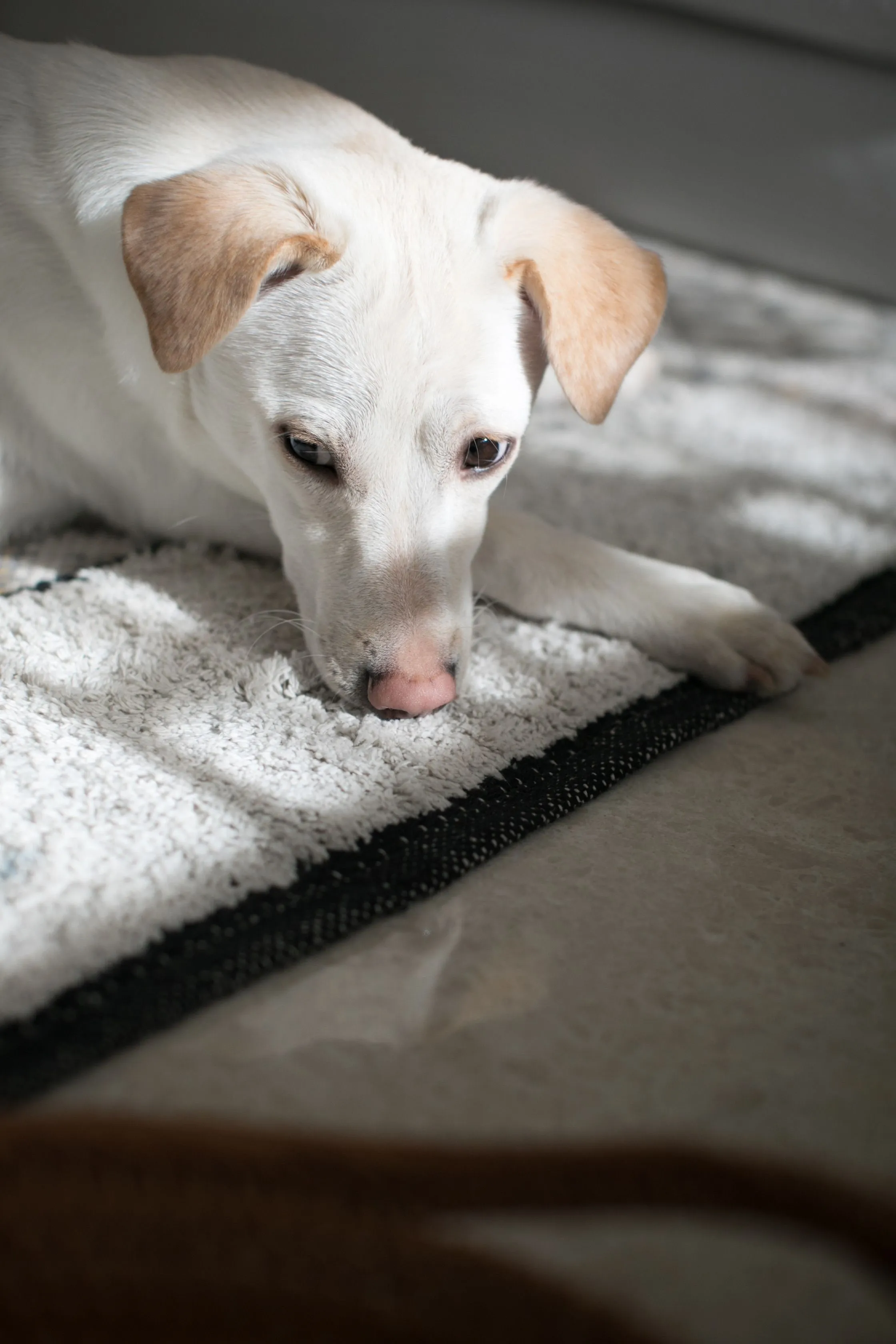
The clearest signals show up in what the dog does, not in how tired it looks. Accidents from a dog who is normally reliably clean sit near the top of the list, especially by exits or windows. So does destruction aimed at boundaries: chewed doorframes, scratched doors, clawed windowsills, the marks of a dog trying to get out or manage rising tension.
Vocalising is another, though you often only learn about it from a neighbour, since barking and howling tend to peak shortly after you leave rather than at the end of the absence. A greeting that is frantic and over-the-top, well beyond a normal happy hello, can point the same way. Dogs left longer have been observed greeting more intensely on return [3].
One stray accident on an off day means little. A pattern is the thing to watch. Persistent house soiling, destruction, and distress vocalising together are the classic markers of a stretch that is too long, or of separation anxiety that needs addressing on its own terms.
How do I know when it’s time to hire a dog walker or sitter?
The practical trigger is a mismatch: your day is longer than your dog’s comfortable stretch, and closing that gap yourself is not realistic. A midday dog walker breaks an eight-hour absence into two manageable halves, covers the toilet break, and adds the movement and stimulation that a long shut-in day strips away.
There is a behavioural case too. Dogs whose routines change abruptly, especially those who go from lots of company to long absences, are at raised risk of developing new separation-related behaviour [5]. A walker, a sitter, or a few days of daycare softens that transition and gives an under-exercised or under-stimulated dog an outlet.
Help is also worth it when the signs keep appearing despite your best routine. If house soiling, destruction, or distress persist even with exercise and predictability in place, that can point to separation anxiety rather than a simple scheduling problem, and it is worth involving your vet or a qualified behaviourist alongside any daytime support you arrange.
There is no universal number, and the search for one is part of what trips owners up. The comfortable stretch for your dog is a moving figure, set by age at both ends, nudged by bladder, temperament, and how the dog learned to be alone.
The good news is that dogs tell you where their line sits, if you read the reunion and the state of the house rather than the clock. A dog who settles, empties on schedule, and greets you like a normal glad-to-see-you dog is a dog whose day fits. When the accidents, the chewing, or the frantic welcomes start, the number was too high. The fix is rarely complicated: shorter gaps, more movement, a predictable routine, and a hand from a walker or sitter when the day outruns what the dog can hold.
References
- (2021). Review of epidemiological, pathological, genetic, and epigenetic factors that may contribute to the development of separation anxiety in dogs. Journal of the American Veterinary Medical Association. https://doi.org/10.2460/javma.20.08.0462
- (2010). Video analysis of dogs with separation-related behaviors. Applied Animal Behaviour Science. https://doi.org/10.1016/j.applanim.2010.01.014
- (2011). The effect of time left alone at home on dog welfare. Applied Animal Behaviour Science. https://doi.org/10.1016/j.applanim.2010.11.015
- (2010). Video analysis of dogs with separation-related behaviors. Applied Animal Behaviour Science. https://doi.org/10.1016/j.applanim.2010.01.014
- (2022). Impact of Changes in Time Left Alone on Separation-Related Behaviour in UK Pet Dogs. Animals. https://doi.org/10.3390/ani12040482
The fire's still going.
Stoke another read →