8 Smart Kitchen Cutlery Storage Ideas for Any Space

What's in this list
- 01Kitchen cutlery storage ideas that start with drawer dividers
- 02In-drawer knife blocks that hide the sharp stuff
- 03Magnetic wall strips to reclaim the counter
- 04Countertop knife blocks for the classic look
- 05Wall-mounted rails for utensils within reach
- 06Under-cabinet racks for forgotten vertical space
- 07Deep drawer trays that use every inch
- 08Rolls, sheaths, and blade guards for compact spaces
A messy cutlery drawer is one of those small daily annoyances cooks put up with for years. Knives slide around and go dull against each other. Forks tangle up. The paring knife you want is hiding under a spatula, again.
Fixing it rarely means buying more stuff. Usually it just means matching the tool to the space you already have, and that’s where good kitchen cutlery storage ideas pay off. Some cooks love their drawers. Others empty the drawer completely and go vertical instead. There’s no single right answer here, just the one that suits your counter, your walls, and the way you actually cook. One low-effort option keeps coming up as the space-saver people wish they’d tried years earlier. Here are eight approaches, from the obvious ones to the ones that quietly change how a kitchen works.
Kitchen cutlery storage ideas that start with drawer dividers
Drawer dividers do the heavy lifting in most flatware setups, and it’s easy to see why. A basic divided flatware tray gives forks, spoons, and knives their own lanes, which stops the daily rummaging that tangles a shared drawer. Adjustable dividers take it further, letting you widen a slot for serving spoons or shrink one for teaspoons. The good ones have a nonslip base so the tray doesn’t slide forward every time you yank the drawer open. Bamboo and molded plastic both do the job. Bamboo looks warmer and shrugs off warping, while plastic wipes clean in seconds. If your drawer is some odd depth, expandable dividers that telescope to fit will spare you a tray that rattles around with two inches of dead space on either side.
In-drawer knife blocks that hide the sharp stuff
A countertop knife block hogs real estate, so plenty of cooks move the whole thing into a drawer instead. An in-drawer knife block is a slotted insert, usually bamboo or plastic, that holds blades flat or at a slight angle inside a normal drawer. It keeps edges from banging against other utensils and keeps sharp points away from your fingers when you’re feeling around blind. Get one with generous slots, because a block sized only for thin paring knives won’t take a chef’s knife or a santoku. Some are a single fixed unit. Others use loose pegs you rearrange to fit whatever set you own, and that pegged style adapts as your collection grows, which beats buying a new block every time you add a bread knife.
Magnetic wall strips to reclaim the counter

A magnetic knife strip mounts to the wall and holds blades by the flat of the steel. It clears the counter, keeps your knives in plain sight, and puts them within arm’s reach of the cutting board. Mount it above a workspace but clear of the sink splash zone, and use anchors rated for the weight of a full set. Technique matters here: touch the spine to the magnet first, then roll the blade down, instead of slapping the edge against the bar. That habit keeps the cutting edge from picking up small chips over time. Strips come in stainless, walnut, and acrylic-faced versions, so you can match one to your backsplash. Renters have a few strong adhesive-backed options, though a drilled mount holds heavier knives far more reliably.
Countertop knife blocks for the classic look
The traditional knife block still earns its spot, especially for cooks who like their blades staged and ready by the stove. A slotted knife block protects edges by giving each blade its own channel, so nothing rattles against metal. Universal blocks use flexible bristle inserts instead of fixed slots, which lets you drop in any knife at any angle. That suits a mismatched collection better than a block molded for one brand’s set. The catch is the counter footprint, plus the slots themselves, which trap crumbs and moisture if you sheath a knife that isn’t fully dry. Wipe blades down and let the block air out now and then. Angled blocks that lean back take up less depth and look a little less bulky on a shallow counter.
Wall-mounted rails for utensils within reach
A wall rail is a slim metal bar, often with hooks or magnetic clips, that runs along the backsplash and holds the tools you grab constantly. It’s less about knives and more about the everyday supporting cast: whisks, slotted spoons, kitchen shears, measuring cups. Getting these off the counter and out of the drawer frees up space for the cutlery that really needs it. Grid-style rail systems let you slide hooks and small caddies wherever you want them, so the layout follows your habits instead of the other way around. Mount the rail at a height where the longest tool clears the counter, and keep it away from the cooktop so hanging utensils don’t sit in splatter range.
Under-cabinet racks for forgotten vertical space
The underside of an upper cabinet is prime real estate that most kitchens ignore. Under-cabinet racks screw or clamp to that surface and hold anything from stemware to a slim knife tray. For cutlery, a shallow pull-down or slide-out rack tucks flatware or a compact knife set into the gap above your work zone, keeping it hidden but easy to reach. This works especially well in small kitchens where every drawer is already spoken for. Measure the clearance between the cabinet bottom and the counter first, because a rack loaded with tools can eat into the headroom you need for a stand mixer or a tall kettle. Clamp-on versions spare you the drilling, which renters and the commitment-averse will appreciate.
Deep drawer trays that use every inch
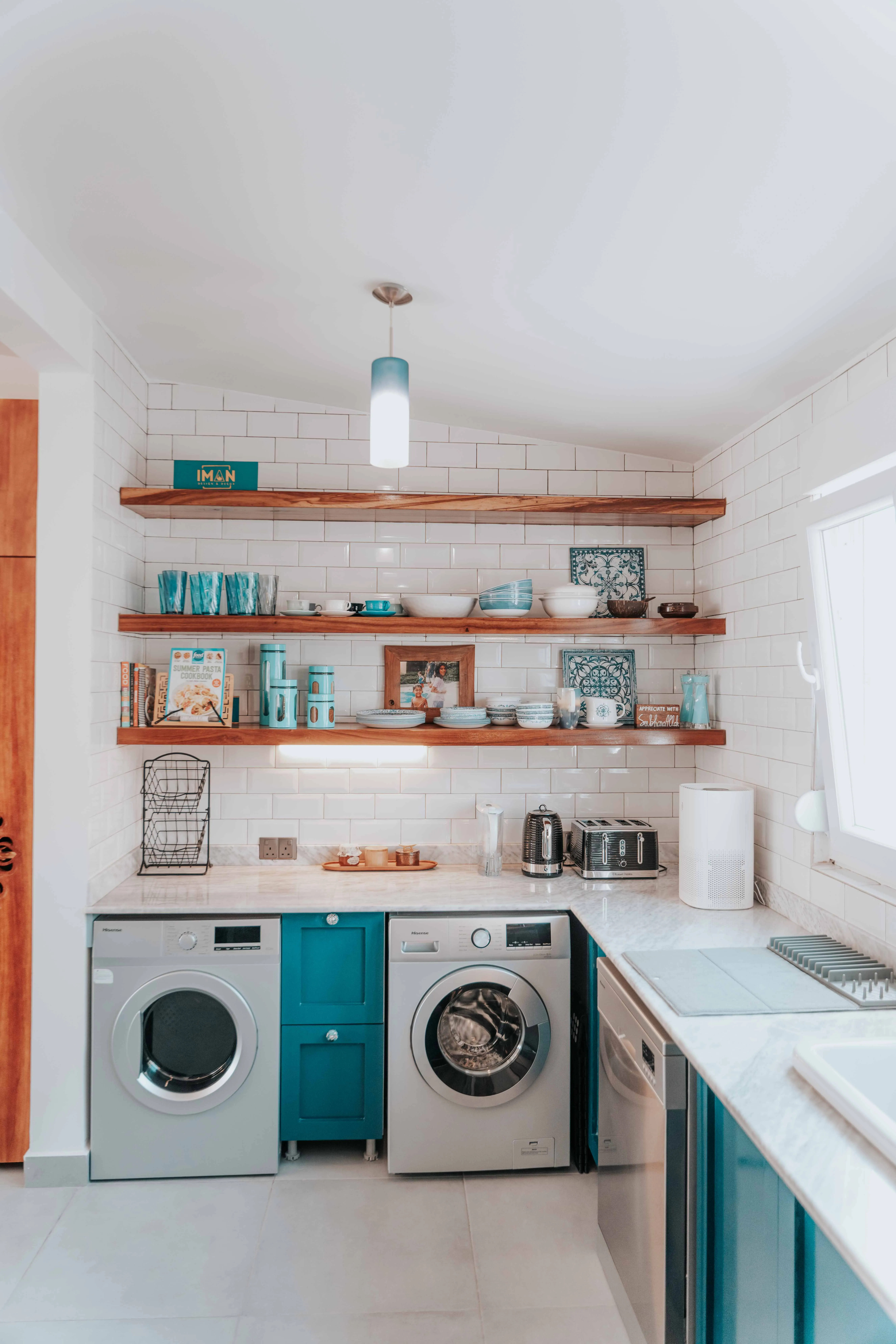
Deep drawers are a blessing and a trap. All that vertical volume tempts you to pile things, and a pile is where organization goes to die. A tiered or stacking tray fixes it by creating a second level: an in-drawer organizer that lifts a top tray over a lower one, so a knife layer sits above the flatware tray or the other way around. Some slide sideways to show what’s beneath, others lift out entirely. Either way, a cavernous drawer that used to swallow everything becomes two usable, shallow tiers. Look for trays with a lip that keeps blades from sliding under the divider walls. Pair a deep drawer tray with blade guards on your knives and you get the storage density of a pile with none of the nicked edges.
Rolls, sheaths, and blade guards for compact spaces
When wall and drawer space both run out, go portable. A knife roll wraps blades in individual canvas or leather pockets and ties shut, which is how a lot of line cooks and cooking students carry their kit. At home, a roll tucks into a pantry shelf or a deep drawer and keeps a full set contained. For single knives, blade guards or slip-on sheaths shield the edge and let you stash a knife safely almost anywhere, even flat in a shallow drawer with no dedicated slot. Universal guards come in a few widths to fit everything from paring knives to cleavers. They’re cheap, they travel well, and they turn any spare nook into safe knife storage without a single screw in the wall.
Most kitchens only need three or four of these working together, so treat the list as a menu rather than a checklist. Pick a home for your knives first, since those are the tools that punish bad storage with dull, chipped edges. The magnetic wall strip keeps surfacing as the quiet favorite because it pulls double duty, clearing the counter while keeping blades in plain sight. Then sort the flatware with a divided tray, and hand the overflow to a rail or an under-cabinet rack. Whatever mix you settle on, the goal stays the same: reach in, grab the right tool, and get back to cooking without a fight. Start with the drawer you open most, and build out from there.
The fire's still going.
Stoke another read →