Checklist
The Basic Kitchen Cleaning Checklist: Daily, Weekly, Deep
Most of us over-scrub the wrong things and skip the one spot that grows the most bacteria between meals.
Draws on the food-hygiene and microbiology studies listed below.

The dirtiest thing in your kitchen is probably the thing you clean with.
Your dish sponge holds more living bacteria than your bin. And the usual fixes, a spin in the microwave or a soak in bleach, can backfire in ways it took researchers a genome-sequencing project to figure out.
Most kitchen cleaning fails for the opposite reason. It treats every surface the same. The counter gets the same weekly wipe as the extractor filter, so the counter gets neglected and the filter never gets touched at all. The fix is to sort tasks by how often they actually need doing, then let a list do the remembering. What follows is that list.
How to use this basic kitchen cleaning checklist
Three buckets: daily, weekly, and monthly-or-deeper. No spreadsheet, no label maker.
Run the daily group on autopilot as you finish cooking, while a pan soaks or the kettle boils. Pick a fixed day for the weekly group so it stops being a decision you have to make. Block the deep-clean jobs into a monthly slot, or spread them across the weeks so no single session eats an afternoon.
A cleaning routine only works if it survives a bad week. Miss a day and the daily items just roll forward, no penalty. This is a cleaning schedule, not an exam.
Daily tasks
These are the jobs that stop a kitchen from tipping into chaos. They target the surfaces food and hands touch most, where bacteria arrive fresh every day and multiply overnight.
High-touch surfaces matter more than they look. Cleaning them daily limits the soil and pathogens that spread from one contaminated touch to the next surface, and the one after that [1]. Countertop sanitising and a quick wipe of handles and taps do most of the work of kitchen hygiene for very little effort. The sponge earns its place here too, for reasons the weekly group will explain.
Weekly tasks
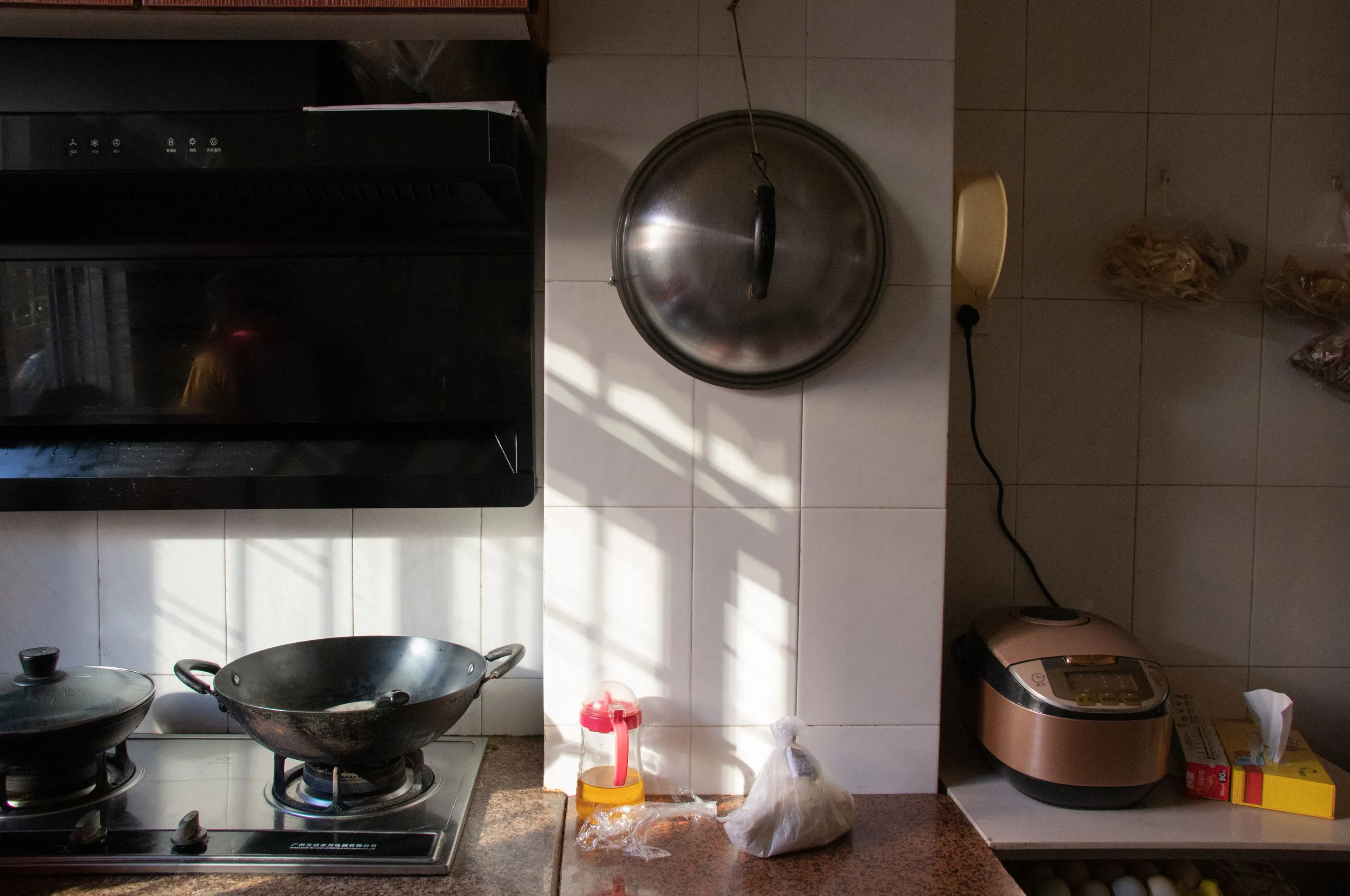
Once a week, catch the things that build up slowly. Floors, the microwave interior, small appliance exteriors, and the bin all hit their limit at roughly this pace.
The sponge belongs here for a specific reason. Used kitchen sponges carry extraordinary bacterial densities, and some of the most abundant species are close relatives of known pathogens [2]. Here is the part that surprised me: sanitising by microwaving or boiling did not clear them out, and it was linked to a higher share of those pathogen-related bacteria, probably because the tough survivors recolonise fast. The researchers’ advice was blunt. Replace the sponge weekly rather than trust sanitising to keep it safe [2].
Monthly and deep-clean tasks

This is the deep clean kitchen work: the jobs that only announce themselves once they have been ignored too long. A monthly rhythm keeps them from piling up.
The fridge interior heads the list on hygiene grounds. Domestic refrigerators can hide foodborne pathogens on their interior surfaces, shelves being the most frequently contaminated spot, and a cold fridge slows some of these organisms without stopping them [3]. Cleaning the interior now and then is what stops spills and leaking packaging from becoming a longer-term contamination reservoir. The rest of this group, oven, extractor filter, cupboard interiors, is more about grease and grime than germs, but the same monthly slot handles them fine.
Supplies to keep on hand
None of this appliance cleaning works without the basics within reach. A short kit you actually restock beats a cupboard of half-empty specialist sprays you forgot you owned.
Keep it small. Most of the list above runs on dish soap, a general surface cleaner, hot water, and something to dry with. The one consumable worth watching is the sponge, since the plan bins it every week.
A clean kitchen is not a heroic monthly blitz. It is a handful of daily habits that take minutes, a weekly reset that fits in one session, and a monthly deep clean you can see coming.
The science behind this basic kitchen cleaning checklist is narrower than the internet suggests. Wipe the surfaces hands touch, dry the sponge and bin it weekly, and clean the fridge before a spill becomes a colony. Everything else on the list is grease, dust, and your own comfort.
Print it, stick it on the fridge door, and let the boxes do the remembering.
29 things, in 5 groups
How to use this basic kitchen cleaning checklist
-
Folding them into cooking is what keeps the habit alive.
Daily tasks
-
Warm water and detergent, then a rinse, removes most of what a wipe needs to remove [1].
-
These high-touch spots pass bacteria hand to hand and get skipped the most.
-
A wet sponge is a bacterial incubator; drying it out slows the growth.
Weekly tasks
-
Sanitising a used sponge does not reliably cut its bacterial load and may shift it toward pathogen relatives [2].
-
Reused damp towels spread bacteria across every surface they touch.
Monthly and deep-clean tasks
-
Shelves are the most contaminated interior surface; a cold fridge slows pathogens rather than stopping them [3].
Supplies to keep on hand
-
Microfibre cloths dry faster than sponges and tend to carry lower bacterial loads.
References
- (2004). Effects of cleaning and disinfection in reducing the spread of Norovirus contamination via environmental surfaces. Journal of Hospital Infection. https://doi.org/10.1016/j.jhin.2003.10.011
- (2017). Microbiome analysis and confocal microscopy of used kitchen sponges reveal massive colonization by Acinetobacter, Moraxella and Chryseobacterium species. Scientific Reports. https://doi.org/10.1038/s41598-017-06055-9
- (2005). Food safety knowledge of consumers and the microbiological and temperature status of their refrigerators. Journal of Food Protection. https://doi.org/10.4315/0362-028X-68.7.1421
The fire's still going.
Stoke another read →