5 signs your houseplant is thriving

What's in this list
- 01New leaf growth: one of the clearest signs your houseplant is thriving
- 02Strong root system
- 03Firm stems
- 04Consistent color
- 05Active soil life
A pothos can sit in the same corner for months looking exactly the same, and most owners read that stillness as contentment. Sometimes it is. Sometimes the plant has quietly stalled. The signs houseplant thriving owners learn to read are small ones. Easy to miss. The fifth one on this list is the cue almost nobody checks, and none of them need a soil meter or any other gadget. They reward the attention you already pay when you water.
Good houseplant health rarely announces itself with a flower or a sudden growth spurt. It shows up in leaf tips, stem texture, root color, and the life happening below the surface. Here is what to look for.
New leaf growth: one of the clearest signs your houseplant is thriving
New leaves are the clearest readout of whether a plant is making more food than it spends. A plant only bothers expanding leaf area when it has the light to power that tissue [1]. Look for unfurling growth at the stem tips and a brighter green on the youngest leaves, with a steady rhythm of new growth through the growing season.
A study of indoor foliage species found that plants kept under low office-level light held onto photosynthesis partly by enlarging their leaf surface to grab more of what little light reached them [1]. So a plant pushing out new leaves is usually getting enough light to fund the effort. If growth has stalled for weeks during spring or summer, look again at where the pot sits and how much light actually hits it.
Strong root system
You can grow a lush canopy and still have a plant in trouble, because the real engine sits down in the pot. Healthy roots tend to be pale and firm, threading through the soil rather than circling a soggy mass at the bottom.
Root system architecture, meaning the branching pattern and reach of the roots, governs how well a plant pulls water and nutrients from its medium [3]. Plants that develop larger, more branched root systems take up water, nitrogen, and phosphorus more efficiently, which feeds everything happening above the soil line [3].
You do not have to uproot anything to check. Roots peeking from the drainage holes are a good sign, and so is a plant that drinks at a predictable pace between waterings. Mushy brown roots or a sour smell point the other way.
Firm stems
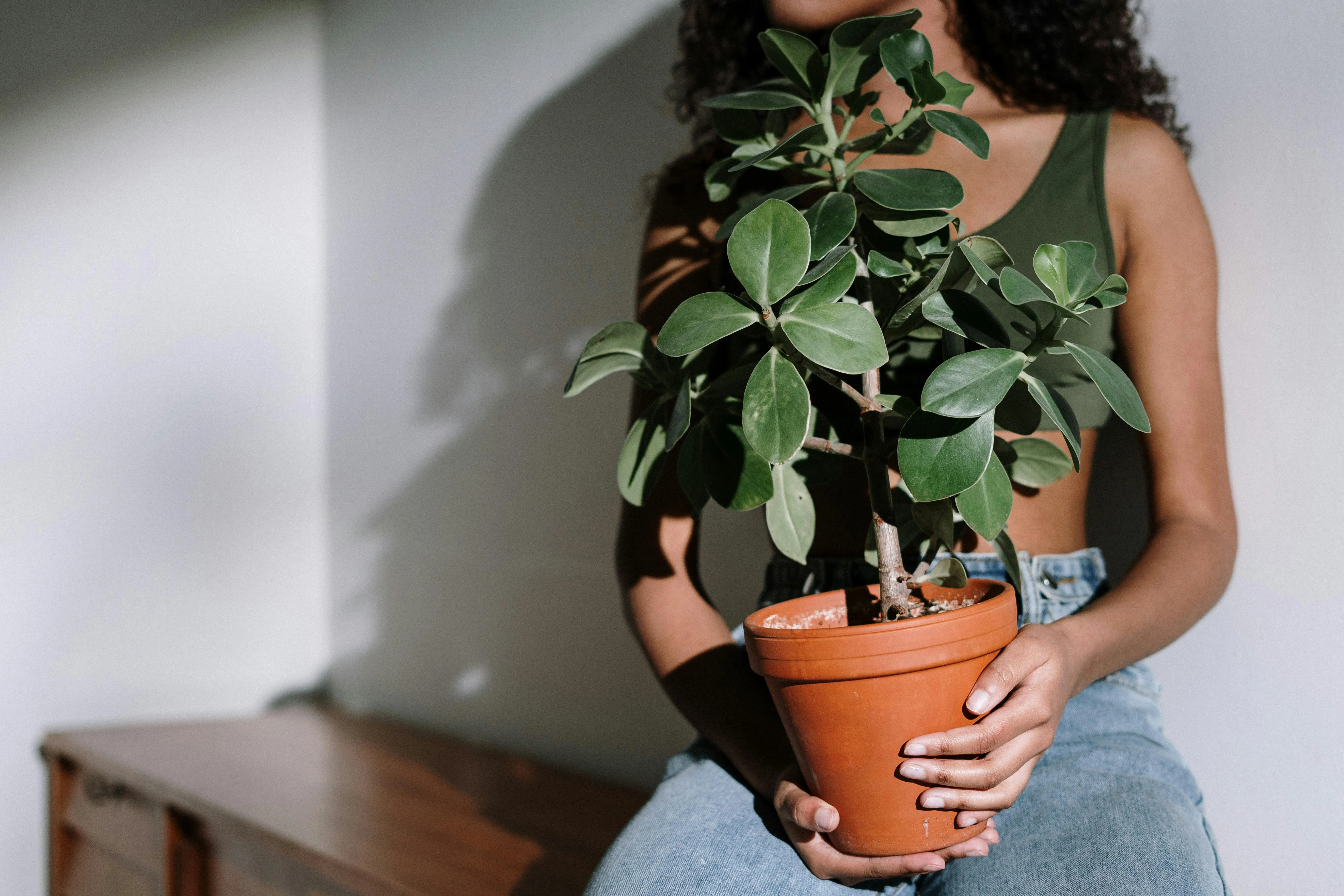
Press a stem gently between two fingers. On a well-watered plant it feels firm and springy, and the leaves sit plump rather than limp.
That firmness comes from turgor pressure, the internal water pressure that pushes plant cells against their walls and keeps soft tissue rigid. Firm stems and turgid leaves indicate proper hydration, because turgor tracks closely with a plant’s water status [2]. Researchers who measured leaf turgor across thirteen species found that this pressure rises and falls with water content, and reliably reflects how hydrated the tissue is [2].
When a plant runs short on water, turgor drops first, which is why early water stress shows up as a subtle softening before any leaf actually droops. Stems that stay firm through the day, and perk back quickly after a drink, suggest the watering rhythm is landing where it should.
Consistent color
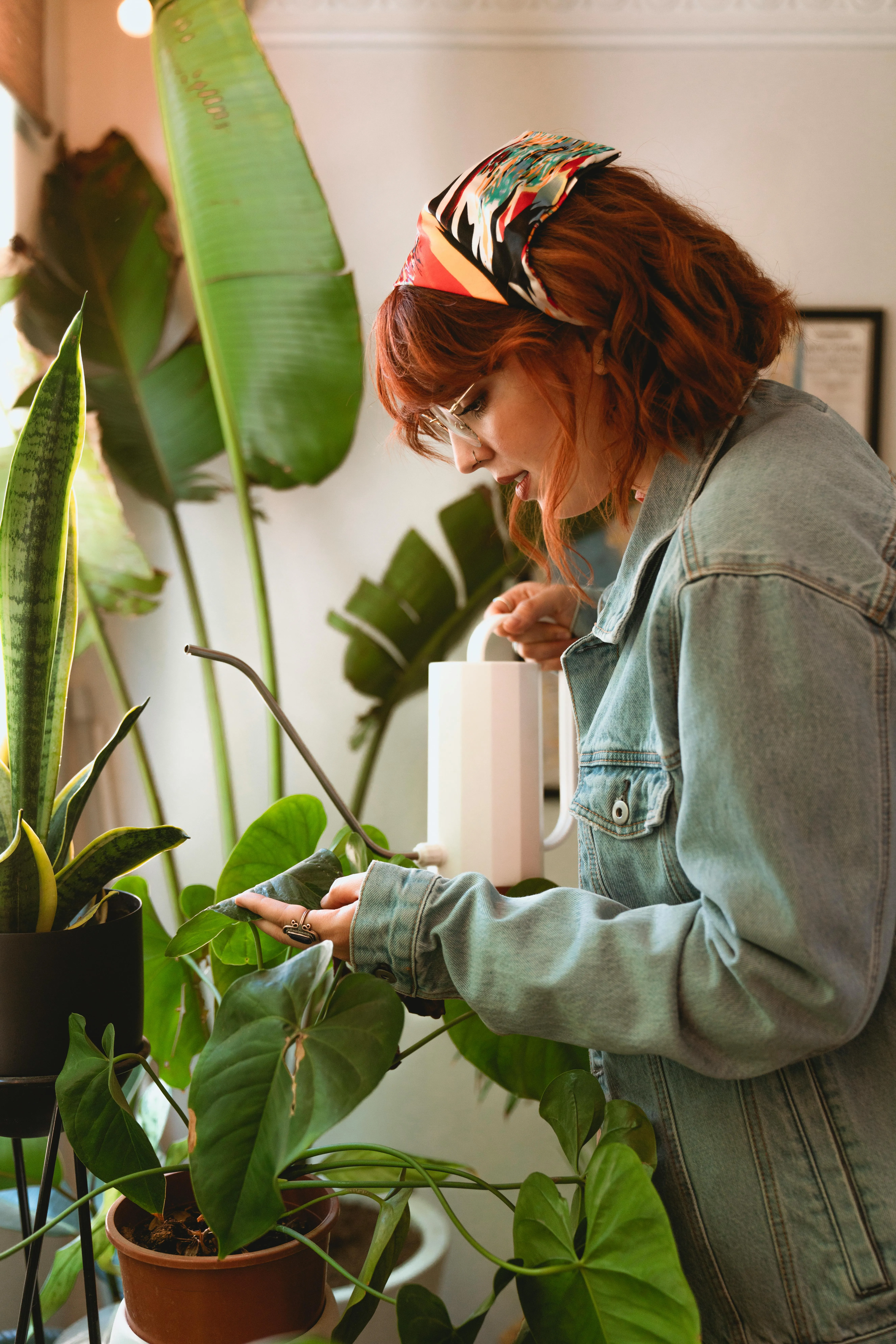
Color tells you something every time you walk past, and consistency matters more than any single shade. A thriving plant holds an even, saturated green across its mature leaves, with new growth coming in healthy and filling out over a few days. Patchy yellowing, washed-out areas, or browning margins usually flag a problem with light levels or watering.
Leaf color tracks chlorophyll, the pigment that captures light for photosynthesis, so steady color signals that the plant is harvesting light well [1]. The indoor-plant study mentioned earlier also found that foliage adjusted its pigment and leaf structure in response to the light it received, keeping photosynthesis efficient even in dim rooms [1].
Some natural variation is fine, especially on variegated cultivars and on older lower leaves that a plant drops on schedule. What you want is stability in the canopy as a whole, not a single flawless leaf.
Active soil life
The least obvious sign sits in the soil itself. A pot that supports life is usually a pot doing its job: springtails skating across the surface after watering, a faint earthy smell, the occasional fungal thread in the mix.
The rhizosphere, the thin zone of soil around the roots, hosts dense communities of microbes that exchange nutrients and signals with the plant [4]. Beneficial bacteria and fungi in this zone help make nutrients available and contribute to overall plant health [4].
For indoor gardening, that means soil showing some visible life is generally a feature rather than a fault, as long as you are not seeing fungus gnats in large numbers. A bag of fresh, well-draining mix and the occasional repot keep that underground ecosystem stocked. Compacted, waterlogged soil is the version that tends to starve roots and microbes alike.
If you take one cue from this list, make it number five. Soil life is the signal people overlook because it asks you to look down instead of up, and it quietly underwrites the new leaves, the firm stems, and the steady color above it. None of these signals works in isolation. A plant pushing fresh growth with pale firm roots and turgid stems is giving you several overlapping reassurances that its basic needs are met.
Good plant care is mostly noticing. You water, you turn the pot toward the window, you brush past it on the way to the kitchen, and over time you learn its normal. The thriving version of your plant is usually quiet. When the canopy holds its color and the soil smells alive, the plant is fine, even on the days it looks like nothing is happening.
References
- (2024). Adaptation of indoor ornamental plants to various lighting levels in growth chambers simulating workplace environments. Scientific Reports. https://doi.org/10.1038/s41598-024-67877-y
- (2022). Monitoring plant water status via static uniaxial compression of the leaf lamina. Plant, Cell & Environment. https://doi.org/10.1111/pce.14383
- (2023). Constitutive basis of root system architecture: uncovering a promising trait for breeding nutrient- and drought-resilient crops. aBIOTECH. https://doi.org/10.1007/s42994-023-00112-w
- (2024). Unveiling the significance of rhizosphere: Implications for plant growth, stress response, and sustainable agriculture. Plant Physiology and Biochemistry. https://www.sciencedirect.com/science/article/pii/S098194282300801X
The fire's still going.
Stoke another read →