Comparison
The Difference Between Terracotta and Plastic Pots
One of these materials forgives overwatering, the other forgives forgetting. The wrong pick shows up three weeks later.
Draws on the container and clay-materials studies listed below.
What's in this list
- 01The difference between terracotta and plastic pots comes down to one wall
- 02Pick the pot that corrects your own habit
- 03Sun on a dark pot is a root problem
- 04Where the white crust comes from
- 05What the extra money buys, and what a hard frost takes away
- 06Plastic inside, terracotta outside: the cheat most growers use
| Dimension | Unglazed terracotta | Plastic, including the nursery pot |
|---|---|---|
| How fast the substrate dries | Loses water through the wall as well as the surface, so the mix dries noticeably faster and the root zone gets its air back sooner. | Loses water only from the surface of the mix and the drainage holes, so the soil stays wet a lot longer. |
| Margin for overwatering | Wide. Surplus water leaves through the clay and air follows it back in. | Narrow. In a dense peat-based mix the lower root zone can stay saturated for days after a watering. |
| Plants it suits | Succulents, cacti, snake plants, hoyas, Mediterranean herbs, anything that resents standing water. | Ferns, calatheas and other moisture-loving plants, plus anything in a bright, dry, heated room. |
| Weight and stability | Heavy, which anchors top-heavy plants but rules out brackets and hanging fixtures. | Light and easy to move, and quick to tip over under a tall plant. |
| Cost, breakage and winter | Costs several times more, cracks when dropped, and can spall or split if left outdoors through a hard frost. | Cheap or free, survives drops, stacks flat, and shrugs off freezing weather. |
| How it ages | Picks up white mineral deposits and a patina. Scrubbable, though many growers leave it. | Looks the same in year five as in year one, which for a black nursery pot is no compliment. |
The verdict
Terracotta, for most houseplants and most people. The porous wall corrects the commonest indoor mistake, watering too often. Choose plastic on purpose: for moisture-lovers, hanging planters, cold balconies, and any job involving more than a few pots.
- Unglazed terracotta suits
- Anyone who waters on a schedule rather than by feel, and anyone growing succulents, cacti or thick-rooted plants that rot at the first hint of standing water.
- Plastic, including the nursery pot suits
- Growers of ferns, calatheas and other moisture-loving plants, plus anyone potting up dozens of plants, hanging baskets or wall brackets.
The cheapest pot in the shop is the one your plant is already sitting in: that flimsy black nursery pot hidden inside the display container. You could leave it there, and that’s a defensible choice. You could also spend a little more on fired clay, which is usually the better one. What tips it isn’t the plant. It’s the person holding the watering can.
Both materials hold soil and let water out through drainage holes. What separates them is one physical property, and nearly every practical difference follows from it.
The difference between terracotta and plastic pots comes down to one wall
Unglazed terracotta is clay fired at a fairly low temperature and left uncoated, so the fired body keeps an open network of pores. Water moves out of the soil into the porous clay, wicks to the outer surface, and evaporates there. Air travels the other way, back into the root ball. A glaze seals those pores, which is why a glazed ceramic pot acts like plastic even though it started as the same raw material.
The effect is measurable, not folklore. In controlled comparisons of clay and plastic containers, the clay wall accounted for 42 percent of total water loss in winter and 25 percent in summer, while plastic containers lost only 55 to 66 percent as much water overall as the clay ones [1]. Same plant, same mix, same window, and you water clay roughly twice as often.
Plastic loses water at the surface of the mix and through the drainage holes, and nowhere else. That’s the whole mechanism, and it cuts both ways.
Pick the pot that corrects your own habit
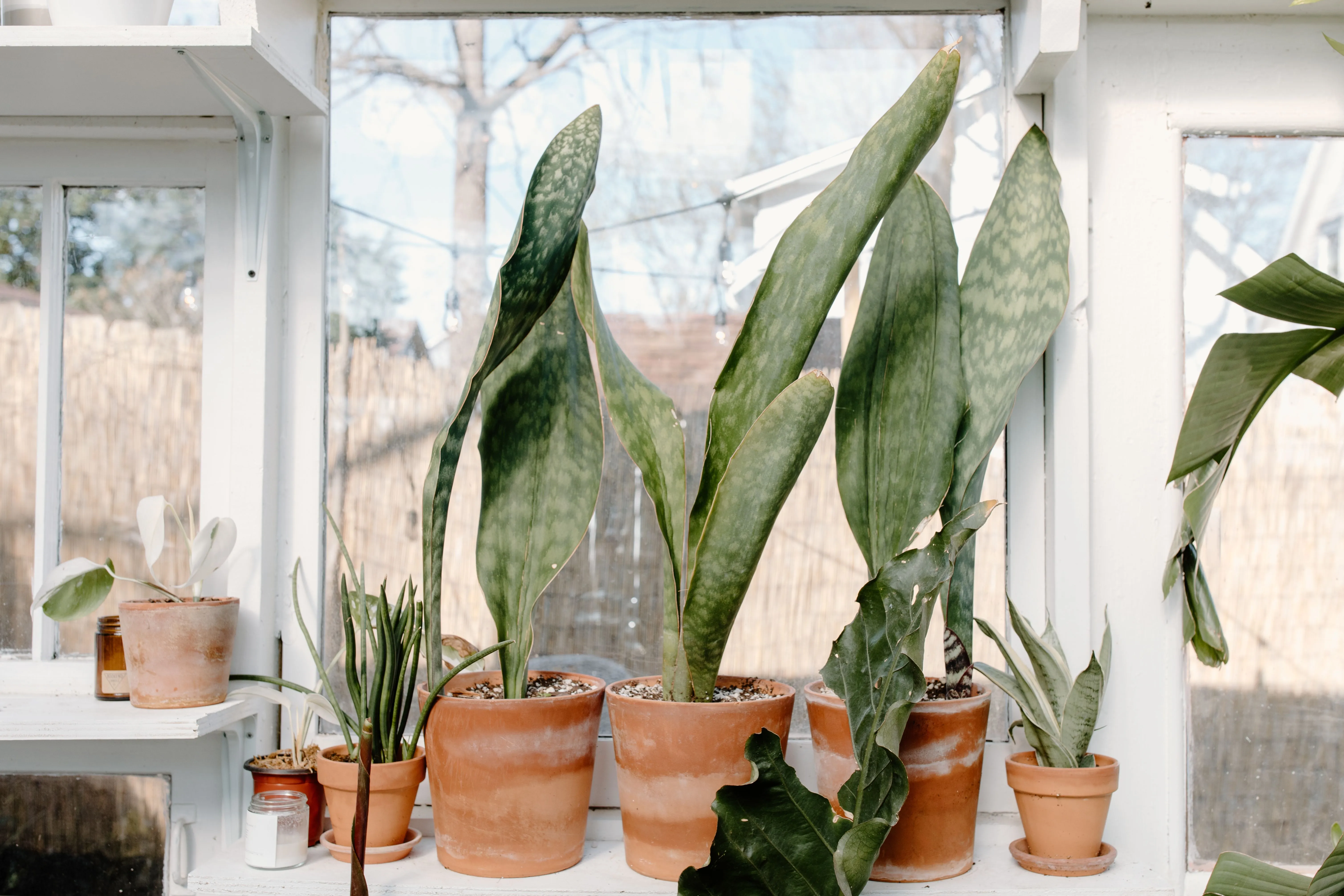
Roots need oxygen as much as they need water. When a peat-heavy mix sits saturated, the air spaces stay full, the root zone runs short of oxygen, and the roots weaken before any pathogen shows up.
Work on container-grown rhododendron shows what happens next. Plants held in flooded substrate for 24 or 48 hours before exposure to Phytophthora developed worse root and crown rot, including a cultivar the trade treats as resistant [3]. Drought stress set plants up for trouble too, which is the fair caveat for clay: a porous pot in a hot, dry room can push a plant into the opposite failure.
So the useful question in the aisle is about your own habit, not the pot’s virtues. If you tend to over-water, porous clay buys you margin, since plastic holds a lot more water for a lot longer in the same conditions [1]. If you tend to forget, plastic buys you that margin instead.
Sun on a dark pot is a root problem
Pot material also sets root zone temperature, which is where a black nursery pot on a south-facing sill earns its reputation. Dark plastic soaks up sunlight and passes the heat into the soil, which then holds it.
Field trials across four American states compared standard black plastic containers with porous alternatives and recorded the highest substrate temperatures in the plastic, while containers that lost water through their side walls ran cooler. The authors put much of that cooling down to evaporation from the walls rather than colour alone [2]. Roots on the sunlit face of a hot pot are the first to stop growing.
Indoors the effect is gentler than in a nursery yard, but a dark pot in direct summer sun behind glass is still the harshest spot in the house for a root ball.
Where the white crust comes from
The powdery white bloom on the outside of a clay pot is salt. Dissolved salts travel with water through the pores of fired ceramic and crystallise wherever that water evaporates, which on a plant pot means the outer wall and the rim [5]. In a houseplant, that dissolved load arrives with hard tap water and with fertiliser the plant never took up.
Those salts are in a plastic pot too. They just have nowhere visible to go, so they concentrate in the soil instead, where the first sign tends to be scorched root tips and crisped leaf margins rather than a stain.
Removing the crust takes water, a splash of white vinegar and a stiff brush. Flush the pot now and then with a generous volume of plain water and it carries accumulated salts out through the drainage holes. Plenty of growers leave the mineral deposits where they are and call it patina.
What the extra money buys, and what a hard frost takes away
Terracotta costs several times what plastic costs, and it breaks when dropped. It also breaks when left outside through a real winter. Fired clay draws water into its pores, that water expands as it freezes, and the internal stress flakes the surface or splits the wall. Research on clay bricks ties frost resistance directly to pore structure and water absorption, with fine pores that hold water tightly implicated in the damage [4]. Bricks aren’t flowerpots, but the material problem is the same, and pots sold as frost-resistant have usually been fired harder and denser for exactly this reason.
Weight is the other cost, and sometimes the other benefit. A filled 25 cm clay pot is a two-handed lift. That mass is what stops a mature dracaena or fiddle leaf fig from going over, and it’s also what rules terracotta out for hanging planters and wall brackets.
Plastic inside, terracotta outside: the cheat most growers use
Commercial growers rarely repot anything. They leave the plant in its plastic nursery pot and set that inside a decorative outer container, a cachepot, which never touches the roots. Watering happens at the sink, the inner pot drains completely, and the plant goes back once it has stopped dripping.
Several problems dissolve at once. Decorative containers without drainage holes become usable. Repotting shock goes away, since nothing is disturbed. Judging moisture becomes a matter of lifting the inner pot and feeling its weight, which beats guessing from the surface.
The way it goes wrong is water pooling unseen in the base of the outer pot, which recreates the swamp the whole arrangement was meant to avoid. A layer of pebbles under the nursery pot keeps the base clear, and tipping out the surplus after watering takes seconds.
One caution: a plastic liner inside a terracotta outer pot cancels the porosity completely. If you bought the clay for its wall, the plant belongs in it directly.
Standing in the aisle with one plant and one decision, terracotta is the better default, because the failure it guards against is the failure most people actually commit. For succulents, cacti, snake plants and Mediterranean herbs it’s barely a choice at all.
Plastic earns its place on purpose: ferns, calatheas and other moisture-loving plants, hanging baskets where every gram counts, cold balconies where clay would spall, and the twenty seedlings nobody wants to spend a fortune housing.
And there’s nothing wrong with the nursery pot the plant came in. It’s a well-designed object with good drainage and no weight to it. It’s only ugly, which is what the outer pot is for.
References
- (1971). The effect of container porosity on root environment and plant growth. II. Water relations. Plant and Soil. https://doi.org/10.1007/BF01372627
- (2015). Substrate Temperature in Plastic and Alternative Nursery Containers. HortTechnology. https://doi.org/10.21273/HORTTECH.25.1.50
- (1981). Predisposing effects of soil moisture extremes on the susceptibility of rhododendron to Phytophthora root and crown rot. Phytopathology. https://doi.org/10.1094/Phyto-71-831
- (2020). Influence of Pore-Size Distribution on the Resistance of Clay Brick to Freeze-Thaw Cycles. Materials. https://doi.org/10.3390/ma13102364
- (2025). Corrosion of Porous Building Ceramics Caused by Double Sulphate Salt. Materials. https://doi.org/10.3390/ma18051041
The fire's still going.
Stoke another read →