6 Plants for a Relaxing Home Atmosphere
What's in this list
- 01The Power of Green Spaces Indoors
- 02Snake Plants: The Nighttime Oxygen Producers
- 03Peace Lilies for Adding Elegant Calm
- 04Pothos Plants for Easy Low-Light Greenery
- 05Eucalyptus Bunches for Fragrant Showers
- 06Basic Maintenance Rules for Black Thumbs
An empty corner does something to a room, and to the people sitting in it. Put one living thing there, green and a little lopsided, and the space softens.
That’s more than a mood. Researchers have measured it, tracking heart rate and nervous-system signals in people sitting near foliage versus people sitting near nothing at all.
Most lists of calming houseplants recommend the same high-drama divas: fiddle-leaf figs, orchids, anything that drops half its leaves if you glance at it sideways. This list goes the other way. Six plants that forgive neglect, ask for almost nothing, and still earn their spot on looks and clean air.
One of them makes oxygen at night, which is a strange and useful thing for a bedroom. Another isn’t really a houseplant, and it lives somewhere you probably haven’t considered. Stick around for #5 if you’ve never thought of greenery as something you hang rather than pot.
The Power of Green Spaces Indoors
Bringing nature inside is the whole idea behind biophilic decor: the belief that plants shape how a room feels, not just how it looks. And there’s evidence to back it up. In one crossover study, university students who did a short task beside a foliage plant showed lower sympathetic nervous activity than when they did the same task with no plant in the room, which is a physiological sign of relaxation [1]. A separate randomized study found that handling indoor plants suppressed sympathetic nervous system activity and lowered diastolic blood pressure compared with a screen-based task [2]. Looking at green foliage, then, seems to loosen physical tension and turn down the body’s stress response.
You don’t need a jungle for any of this. A few well-placed pieces of low maintenance greenery shift the emotional temperature of a room, which is why indoor plants are such an easy first step toward calm.
Snake Plants: The Nighttime Oxygen Producers

The snake plant (Sansevieria, sometimes labeled Dracaena trifasciata) is for anyone convinced they kill everything they touch. It puts up with low light, forgotten watering, and long stretches of being completely ignored. Its stiff upright leaves have a sculptural look that works well in modern or minimal rooms.
What makes it worth having in a bedroom is its metabolism. Most houseplants breathe during the day, but snake plants use crassulacean acid metabolism: they keep their pores open at night, releasing oxygen while you sleep. Fitting company for a room built around rest.
Care is close to nothing. Water only once the soil has dried out completely. Give it bright indirect light if you can, but it will survive a gloomy corner anyway. Steer clear of soggy pots, which are the one thing that reliably kills it. If you’re just starting out with houseplant care, this is the gentlest possible place to begin.
Peace Lilies for Adding Elegant Calm
Few plants say “serenity” as plainly as a peace lily (Spathiphyllum): dark glossy leaves, pale white spathes that look like folded linen. It reads as elegant without seeming to try, which is why you’ll find it in spa lobbies and hotel lounges everywhere.
It earns its keep beyond looks, too. The peace lily was among the species tested for air purification, and that research suggests houseplants can lower certain volatile organic compounds in enclosed indoor spaces over time [3].
Best of all, it tells you what it wants. When it’s thirsty it wilts dramatically, then springs back within hours of a drink, so you’re never left guessing. Keep it in medium, indirect light. Water when the top inch of soil feels dry. Mist it now and then if your home runs dry.
One caution for households with curious pets: the leaves are mildly toxic if chewed, so think about where you put it.
Pothos Plants for Easy Low-Light Greenery

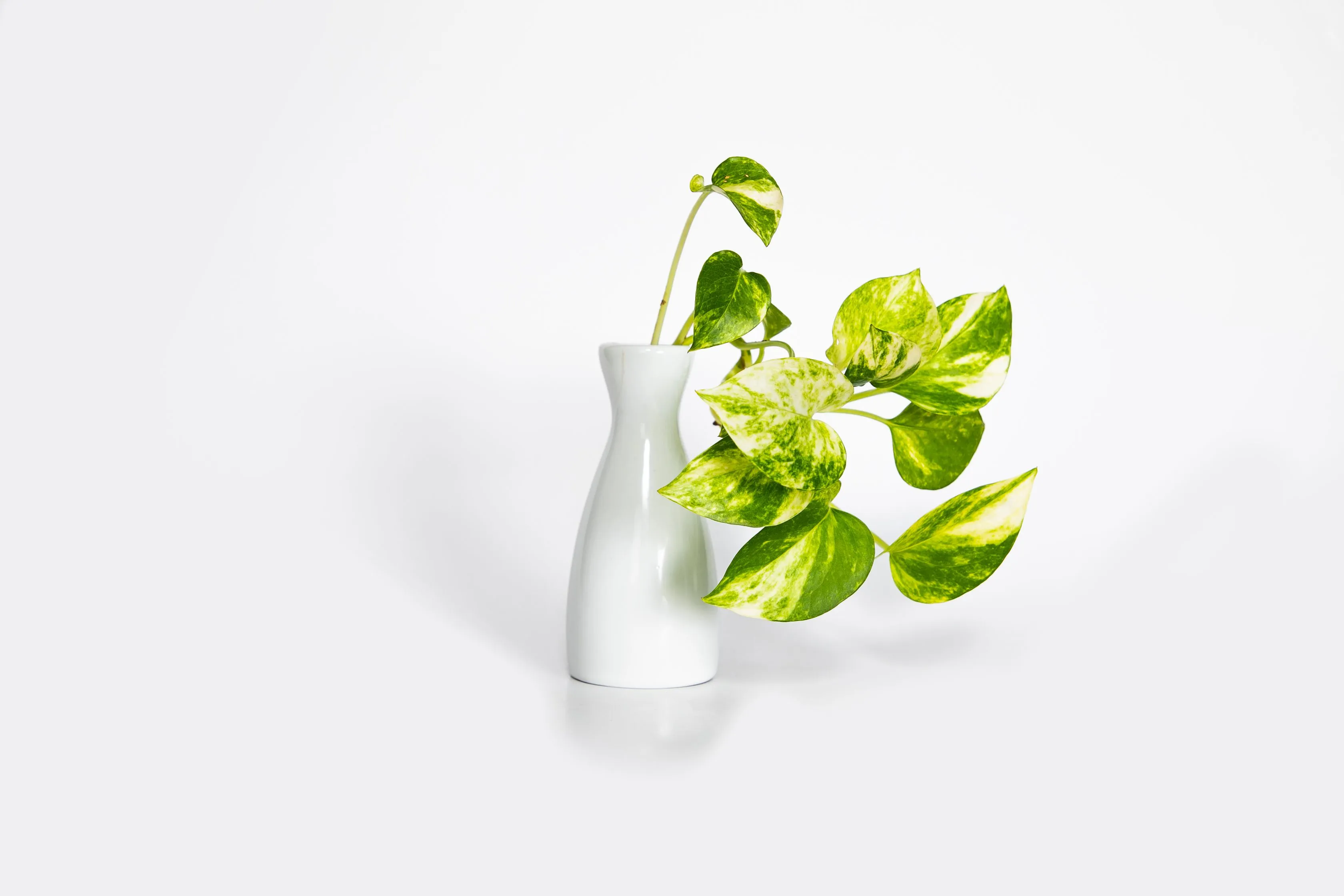
If any plant has earned the title of unkillable, it’s pothos (Epipremnum aureum), often sold as devil’s ivy. Its trailing vines of heart-shaped leaves spill off a shelf, drape down a bookcase, or climb a moss pole, which makes it flexible low maintenance greenery for pretty much any corner you’ve got.
It handles low light, shrugs off irregular watering, and grows fast enough to feel rewarding rather than tedious. Pothos also turned up in the wider research on plants and indoor air, where leafy species were linked to lower levels of airborne volatile organic compounds in tested rooms [3].
Propagating it is almost too easy: snip a vine below a node, drop it in a glass of water, and roots show up in a week or two. That’s what makes pothos such a generous plant, the kind you end up handing out in jam jars to friends who admire yours.
Eucalyptus Bunches for Fragrant Showers
Here’s the one that isn’t really a houseplant. A bundle of fresh eucalyptus, tied with twine and hung from your showerhead, turns an ordinary wash into something closer to a steam treatment. The hot water pulls the aromatic oils out of the leaves, and the room fills with a clean, faintly medicinal scent that a lot of people find calming after a long day.
It asks nothing of you. No soil, no light schedule, no repotting. Buy a bunch from a florist or a market, hang it somewhere the spray won’t soak it directly, and swap it out every few weeks as the fragrance fades.
The silvery leaves look good against tile, too, a slightly rustic, sculptural note in a room that usually has none. For renters and the permanently busy, it’s the lowest-commitment way to fold a small sensory ritual into the day.
Basic Maintenance Rules for Black Thumbs
Most houseplants die from a short list of avoidable habits, and overwatering leads that list by a mile. Roots need air as much as they need moisture, and soggy soil suffocates them. The fix is dull and reliable: let the top inch of soil dry out before you water again, and use pots with drainage holes so the excess has somewhere to go.
Light comes next. Match the plant to the spot instead of forcing a sun-lover into a dim hallway, and turn the pot occasionally so growth stays even. Wipe the leaves down every so often, since a film of dust blocks the light the plant needs to feed itself. Group plants with similar needs together so you’re not running three different routines.
None of this takes a green thumb, or much time. Good houseplant care is mostly restraint, a bit of attention, and letting forgiving plants do what they were already going to do.
Start with one. The snake plant from #2 is the safest bet here: nearly impossible to kill, and quietly useful in a bedroom, where its overnight oxygen counts for something. Add a pothos on a shelf and a peace lily in a corner, and you’ve built a relaxing home atmosphere without turning plant care into a second job. If you want the calm without committing to a pot at all, the eucalyptus bunch from #5 gives you a sensory shift for the price of a florist’s bundle.
The research here is modest but consistent: green foliage nudges the body toward relaxation, and leafy plants can chip away at indoor air pollutants over time. None of it calls for expertise. It calls for a windowsill, a watering can you reach for less often than you’d expect, and a bit of patience while the room learns to feel like somewhere you want to be.
References
- (2017). Comparison of Physiological and Psychological Relaxation Using Measurements of Heart Rate Variability, Prefrontal Cortex Activity, and Subjective Indexes after Completing Tasks with and without Foliage Plants. International Journal of Environmental Research and Public Health. https://doi.org/10.3390/ijerph14091283
- (2015). Interaction with indoor plants may reduce psychological and physiological stress by suppressing autonomic nervous system activity in young adults: a randomized crossover study. Journal of Physiological Anthropology. https://doi.org/10.1186/s40101-015-0060-8
- (2015). Phytoremediation of particulate matter from indoor air by Chlorophytum comosum L. plants. Air Quality, Atmosphere & Health. https://doi.org/10.1007/s11869-014-0285-4
The fire's still going.
Stoke another read →