6 Ways to Build a Calm Home Lifestyle With Plants
What's in this list
- 01Selecting Low-Maintenance Air Purifying Plants
- 02The Therapeutic Ritual of Weekly Watering
- 03Grouping Greenery for Visual Impact
- 04Maximizing Windows for Leafy Views
- 05Using Natural Wood and Stone Textures
- 06Drying Herbs for Functional Kitchen Decor
The quietest room in a city apartment is rarely the one with the thickest walls. Usually it’s the one with the most green in it.
There’s data behind that. When researchers asked people to repot a houseplant and then sit down with a computer task, the two activities left very different marks on the body. One settled the nervous system. The other did the opposite.
Plants do something to a space that paint and furniture can’t quite manage, and the effect shows up in heart-rate readings as much as in how a room looks at first glance.
The six approaches below run from the easy win (a forgiving plant on a shelf) to the more involved (a window arranged around leaves, herbs drying over the stove). The watering ritual at number two is the one most people underrate.
Selecting Low-Maintenance Air Purifying Plants
Start with species that forgive neglect. Snake plants, pothos, ZZ plants and peace lilies put up with low light and irregular watering, which matters in a flat where the brightest spot is one windowsill. These are the air purifying plants that get name-checked in the old NASA clean-air lists, though the real filtering effect in a normal room is modest, and a pot of pothos is no substitute for a ventilation system. The stronger case for them is psychological. Greenery you can keep alive without fuss lowers the barrier to keeping plants at all, and a thriving plant is the foundation of any indoor jungle worth the name. Pick three or four that match your light, group them where you actually spend your time, and let the easy wins build some confidence before you reach for fussier specimens.
The Therapeutic Ritual of Weekly Watering

Watering is where the science gets specific. In a randomized crossover study, young adults who transplanted an indoor plant showed suppressed sympathetic nervous system activity and lower diastolic blood pressure than the same people doing a computer task [1]. The plant work left them feeling more comfortable and soothed. The screen work nudged them the other way.
A weekly watering round is a small, repeatable version of that same hands-on contact. Checking soil moisture, turning pots toward the light, pinching off a dead leaf. None of it is demanding, and that’s rather the point. The ritual buys you a few minutes of slow, tactile attention that pulls focus away from a glowing rectangle. Give it a fixed slot, Sunday morning say, coffee in one hand and the watering can in the other.
Grouping Greenery for Visual Impact
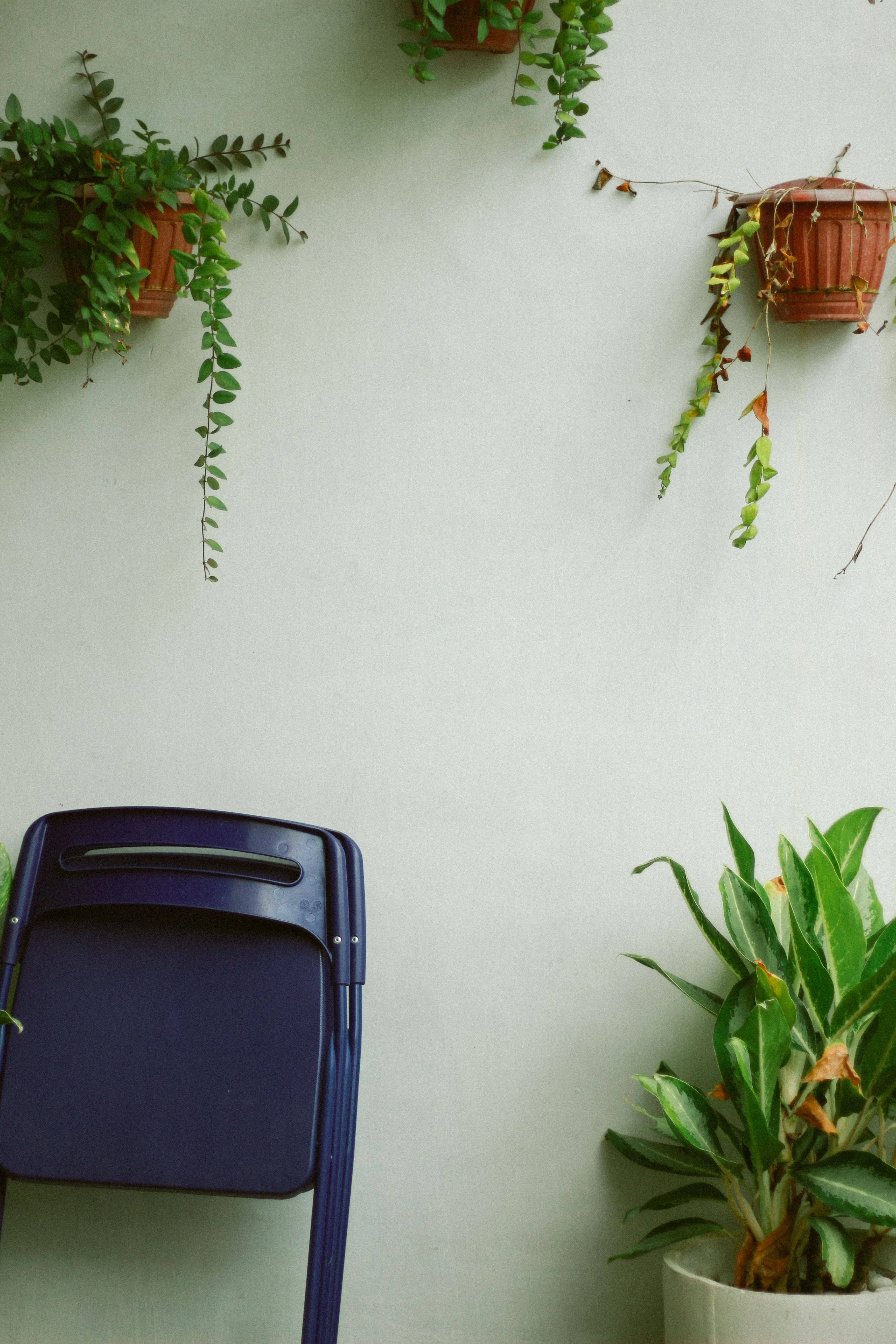
A single plant on a windowsill reads as an afterthought. Five plants clustered together read as intention. Grouping greenery in odd numbers, at varied heights, with a mix of leaf shapes, is a core move in biophilic design because it mimics how vegetation grows in the wild: dense overlapping layers, not tidy single file. A bookshelf corner with a tall plant, two mid-height ones and a vine spilling over the edge gives you the lush, layered look people mean when they talk about an indoor jungle. Clustering also makes care easier, since houseplants with similar light and humidity needs share a microclimate and remind you to water them in one pass. Empty floor corners, the top of a wardrobe, the gap beside a sofa: all of them take a grouping well.
Maximizing Windows for Leafy Views

A window framed by greenery does double duty. It pulls daylight deeper into the room and gives you something living to rest your eyes on. Large-scale workplace research found that a window view of greenery was linked with lower reported stress, while having no window view at all tracked with higher stress [2]. You can borrow that at home by running trailing plants along the top of a window frame, setting a tall specimen just beside the glass, or hanging two or three pots at staggered heights so the view outside filters through leaves. The aim is a soft green edge between you and the street, not a blackout of the light. Even a modest sill of herbs changes how the window feels; the flat pane of glass becomes a small, framed piece of the outdoors.
Using Natural Wood and Stone Textures
Plants set the tone; natural textures hold it. Raw wood, unglazed terracotta, woven rattan, linen and stone give a room the tactile variety biophilic design leans on: the sense that surfaces have grain and weight and a bit of history. A reclaimed-wood shelf carrying your pots. A stone tray under a cluster of succulents. A jute rug grounding a reading chair. Each adds a material that sits closer to the outdoors than plastic or laminate does. The Human Spaces work that tracked well-being across thousands of workers also flagged nature-resembling accent colours (the greens, browns and blues) as positive for how people felt at work [2]. At home you can reach for that same palette through materials rather than paint. Let the wood and stone carry the warmth; the plants supply the colour.
Drying Herbs for Functional Kitchen Decor
The kitchen is the easiest room to fold into a calm home lifestyle, because the greenery there earns its keep twice. A few bunches of rosemary, thyme or bay hung to dry from a rail or a length of twine give the room scent, colour and a display that shifts slowly as the leaves cure. Then you cook with them. Drying herbs takes almost no effort, costs almost nothing if you grow or buy them fresh, and turns a functional wall into something closer to a living larder. The rhythm of hanging bundles softens the hard lines of cabinets and tile, and the smell does quiet work on your mood every time you walk in. Pair the drying rack with a small pot of basil or mint on the sill and the kitchen becomes its own green corner.
The research here is encouraging rather than settled. Most of it comes from workplaces and short experiments, so hold the numbers loosely; the direction repeats across studies, though, and rooms with living things in them tend to feel better to be in. So start where it’s easiest. A forgiving plant on a shelf, a cluster in a bare corner, a window softened with a trailing vine. Add wood and stone as you go, and let the kitchen herbs arrive last, once the rest of the flat already reads green.
References
- (2015). Interaction with indoor plants may reduce psychological and physiological stress by suppressing autonomic nervous system activity in young adults: a randomized crossover study. Journal of Physiological Anthropology. https://doi.org/10.1186/s40101-015-0060-8
- (2015). Human Spaces: The Global Impact of Biophilic Design in the Workplace. Human Spaces / Interface (industry research report). https://greenplantsforgreenbuildings.org/wp-content/uploads/2015/08/Human-Spaces-Report-Biophilic-Global_Impact_Biophilic_Design.pdf
The fire's still going.
Stoke another read →