Questions answered
Can You Sleep With a Snake Plant in Your Room? Answered
One measured number quietly collapsed the whole bedroom-plant panic, and it is closer to a rounding error than a risk.
Draws on the plant physiology, indoor air and phytochemistry papers listed below.
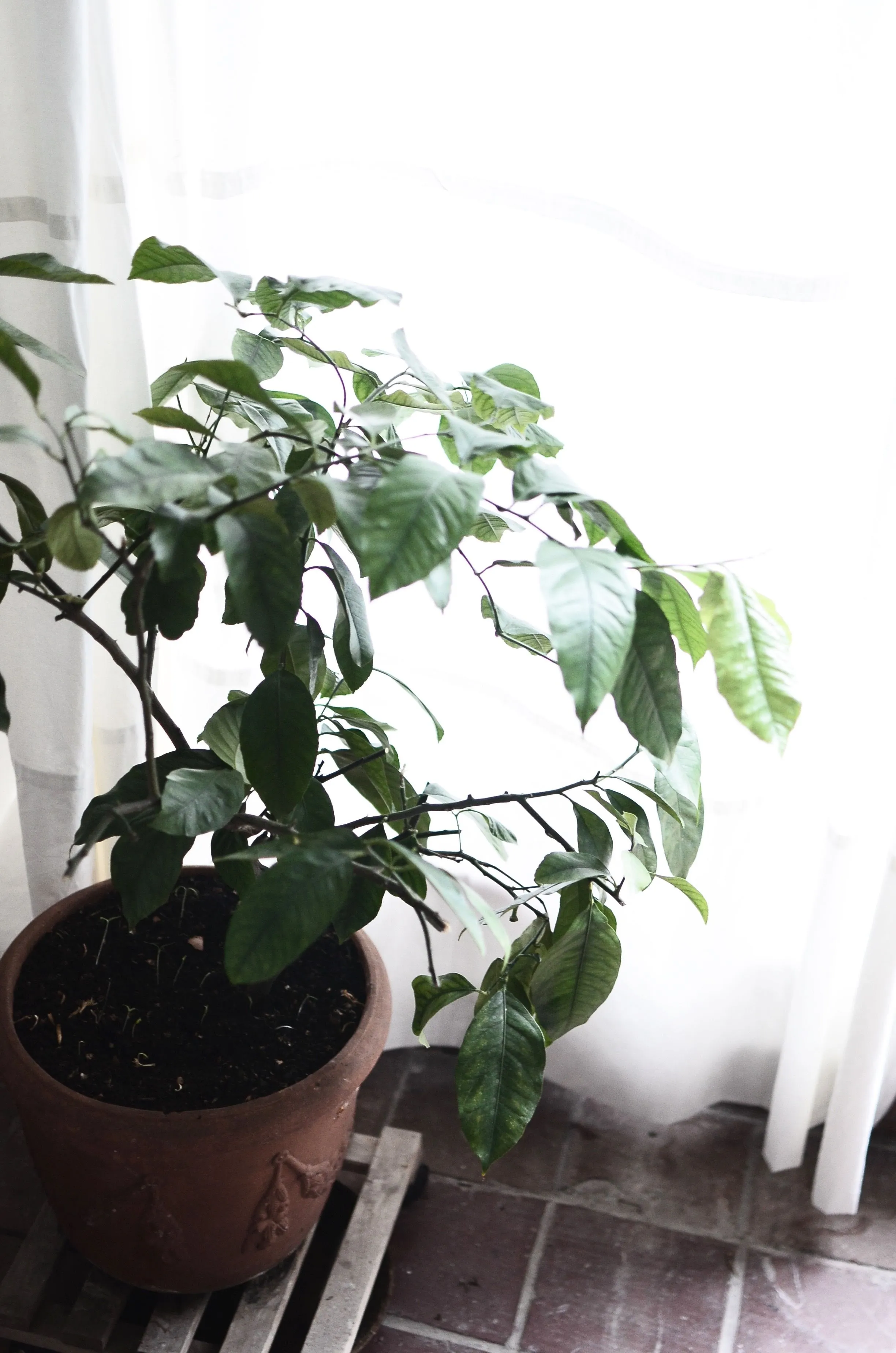
A rumour got loose sometime in the last decade: leave a plant next to your bed and it will quietly compete with you for oxygen all night. It shows up in comment threads. It arrives, unprompted, from well meaning relatives.
Someone eventually measured it. The number that came back is a rounding error next to your own breathing. So, can you sleep with a snake plant in your room? Yes. The questions actually worth asking turn out to be about cats and watering.
Can you sleep with a snake plant in your room?
The worry traces back to a half remembered claim about plants and oxygen, and it falls apart on scale. A snake plant in a ten litre pot is a modest amount of leaf tissue sharing a room with a person who moves several thousand litres of air over eight hours.
What does deserve attention has nothing to do with air. Sansevieria leaves taste bitter and are mildly toxic if swallowed, so a cat with a nibbling habit changes things. So does a pot that never dries out. Past those two, it’s one of the easier bedroom plants to live with, mostly because it puts up with the dim light and forgetful watering that bedrooms tend to produce.
Do plants steal oxygen from your bedroom at night?
Plants respire around the clock. In daylight, photosynthesis outpaces it. After dark only respiration is left, so yes, a houseplant does add a little carbon dioxide to the room.
A little. Researchers who sealed potted plants into a dark chamber measured their output at about 0.6 percent of one human’s [2]. Shutting the bedroom door changes the air in there far more than the pot on the windowsill does. So does a second person in the bed.
The myth sticks around because it sounds mechanically sensible. Plants breathe, people breathe, so they must be competing. Nobody bothered running the arithmetic for a long time.
Does a snake plant really release oxygen at night?
The nighttime oxygen story is half right, which is why it travels so well. Most houseplants run C3 photosynthesis and keep their stomata shut after dark. Snake plants work differently. They use CAM photosynthesis, short for crassulacean acid metabolism, which opens the pores at night to take in carbon dioxide and bank it as malic acid until morning. One survey of ten Sansevieria species found the pathway in seven of them [1].
The popular version overreaches at the next step. Fixing carbon and releasing oxygen are separate halves of the process, and only the first runs overnight. The oxygen comes out of the light-driven reactions the following day, when that stored acid gets broken back down. The plant really is up to something odd while you sleep. It just isn’t exhaling over your pillow.
Are snake plants toxic to cats and dogs?
Snake plant leaves are full of steroidal saponins. A 1996 phytochemical study pulled twelve of them out of the plant, ten never described before [3], and a later review catalogued the same family of compounds across Sansevieria and Dracaena along with their measured biological activity [4]. Saponins disrupt cell membranes, which accounts for both the bitterness and the upset gut.
The ASPCA lists snake plants as toxic to pets, with nausea, vomiting and diarrhoea as the usual signs. Most real incidents stay minor, because the sap tastes foul enough that an animal quits after one experimental bite. If your cat grazes houseplants as a hobby, though, move the pot up high or pick a different species. Anything worse than brief upset means a call to the vet.
Will a snake plant clean the air in my bedroom?
Snake plants sit near the top of nearly every list of air purifying plants, a reputation built on a 1989 NASA chamber experiment and oversold ever since. In 2020, two Drexel engineers went back through 196 published results from twelve of those chamber studies and converted them into clean air delivery rate, the metric used for actual purifiers. The median single plant scored 0.023 cubic metres per hour [5].
To match what ordinary building ventilation already does, by their maths, you would need somewhere between 10 and 1,000 plants for every square metre of floor.
Opening a window does more. Buy the plant for the way it looks in the corner and you won’t be disappointed.
How many snake plants is too many for a bedroom?
No number makes a bedroom unbreathable. The limits are elsewhere.
Every pot holds a small reservoir of damp soil, and a dozen of them will nudge the humidity up in a room that stays shut all night. That matters if you already get condensation on the windows. Watering becomes a chore. Dim corners grow leggy plants, leggy plants get overwatered out of pity, and overwatering is the one thing a sansevieria truly resents.
Two or three in a normal bedroom sits well inside all of that. One big specimen usually looks better than four small ones fighting for space on the same dresser.
Where’s the best place to put a snake plant in a bedroom?
Bright indirect light is what you’re after, so anywhere within a couple of metres of a window, clear of the direct afternoon sun that scorches leaves. North-facing rooms are fine. Growth just slows.
Two default spots cause most of the trouble. Over a radiator, the pot dries unevenly and the roots take the hit. Wedged into a dark corner behind the wardrobe, the plant hangs on for months while quietly going downhill, and it declines slowly enough that you won’t notice until leaves start folding over.
Floor level beside a chest of drawers suits that upright shape. A tall sansevieria on a low surface looks better than one crammed onto a narrow sill, and it keeps the leaves off the cat’s usual patrol route.
Can a snake plant in the bedroom cause mould or attract bugs?
Both are possible, and both come from the same place: too much water. Snake plants store moisture in their leaves and rhizomes and are built for drought. Soil that never dries out breeds fungus gnats within a week or two, and the surface can grow a white bloom of harmless mould that still bothers anyone sleeping a metre away from it.
Let the top few centimetres dry out completely between waterings and most of this never starts. In a cool bedroom in winter, that can mean watering once a month, sometimes less. A pot with drainage holes and a saucer you actually empty beats any spray or soil treatment.
Pick the spot for the light and for how the room looks. Water it less often than your instincts tell you. That covers most of the job.
References
- (2019). Relationships between leaf succulence and Crassulacean acid metabolism in the genus Sansevieria (Asparagaceae). Flora. https://doi.org/10.1016/j.flora.2019.151489
- (2019). Interaction between plant species and substrate type in the removal of CO2 indoors. Air Quality, Atmosphere & Health. https://doi.org/10.1007/s11869-019-00736-2
- (1996). Steroidal saponins from Sansevieria trifasciata. Phytochemistry. https://doi.org/10.1016/S0031-9422(96)00397-4
- (2021). Structures and Bioactivities of Steroidal Saponins Isolated from the Genera Dracaena and Sansevieria. Molecules. https://doi.org/10.3390/molecules26071916
- (2020). Potted plants do not improve indoor air quality: a review and analysis of reported VOC removal efficiencies. Journal of Exposure Science & Environmental Epidemiology. https://doi.org/10.1038/s41370-019-0175-9
The fire's still going.
Stoke another read →